There are places beneath the earth where time seems to pause.
In the cool silence of limestone caves in France, walls rise in pale curves and chambers stretch into darkness. The air carries a stillness that has remained almost unchanged for thousands of years. Here, long before cities or written language, human hands moved across stone surfaces with charcoal and mineral pigments, leaving behind images that would outlast the generations who painted them.
Recent research suggests that some of these cave paintings date back approximately 16,000 years, placing them deep within the closing centuries of the last Ice Age. The images belong to the cultural period known as the Magdalenian culture, a time when human communities across western Europe created intricate tools, carvings, and striking works of cave art.
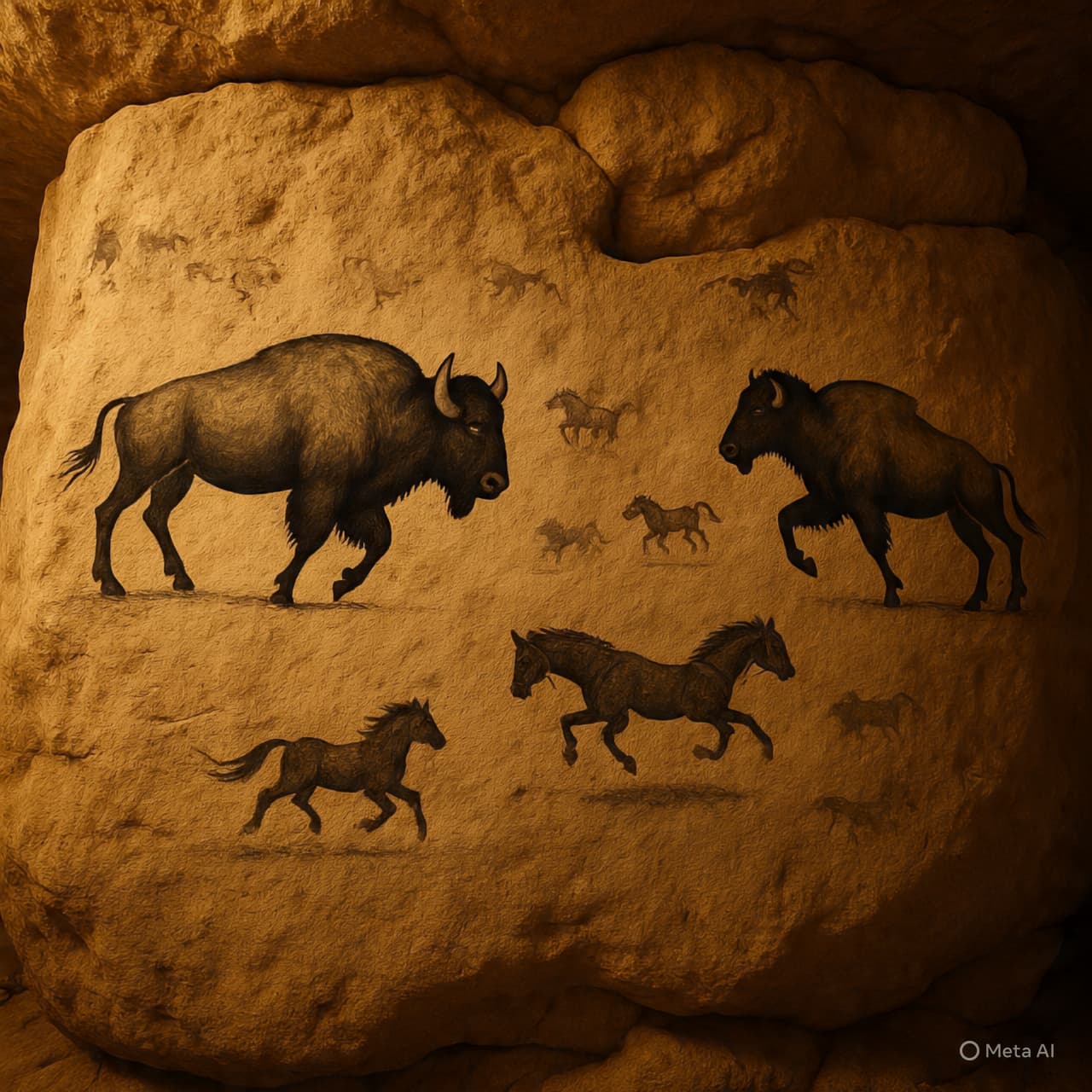
To stand before such paintings today is to encounter a moment preserved in mineral and shadow. Lines trace the forms of animals—bison, horses, deer—creatures that once roamed the cold grasslands outside the cave entrances. Some figures appear almost in motion, their bodies layered with confident strokes that suggest familiarity with the living animals they depict.
For archaeologists, determining the age of these artworks requires careful work. In recent studies, researchers used modern analytical techniques to examine pigments, mineral deposits, and organic traces associated with the paintings. Radiocarbon dating of charcoal and other materials, along with stratigraphic analysis of cave surfaces, helped establish the approximate time when these images were created.
The result places the paintings firmly around 16,000 years ago, offering new clarity about when the cave was used as a site of artistic expression.
The Paleolithic artists who created these images likely worked by the glow of small fires or stone lamps filled with animal fat. Flickering light would have animated the surfaces of the cave walls, making painted animals appear to shift and move with the shadows.
Such environments were not merely shelters. Archaeologists believe caves sometimes served ceremonial or symbolic purposes, places where early humans gathered to create images that reflected the rhythms of their world—hunting animals, seasonal migrations, and perhaps beliefs that remain only partly understood.
The caves themselves also preserved these paintings through time. Protected from weather, sunlight, and human disturbance for millennia, the walls remained largely untouched until modern exploration rediscovered them.
France is home to some of the world’s most celebrated Paleolithic cave art sites, including the renowned Lascaux Cave and the older Chauvet Cave, where paintings dating back tens of thousands of years have transformed our understanding of early artistic expression.
Each newly studied site adds another fragment to that long story.
These images are not simply decorations on stone. They are evidence of imagination, observation, and the human impulse to record experience through art. The animals, lines, and shapes preserved on cave walls reveal that even during the harsh climates of the Ice Age, people were capable of complex symbolic expression.
The study concludes that the paintings examined in the French cave system were created roughly 16,000 years ago during the Magdalenian period, providing further insight into the artistic traditions of late Paleolithic societies in Europe.
AI Image Disclaimer
These images are conceptual visualizations created with AI and are intended to illustrate prehistoric scenes rather than represent actual photographs of the caves.
Source Check
Credible coverage and/or primary reporting exist from: The Guardian Smithsonian Magazine ScienceDaily Archaeology Magazine Phys.org
Published by Banx Network. This article is part of the Banx decentralized media programme, powered by the BXE token on the XRP Ledger.