There are parts of the body that seem to resist time—not by defying it, but by holding steady while everything around them changes. Long after soft tissue fades and bone begins to soften into the earth, there remains something quieter, more enduring. A surface, pale and unassuming, that carries within it a record not easily erased.
Tooth enamel, the hardest substance in the human body, has long been understood as a shield—protecting what lies beneath from wear, from pressure, from the gradual erosion of daily life. Yet in recent scientific work, it has begun to reveal another role, less visible but perhaps more lasting. It is not only a barrier, but an archive.
Within its dense, mineralized structure, enamel preserves traces of biomolecules that can survive for thousands, even millions, of years. Unlike DNA, which often degrades under environmental stress, certain proteins embedded in enamel remain stable over far longer timescales. These proteins, though fragmented and altered, retain enough structure to be analyzed, offering insight into the organisms from which they came.
The process of recovery is delicate. Scientists extract these ancient proteins and examine their sequences, comparing them across species and time. In doing so, they reconstruct relationships that might otherwise remain uncertain—linking individuals to populations, and populations to broader evolutionary paths. In some cases, enamel-derived proteins have provided information where DNA could not be recovered at all.
This has particular significance for the study of ancient humans and their relatives. Fossils that have long resisted genetic analysis may now yield new forms of evidence through enamel. Teeth, often preserved when other parts of the skeleton are lost, become points of entry into the past—small, durable fragments that carry disproportionate weight in understanding who lived, how they were related, and how they moved through their environments.
The durability of enamel is central to this role. Its tightly packed crystals create a structure that protects embedded biomolecules from heat, moisture, and microbial activity. Over time, while other tissues dissolve or transform, enamel remains comparatively stable, holding within it a reduced but persistent molecular signal.
There is also a quiet shift in how the past is approached. Where once the focus rested primarily on bones and visible form, attention is now turning toward what remains at the microscopic level. The body, even in its most reduced state, continues to offer information—not through shape alone, but through chemistry.
In this sense, enamel becomes more than a remnant. It becomes a bridge, connecting present methods with ancient lives. Each sample carries within it a fragment of biological identity, preserved not through intention, but through the natural properties of the material itself.
Scientists have identified tooth enamel as a key source of ancient biomolecules, particularly proteins that can survive far longer than DNA. This discovery is expanding the ability to study evolutionary history and ancient populations, especially in cases where genetic material is no longer preserved.
AI Image Disclaimer
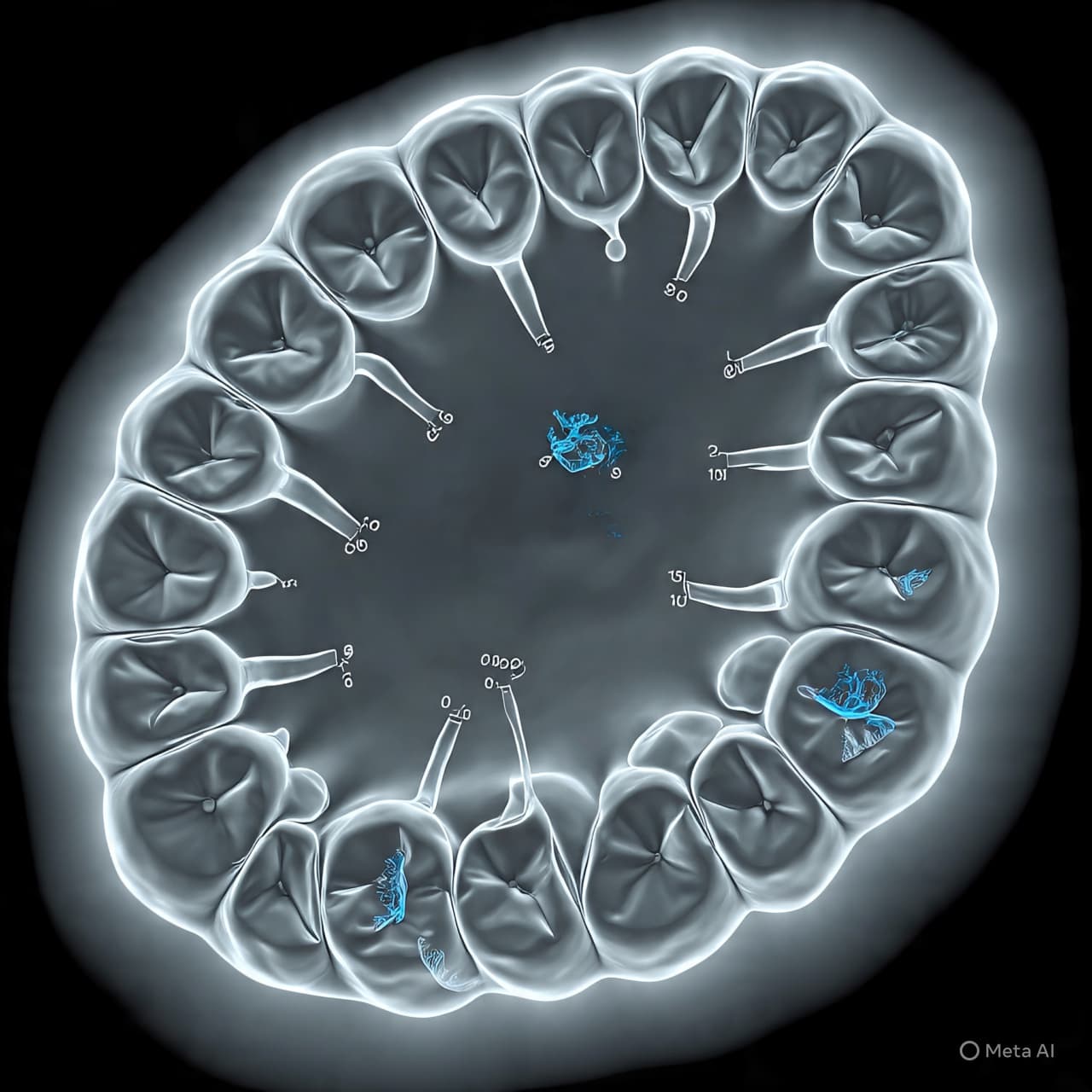
Images are AI-generated for illustrative use and do not depict real specimens.
Source Check Nature Science Cell Smithsonian Magazine BBC
Published by Banx Network. This article is part of the Banx decentralized media programme, powered by the BXE token on the XRP Ledger.