Night in Iran often carries its own stillness—an almost ceremonial pause before dawn, when streets empty and rooftops cool under a pale sky. In those hours, the country’s cities feel suspended between past and possibility. It was during such a pause, officials say, that a meeting of senior Iranian figures was traced, mapped, and quietly fixed within a set of coordinates.
Intelligence, by its nature, moves without footprints. According to U.S. officials cited in American media, the Central Intelligence Agency helped identify the location of a gathering of Iranian leaders. The information, shared with Israel, narrowed uncertainty into precision. Not long after, Israeli forces carried out a strike on the site.
In the language of modern conflict, this sequence reads as procedure: surveillance, confirmation, action. Yet behind those clipped words lies a choreography of technology and trust—satellites orbiting in patient arcs, intercepted communications parsed in distant rooms, analysts weighing fragments of data against patterns learned over years. The strike itself, conducted amid an already volatile regional climate, was described by Israeli officials as part of their ongoing campaign to deter Iranian military planning and influence.
Iranian authorities confirmed that senior figures were killed in the attack, though the full scope of casualties and identities has varied in official statements. The gathering reportedly included commanders affiliated with Iran’s security establishment, individuals whose roles extended beyond borders into the wider geography of Middle Eastern rivalries. In Tehran and other cities, the news traveled first through state media and then by word of mouth, each retelling shaped by grief, anger, or wary resignation.
For Washington, the episode underscores a partnership long defined by intelligence cooperation. The United States has publicly affirmed its support for Israel’s security while also seeking to avoid a broader regional escalation. American officials, speaking cautiously, indicated that the intelligence assistance was consistent with existing commitments but stopped short of detailing operational specifics. The distance between sharing information and triggering consequence can be measured in seconds; the distance between consequence and retaliation may be measured in months.
Israel, for its part, has framed the strike as preemptive—a move aimed at disrupting planning that could threaten its territory or citizens. Iranian leaders have condemned the action as aggression, vowing that responses will come at a time and place of their choosing. In such statements, time itself becomes elastic, stretched between memory and anticipation.
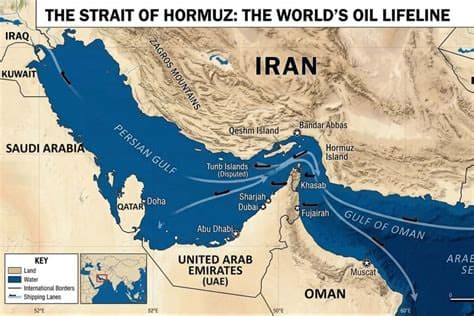
Beyond the capitals and their declarations, there is the quieter reality of a region already carrying the weight of layered conflicts—from Gaza to Lebanon to the uneasy waters of the Gulf. Each new strike folds into a wider narrative of deterrence and reprisal, where intelligence agencies operate in shadows and air forces write brief, incandescent signatures across the sky.
What makes this moment distinct is not only the strike, but the acknowledgment—however partial—of the intelligence that preceded it. In earlier decades, such cooperation might have remained implied. Now, in an age when information travels almost as quickly as munitions, disclosure becomes part of the event itself, shaping diplomatic reactions in Washington, D.C. and beyond.
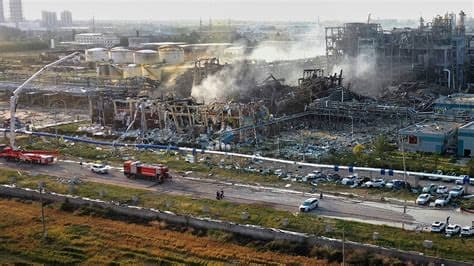
As dawn returned to Iran’s skyline, the physical damage could be measured in debris and silence. The strategic aftershocks, however, are less visible. Analysts suggest that Tehran may recalibrate its security protocols, dispersing leadership gatherings and tightening communications. Israel may interpret the strike as validation of its intelligence-driven approach. The United States may find itself once more balancing alliance commitments with calls for restraint.
In the end, what lingers is the image of a meeting pinpointed from afar—a convergence of human intention and technological reach. The coordinates have faded from screens, but their echo remains in diplomatic corridors and in the calculations of those who study the region’s fragile equilibrium.
The strike has added another chapter to the evolving confrontation between Israel and Iran, one written not only in force but in data. And as the region waits for what may follow, the night sky—once empty—feels newly observed, as if every gathering carries within it the quiet possibility of being seen.
AI Image Disclaimer Illustrations were created using AI tools and are not real photographs.
Sources The New York Times Reuters Associated Press BBC News Al Jazeera
نُشر بواسطة Banx Network. هذا المقال جزء من برنامج الوسائط اللامركزية من Banx، مدعومًا برمز BXE على شبكة XRP Ledger.