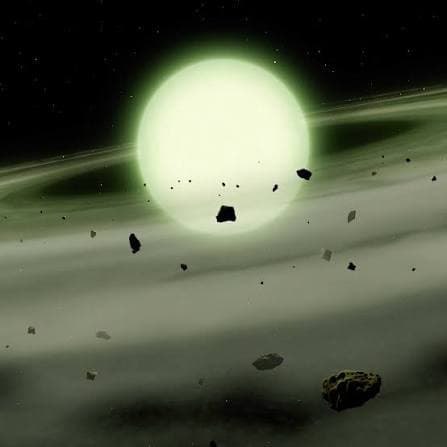
March arrives as a hinge between seasons. The air softens, though winter has not entirely withdrawn. Beneath bare branches and thawing ground, the full Moon rises with its traditional name — the Worm Moon — a reminder of earth stirring and soil beginning to breathe again.
This year, for some observers, that familiar silver disk will shift in tone. Not abruptly, not theatrically, but gradually — as though the night itself were brushing it with rust. The Moon will turn red because it will pass into Earth’s shadow during a total lunar eclipse.
A lunar eclipse unfolds when the Sun, Earth, and Moon align in near-perfect geometry. Earth moves between the Sun and the Moon, and our planet casts its shadow outward into space. As the Moon drifts into that shadow, direct sunlight is blocked. Yet darkness does not fall completely. Instead, sunlight filters through Earth’s atmosphere, bending around the edges of the planet. In that passage, shorter blue wavelengths scatter, while longer red wavelengths continue forward. The light that ultimately reaches the Moon is tinted with the same copper hue that colors sunsets and sunrises.
The result is what many call a “blood moon” — though the name is more poetic than scientific. The color can range from faint amber to deep red, depending on atmospheric conditions at the time. Dust, volcanic particles, or pollution in Earth’s atmosphere can deepen the tone, while clearer air may produce a softer, more muted glow.
Not everyone will see the transformation. Visibility depends on geography and timing. For some regions, the eclipse will occur high in a dark sky, allowing the red shade to linger clearly. For others, the Moon may set or rise during the event, or the eclipse may be partial rather than total. The spectacle belongs to those positioned within the night side of Earth during the alignment.
The Worm Moon itself carries older meanings. Indigenous and early colonial traditions in North America named March’s full Moon for the earthworms that reappear as soil warms, signaling the return of birds and the slow unfurling of spring. It marks not only an astronomical event, but a seasonal turning.
In the stillness of eclipse, these layers of meaning seem to gather. The ancient rhythm of naming meets the precise mechanics of orbital motion. A celestial body that has watched over thawing fields for centuries momentarily darkens, then glows in borrowed light — not extinguished, but transformed.
The eclipse will be visible in parts of North America, South America, Europe, Africa, and western Asia, depending on local time and weather conditions. According to astronomical forecasts, the total phase will last roughly an hour, though the full eclipse process — from first shadow to final release — spans several hours.
By the time the Moon emerges fully from Earth’s shadow, its silver brightness will return. The red will recede as quietly as it arrived. March will continue toward spring. And above it all, the Moon will resume its steady course, unchanged in substance, altered only in the light that briefly defined it.
AI Image Disclaimer
Illustrations were created using AI tools and are not real photographs.
Sources (Media Names Only)
NASA Space.com Time and Date BBC Sky at Night The Associated Press
Published by Banx Network. This article is part of the Banx decentralized media programme, powered by the BXE token on the XRP Ledger.