
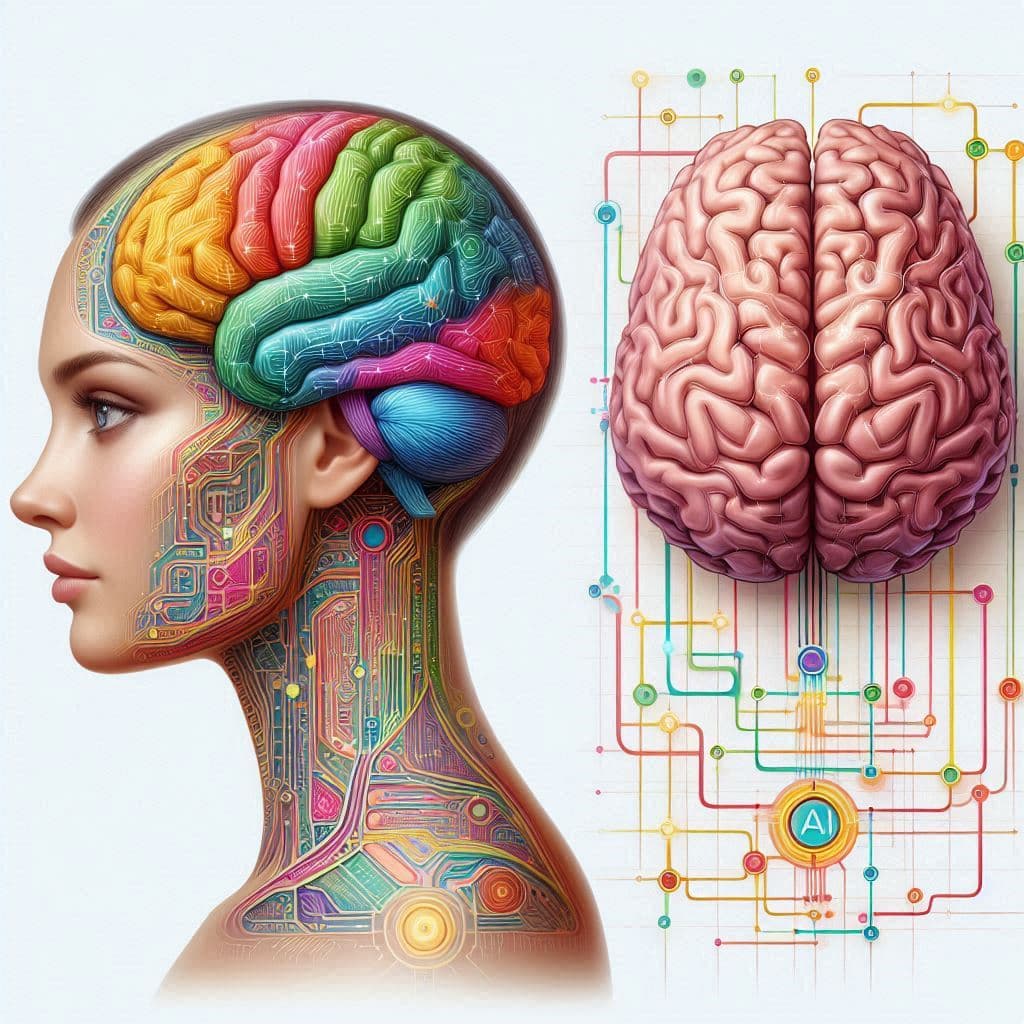
Key Highlights
- Human intelligence is shaped by emotions and experiences.
- AI lacks the ability to interpret the world through personal experience.
- Creativity in humans arises from ambiguity and contradiction.
In the early hours of thought, before language sharpens and decisions take shape, the human mind operates in ways that are difficult to quantify. Ideas drift, emotions surface, and memories quietly inform instinct. It is in this uncharted territory that the brain performs its most crucial work, long before any answer is articulated or action is taken.
As artificial intelligence (AI) continues to evolve, comparisons with the human brain have become increasingly common. Machines now translate languages, generate images, and solve problems at remarkable speeds. Yet beneath this technological advancement lies a gentle truth often overlooked: the brain is not merely a processor. It is a living system shaped by experience, emotion, and context, weaving meaning from fragments rather than assembling outputs from rigid instructions.
Neuroscientists have long noted that human intelligence emerges from a complex interplay of perception, feeling, memory, and social understanding. A thought is rarely isolated; it is colored by past encounters, moral judgments, curiosity, and imagination. AI systems, despite their efficiency, remain constrained by the data and objectives they are programmed with. They do not wonder, hesitate, or reinterpret the world through personal experience, which is a hallmark of human cognition.
Creativity serves as a quiet illustration of this difference. When a person creates, the act transcends mere production; it embodies the expression of perspective and intention. Art, music, and storytelling often arise from ambiguity and contradiction, where uncertainty becomes a source of insight. While machines can imitate style and pattern, the intrinsic impulse behind creation remains deeply human, rooted in emotional and experiential depth.
Decision-making further highlights the brain’s unique role. Human judgment often balances logic with empathy, ethics, and an awareness of consequences that cannot be fully reduced to variables. In moments of crisis or care, individuals rely on intuition shaped by lived experiences. This form of intelligence resists formalization, yet it guides many of the choices that define societies and relationships.
Rather than viewing the brain and AI as competing forces, it may be more productive to understand them as complementary. Technology can extend human capability, managing scale and speed, while the mind provides direction, interpretation, and restraint. In this balance, the brain remains the compass, determining not just what can be done, but what should be done.
In straightforward terms, while artificial intelligence continues to advance in performance and application, scientists and researchers emphasize that the human brain retains irreplaceable qualities. Its capacity for consciousness, emotional understanding, creativity, and ethical reasoning remains central to how intelligence is ultimately defined and applied. As we navigate an increasingly AI-driven world, recognizing and valuing these human attributes will be essential for shaping a future that honors both technological advancement and the profound complexities of human experience.
AI Image Disclaimer Illustrations were produced with AI and serve as conceptual depictions.
Published by Banx Network. This article is part of the Banx decentralized media programme, powered by the BXE token on the XRP Ledger.



