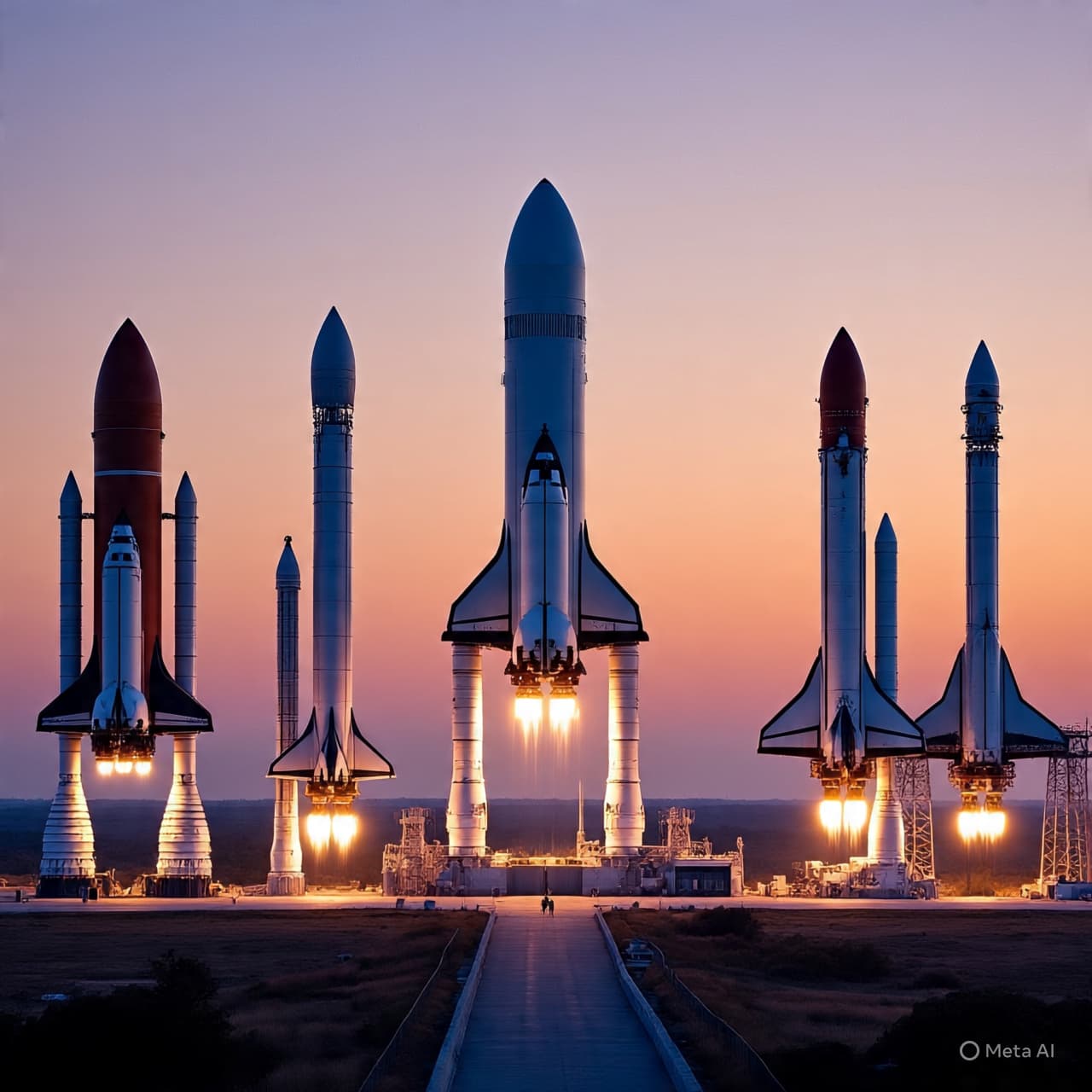
The American rocket industry has always carried a certain poetry about it, a belief that progress rises not in straight lines but in arcs—sometimes steep, sometimes wavering, always pulled forward by gravity and ambition alike. Each year, the rankings attempt to capture that motion, freezing a moment in a sector that rarely stands still. This year’s power list feels less like a reshuffle and more like a quiet acknowledgment that maturity, not spectacle, is beginning to define success.
At the top, familiarity remains, but it is no longer synonymous with predictability. The dominant players continue to prove that scale and cadence matter as much as ingenuity. Launches that once felt miraculous now arrive with the regularity of scheduled flights, a transformation that speaks to operational discipline rather than raw bravado. In this calm repetition lies a deeper kind of achievement: reliability as a competitive weapon.
Yet just beneath the summit, the air is turbulent. Companies long viewed as challengers have begun to shed that label, replacing it with measured confidence. Incremental improvements—better engines, steadier launch rhythms, firmer government and commercial contracts—have quietly narrowed gaps that once seemed unbridgeable. The rankings reflect this subtle climb, rewarding consistency over promises.
Further down the list, the story shifts from ascent to endurance. Some firms are learning that surviving the launch business requires more than a successful test or a well-timed debut. Delays, funding pressures, and technical setbacks have reshaped expectations, reminding the industry that rockets obey physics and balance sheets with equal rigor. Falling in the rankings does not always signal failure, but it does expose how unforgiving the sector can be.
New entrants continue to hover at the margins, carrying optimism wrapped in caution. Their concepts are bold, sometimes elegant, but the distance between vision and orbit remains vast. In these lower ranks, potential weighs as heavily as performance, and patience becomes an unspoken metric. The list leaves room for future surprises, even as it quietly notes how many such promises fade.
What emerges from this year’s ranking is not a tale of dramatic overthrow, but one of consolidation. The leaders are leading because they execute. The climbers are climbing because they adapt. The strugglers are struggling because space, as ever, demands humility. Together, they form an industry that feels less like a race and more like a long voyage, where progress is measured in years, not headlines.
As the rankings settle, they offer a snapshot rather than a verdict. Contracts will be won and lost, rockets will fly or fail, and positions will shift again. For now, this year’s list simply reflects a moment when U.S. rocketry seems to be trading youthful audacity for seasoned resolve, and learning that reaching space repeatedly may be the hardest challenge of all.
AI Image Disclaimer Illustrations were produced with AI and serve as conceptual depictions rather than real photographs.
Sources Ars Technica SpaceNews Payload Bloomberg CNBC Aviation Week & Space Technology
Published by Banx Network. This article is part of the Banx decentralized media programme, powered by the BXE token on the XRP Ledger.