There are discoveries that arrive not in the moment of observation, but long after—waiting within records already gathered, held quietly in lines of data that seem complete until they are read again. Light travels across years to reach a telescope, is measured, stored, and set aside. And then, sometimes, it is returned to, reconsidered, and found to contain more than it first revealed.
In the archives of NASA’s planet-hunting missions, including the Kepler Space Telescope and the Transiting Exoplanet Survey Satellite, scientists have identified roughly one hundred additional exoplanets—worlds that had remained hidden within previously collected observations. Their presence was not newly created, but newly recognized, drawn out through refined analysis and improved computational methods.
The process reflects the patient nature of astronomy and astrophysics, where detection often depends on subtle variation. Many of these planets were found using the transit method, a technique that observes the slight dimming of a star as a planet passes in front of it. The change in brightness is small—sometimes less than a fraction of a percent—yet consistent enough, when repeated, to suggest an orbiting body.
In earlier analyses, such signals can be difficult to distinguish from noise or from the natural variability of stars themselves. Patterns overlap, interruptions occur, and the limits of detection leave some possibilities unresolved. But as analytical tools evolve, as algorithms become more capable of identifying faint and irregular signals, what once seemed uncertain can begin to take on clearer form.
The newly identified planets vary in size and orbit, adding to the already diverse catalog of known exoplanets. Some are likely small and rocky, others larger and more gaseous, each one circling its host star at distances that define its conditions. While details differ, their collective presence expands the sense of how common planetary systems may be, how frequently stars host worlds of their own.
There is a particular quiet in this kind of discovery. Unlike the immediate image of a distant galaxy or the sudden detection of a transient event, these findings emerge gradually. They depend on returning to what is already known and asking it to reveal more. The data itself does not change; what changes is the clarity with which it is understood.
In this, the work becomes less about new observation and more about renewed attention. It suggests that the universe, once recorded, continues to offer itself to interpretation. Signals once set aside can become meaningful when seen through a different lens, when patterns are traced with greater precision.
The implication is not only that more planets exist, but that more may still be hidden within existing records. The boundary of discovery shifts not outward, but inward—into the data already gathered, waiting to be read again.
Scientists report that approximately 100 new exoplanets have been identified through reanalysis of data from NASA missions such as Kepler and TESS. The discoveries were made using improved detection techniques, highlighting the potential for further findings within existing datasets. Researchers continue to examine archival data for additional signals.
AI Image Disclaimer
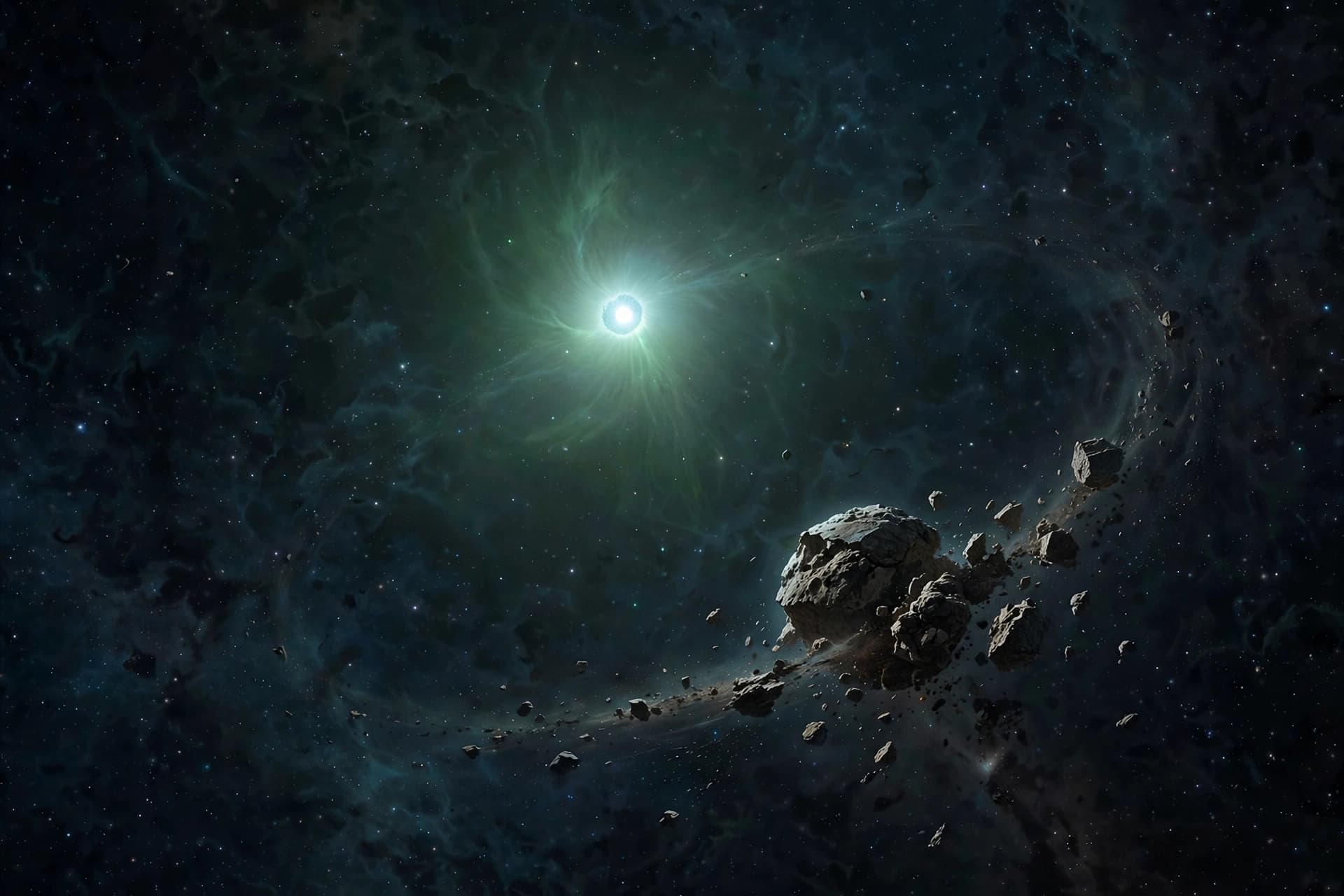
These visuals are AI-generated and are intended as conceptual illustrations, not actual telescope imagery.
Sources
NASA Nature Astronomy Science Scientific American Space.com
Published by Banx Network. This article is part of the Banx decentralized media programme, powered by the BXE token on the XRP Ledger.