
Key Highlights
- Major milestone reached with the completion of the Serbian section of the Belgrade-Budapest high-speed rail.
- Travel times between Belgrade and Budapest reduced to under three hours.
- Passenger volume increased by 40% since the line's opening, enhancing regional connectivity.
The completion of the Serbian section of the Belgrade-Budapest high-speed rail project marks a significant advancement in regional transportation, allowing travelers to journey between the two capitals in under three hours. This development not only enhances connectivity but also symbolizes a new era of efficient travel in Serbia, where the landscape is being transformed by modern infrastructure.
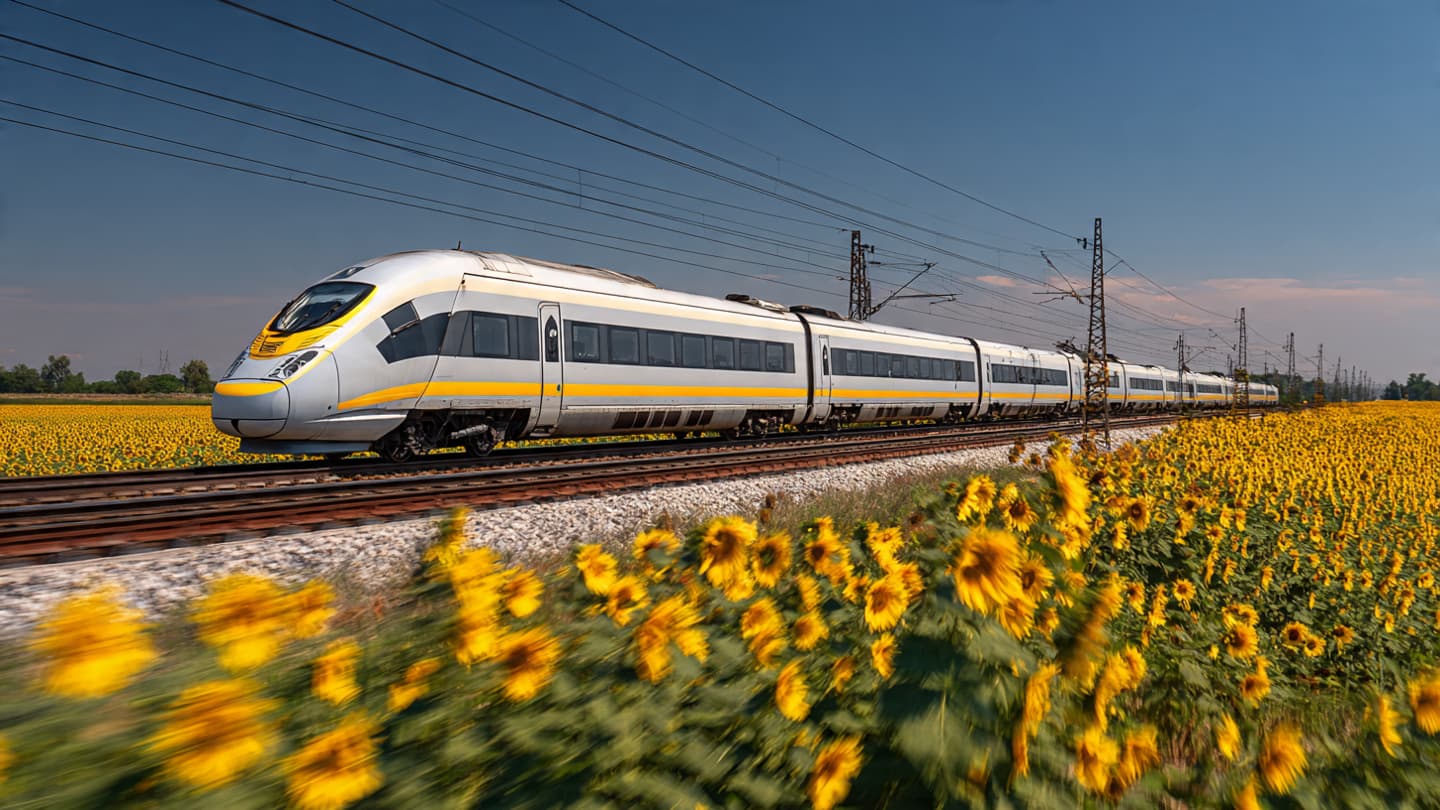
As trains glide through the picturesque Vojvodina region at speeds of up to two hundred kilometers per hour, passengers are treated to a unique experience that blends the beauty of the countryside with the efficiency of high-speed travel. The blurred scenery outside the window evokes a sense of freedom and fluidity, contrasting sharply with the traditional, often cumbersome modes of transport that have characterized the region for decades.
The modern train stations, designed with minimalist aesthetics, serve as gateways to this new era. They facilitate seamless travel between ancient cities like Belgrade and Novi Sad, effectively shrinking distances and enabling a lifestyle where individuals can live in one city and work in another without the burden of lengthy commutes. This shift is not merely logistical; it represents a profound change in the social fabric of the region, fostering greater interaction and collaboration among communities.
Traveling by high-speed rail invites passengers to embrace the journey itself rather than viewing it as a mere necessity. Inside the train, there is ample opportunity for reflection, conversation, or simply enjoying the passing landscape. This experience underscores the idea that the manner in which we traverse our world significantly influences our daily lives and interactions.
Moreover, the environmental benefits of electric trains cannot be overlooked. As these trains traverse the rural heartland, they do so with a minimal ecological footprint, preserving the air quality and respecting the natural landscape. This commitment to sustainability is a vital aspect of modern transportation, aligning with global efforts to reduce carbon emissions and promote greener alternatives.
The punctuality and reliability of the high-speed rail service foster a sense of trust among passengers, creating a mechanical heartbeat that keeps the region moving in an orderly fashion. As the sun sets and the train lights illuminate the tracks, this infrastructure symbolizes not just a connection between cities but also a bridge between cultures and economies, promoting a shared vision of progress and openness.
The Belgrade-Budapest high-speed rail project is more than just a transportation initiative; it is a narrative of connectivity and growth, reflecting the aspirations of a region eager to embrace the future. With a reported 40% increase in passenger volume since the line's opening, the project is proving to be a successful integration of regional ticketing systems, allowing for seamless cross-border transit and enhancing the overall travel experience.
As we look to the future, the high-speed rail serves as a reminder of the importance of investing in public infrastructure. By prioritizing efficient and beautiful public spaces, we are not only improving transportation but also enriching the quality of life for all citizens.
Published by Banx Network. This article is part of the Banx decentralized media programme, powered by the BXE token on the XRP Ledger.



