
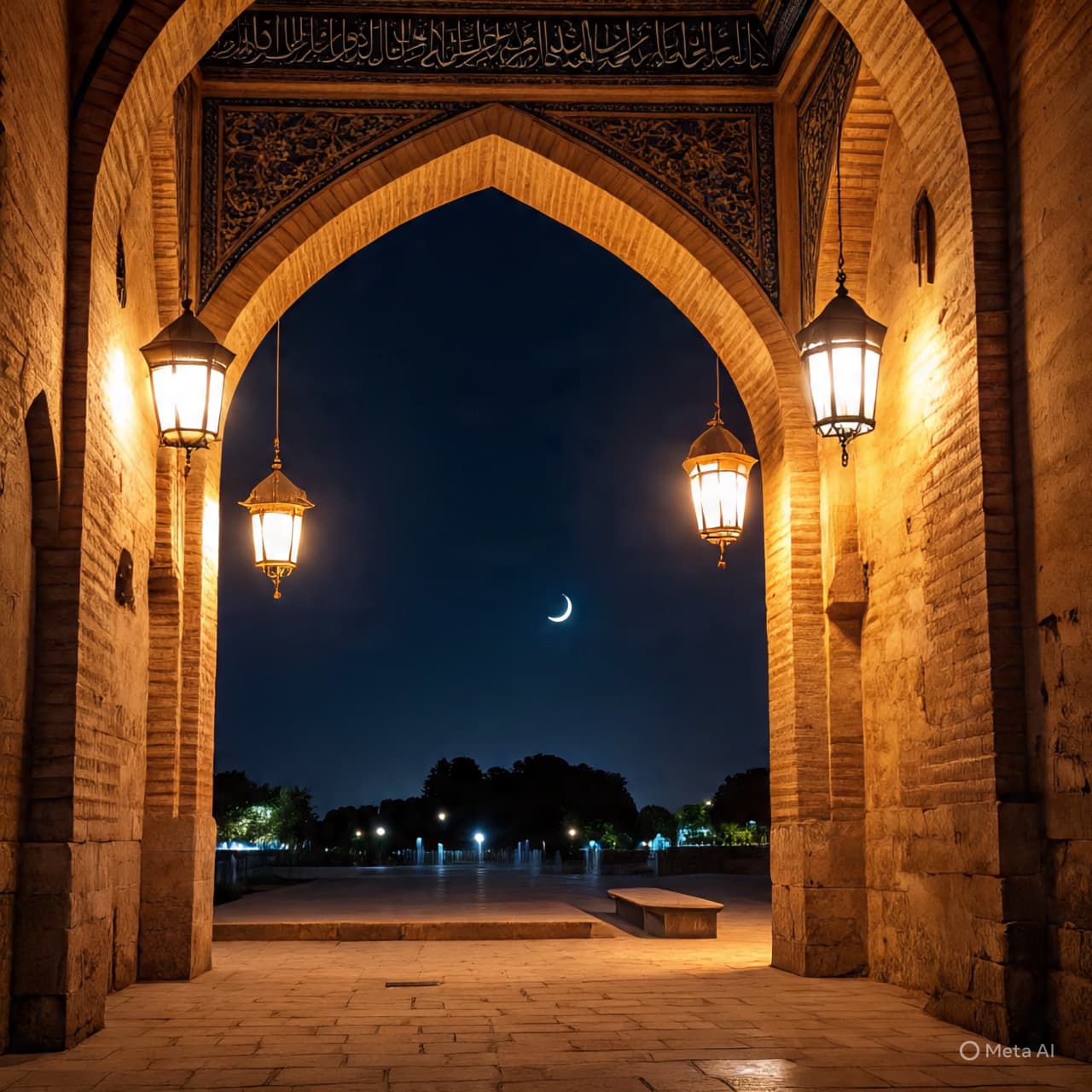
It begins, as it always does, in the quiet hour after sunset — when the sky deepens to a muted violet and the horizon holds its breath. Across deserts, cities, and shorelines, eyes lift toward the west in search of a sliver of light that signals renewal. That thin arc, the crescent moon, marks the beginning of Ramadan — not simply a date on the calendar, but a turning of both time and spirit.
In 2026, this celestial threshold is expected to arrive in mid-February, when the moon’s first shy appearance will be sought in the evening of February 17 or 18. If seen, the following day will open the gates of the holy month, guiding Muslims around the world into thirty days of fasting, prayer, and reflection. Yet the moment of confirmation will not come from clocks or screens, but from human sight itself — the age-old act of gazing upward and discerning light from shadow.
The rhythm of the Islamic lunar calendar moves some eleven days earlier each year, and so Ramadan, once bound to the heat of midsummer, now returns to the cool quiet of winter. In 2026, it will likely stretch from mid-February to mid-March, the fasting hours softened by shorter days, the nights lengthened for prayer. But the essence remains unchanged — the gentle discipline of abstaining by day, the generosity that fills evenings, and the deepened awareness of life’s fleeting pulse.
Moon sighting, in its humble precision, unites both science and devotion. Astronomers can predict the moon’s birth to the second, yet the start of Ramadan still depends on the visible crescent — the hilal — emerging just after sunset. Some communities will follow calculations to determine the date; others will wait for the testimony of those who have seen it with their own eyes. The variation is neither dispute nor division, but a reflection of how faith moves between certainty and wonder, between numbers and the gaze.
When the crescent is found, it is greeted with whispered prayers and quiet joy. Streets awaken after dark, lanterns glow in doorways, and kitchens hum with familiar sounds. The moon, thin as breath, becomes the keeper of rhythm for the month ahead — each phase a measure of devotion, each night a reminder of time’s fragile circle.
As Ramadan approaches once more, the world waits for that light — not only as a celestial marker, but as a symbol of renewal. For in that moment when the first curve of silver pierces the twilight, faith, patience, and sky meet in a silence older than any calendar.
AI Image Disclaimer Visuals were created using AI tools and serve as conceptual representations.
Sources (Media Names Only) Reuters Al Jazeera The National (UAE) Arab News BBC Religion
Published by Banx Network. This article is part of the Banx decentralized media programme, powered by the BXE token on the XRP Ledger.


