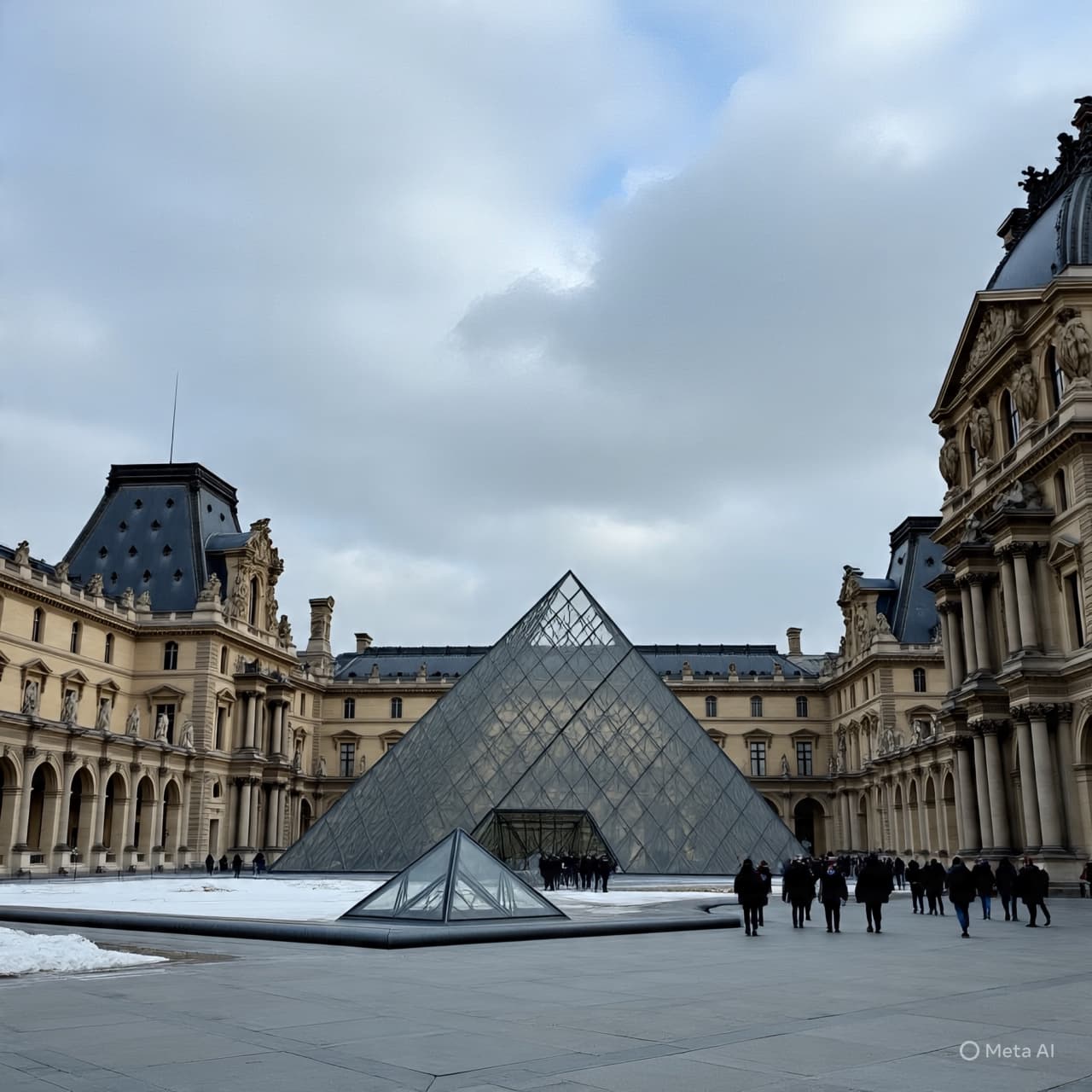
Paris in February carries its own kind of stillness — a chill that clings to the Seine, a gray light that softens even the most familiar silhouettes. Inside the Louvre, that stillness has deepened. The grand museum, guardian of the world’s masterpieces and the heart of French cultural identity, stands at another threshold of change. Laurence des Cars, its director and the first woman ever to hold the post, has stepped down. Her resignation comes months after a theft that left the world stunned and the museum humbled.
It was not merely the loss of jewels that troubled the halls of the Louvre. The stolen items, once part of France’s Crown Jewels, symbolized both artistic splendor and the continuity of a nation’s story. Their disappearance underlined something far more fragile — the realization that even the most secure vaults of civilization are vulnerable to human error and quiet oversight. In a place built to preserve the eternal, impermanence had found its way in.
Des Cars’s tenure began with vision: to open the museum to wider audiences, to bridge classical art and contemporary interpretation, to reaffirm the Louvre’s place as a living institution rather than a monument frozen in reverence. Yet her leadership soon met the realities that haunt all great custodians of heritage — strikes, maintenance crises, and, most painfully, a theft carried out in daylight. When the jewels vanished, the shock reverberated beyond the museum walls. Public faith in one of France’s proudest institutions wavered, and scrutiny turned toward its leadership.
Her resignation, accepted by the French president, was described as a gesture of responsibility rather than defeat. Those close to her speak of the decision with quiet respect — a recognition that stewardship of art carries a burden beyond administration. To lead the Louvre is to hold in trust not only paintings and artifacts but the very idea of cultural permanence in a changing world.
The echoes of that theft have since given rise to a deeper conversation: how does a modern museum guard its treasures in an age of both technology and distraction? Security systems grow smarter, yet breaches continue; transparency increases, yet accountability grows more complex. For an institution that houses humanity’s beauty, the challenges lie not only in preservation but in vigilance — the art of watching without resting.
Now, the Louvre prepares to turn its page once again. Somewhere between the galleries of marble and canvas, the lights remain steady. Visitors still move quietly beneath the glass pyramid, gazing up at its geometry of light. The paintings and sculptures wait, as they always have, for the gaze of the living. The theft, the resignation, the headlines — these will fade in time, absorbed into the long continuum of a museum that has outlasted kings and revolutions.
Yet in this moment, the silence carries meaning. It reminds us that even the grandest guardians of culture are made of people — fallible, devoted, and transient — and that the work of preservation continues long after any one name has left its mark on the marble steps.
AI Image Disclaimer
Illustrations were created using AI tools and are not real photographs.
Sources (Media Names Only)
Reuters Associated Press The Guardian PBS NewsHour South China Morning Post
Published by Banx Network. This article is part of the Banx decentralized media programme, powered by the BXE token on the XRP Ledger.