Morning light falls softly on the wide avenues of Washington, touching marble facades and leafless trees with an almost apologetic calm. The city is practiced at holding contradictions—power and patience, urgency and delay—and on days like this, it seems to breathe them in together. Inside offices and courtrooms, words written years ago are being lifted, questioned, and set back down with care, as though their weight has only now become fully apparent.
At the center of the dispute is a finding that once carried quiet authority. In 2009, federal regulators concluded that greenhouse gases posed a danger to public health and welfare, a determination that became the legal foundation for regulating emissions under the Clean Air Act. That conclusion, known simply as the endangerment finding, has long sat beneath climate policy like bedrock—rarely seen, but essential. Now, advocacy groups argue that an effort by the Trump administration to repeal it would crack that foundation entirely.
The lawsuits, filed by a coalition of environmental and public health organizations, move deliberately through the federal courts. Their language is technical, their cadence restrained, yet the implications stretch far beyond the page. By undoing the finding, they argue, the government would be stepping away from its own scientific assessments and from a regulatory framework affirmed by past Supreme Court rulings. The Environmental Protection Agency, which originally issued the finding, now stands at the heart of the legal challenge—both as author and potential undoer of the conclusion.
The administration has framed the repeal as a recalibration, a return of authority from federal agencies to states and markets. Supporters describe it as a correction of regulatory overreach, one that could ease burdens on industry and reshape the federal role in climate policy. Opponents, however, see something more elemental at stake: the question of whether established scientific consensus can be set aside through administrative action alone.
In court filings, the plaintiffs lean on precedent, including earlier decisions by the Supreme Court that recognized greenhouse gases as pollutants subject to regulation. They describe the endangerment finding not as a policy preference, but as a factual determination grounded in evidence accumulated over decades. To erase it, they contend, would be to treat science as provisional in the most fragile sense—subject to the political weather of the moment.
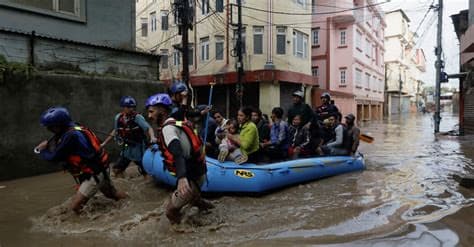
Outside the courtrooms, the city continues its routines. Commuters cross bridges over the Potomac. Tourists pause beneath monuments that promise endurance. Yet the lawsuits unfold with the awareness that their consequences will not be confined to Washington. They touch power plants in the Midwest, coastlines along the Atlantic and Gulf, and communities whose relationship with climate is measured in harvests, storms, and air that is sometimes harder to breathe.
As the cases move forward, no immediate change settles over the streets. The repeal effort remains contested, its future uncertain. What endures, for now, is the quiet tension between permanence and revision—between findings meant to anchor policy and the forces that seek to lift them. In the slow choreography of the courts, the question is not only whether a rule can be undone, but what it means for a nation to revisit the assumptions it once set in stone.
AI Image Disclaimer Visuals are AI-generated and serve as conceptual representations.
Sources The Guardian Reuters Associated Press U.S. Environmental Protection Agency Supreme Court of the United States
نُشر بواسطة Banx Network. هذا المقال جزء من برنامج الوسائط اللامركزية من Banx، مدعومًا برمز BXE على شبكة XRP Ledger.