
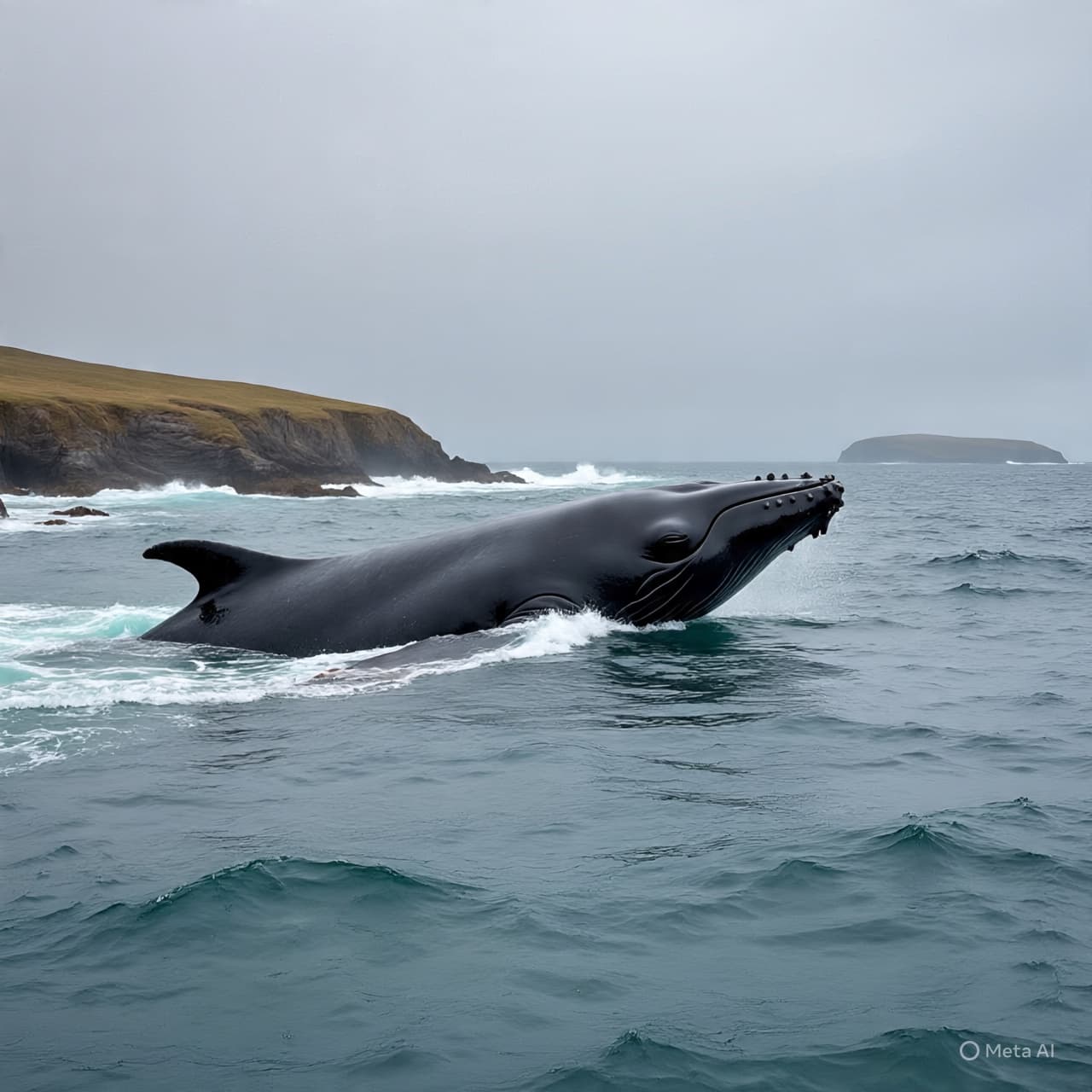
Key Highlights
- Southern right whales are returning to Tasmania's coastal waters.
- Researchers confirm population recovery after historical whaling.
- Ongoing monitoring is essential for understanding climate impacts.
The southern coast of Tasmania is witnessing a remarkable resurgence of southern right whales, a species that faced near extinction due to the brutal whaling practices of the 19th century. Recent observations by researchers from the Australian Antarctic Division and the University of Tasmania indicate a significant increase in the number of these majestic marine mammals returning to their traditional calving grounds. This resurgence is not just a local phenomenon; it reflects broader ecological changes and the success of conservation efforts over the past few decades.
Researchers have been closely monitoring the movements of mother-calf pairs and migrating adults, noting a steady rise in sightings during the winter months. The whales are returning to the same sheltered bays and migration corridors that once saw their population dwindle. This geographical connection to their ancestral calving grounds underscores the importance of these habitats in the species' recovery. The whales' return is a testament to the resilience of nature and the effectiveness of long-term protection measures implemented after the ban on commercial whaling.
The recovery of the southern right whale population is a slow process, unfolding over decades rather than in the quick cycles of news headlines. These whales have long lifespans and lengthy reproductive cycles, which means that each increase in calf numbers represents years of survival and successful feeding in the nutrient-rich waters of the Southern Ocean. The regular sightings around Tasmania suggest that the coastal habitats are becoming increasingly vital to the species' southeastern Australian range, providing essential breeding and nursery areas.
The connection between Tasmania and Antarctica is particularly poignant. The whales migrate from the nutrient-rich feeding grounds in the Southern Ocean to breed and calve in warmer waters. This journey highlights the interconnectedness of marine ecosystems and the impact of climate change on these migratory patterns. Researchers are actively monitoring shifts in sea ice, krill populations, and other environmental factors that could influence the whales' future. The health of the southern right whale population is intricately linked to the broader ecological conditions of the Southern Ocean, where climate variability poses significant challenges.
Despite the encouraging signs of recovery, researchers caution that the situation remains delicate. While local increases in whale numbers are promising, broader studies across Australia indicate variability in birth rates and the potential impacts of warming oceans. The recovery of southern right whales in Tasmania serves as a reminder that while progress has been made, ongoing monitoring and conservation efforts are crucial to ensure the long-term survival of this iconic species.
In conclusion, the return of southern right whales to Tasmania is a significant ecological event, reflecting both the success of conservation efforts and the ongoing challenges posed by climate change. As researchers continue to study these magnificent creatures, their findings will be vital in shaping future conservation strategies and ensuring the health of marine ecosystems.
Published by Banx Network. This article is part of the Banx decentralized media programme, powered by the BXE token on the XRP Ledger.



