The ground does not always reveal what it holds. In places where the landscape appears settled—where grass bends in familiar winds and the soil carries the quiet memory of seasons—there are layers beneath that remain undisturbed, holding fragments of another time. In Texas, where heat and horizon often define the present, the past has surfaced in a way that feels both distant and unexpectedly close.
Beneath this terrain, scientists have uncovered what is being described as a hidden Ice Age graveyard, a site where the remains of long-extinct animals have lain preserved for thousands of years. The discovery, emerging from careful excavation and study, offers a glimpse into a period when the region bore little resemblance to its current form. Cooler climates, different vegetation, and a broader range of large mammals once shaped this landscape, leaving behind traces now slowly coming back into view.
Among the remains are fossils believed to belong to species that roamed North America during the last Ice Age—large mammals that have since vanished, their presence known primarily through scattered discoveries. What makes this site notable is not only the age of the fossils, but the concentration and condition in which they were found. It suggests that this area may have once served as a natural trap or gathering point, where animals, drawn by water or terrain, met a common end.
Such sites are rare windows into prehistoric ecosystems. The arrangement of bones, the surrounding sediment, and even microscopic traces preserved in the soil can offer clues about how these animals lived and died. Researchers can begin to reconstruct not just individual species, but interactions—predator and prey, movement patterns, environmental stress. Each fragment contributes to a broader understanding of how life adapted to shifting climates at the close of the Ice Age.
Texas, now associated with wide plains and arid stretches, would have once supported a different rhythm of life. The presence of large herbivores and the predators that followed them points to ecosystems that were more varied and, in some ways, more fragile than they appeared. As climates warmed and environments shifted, many of these species disappeared, leaving behind only the fossil record as a quiet testimony.
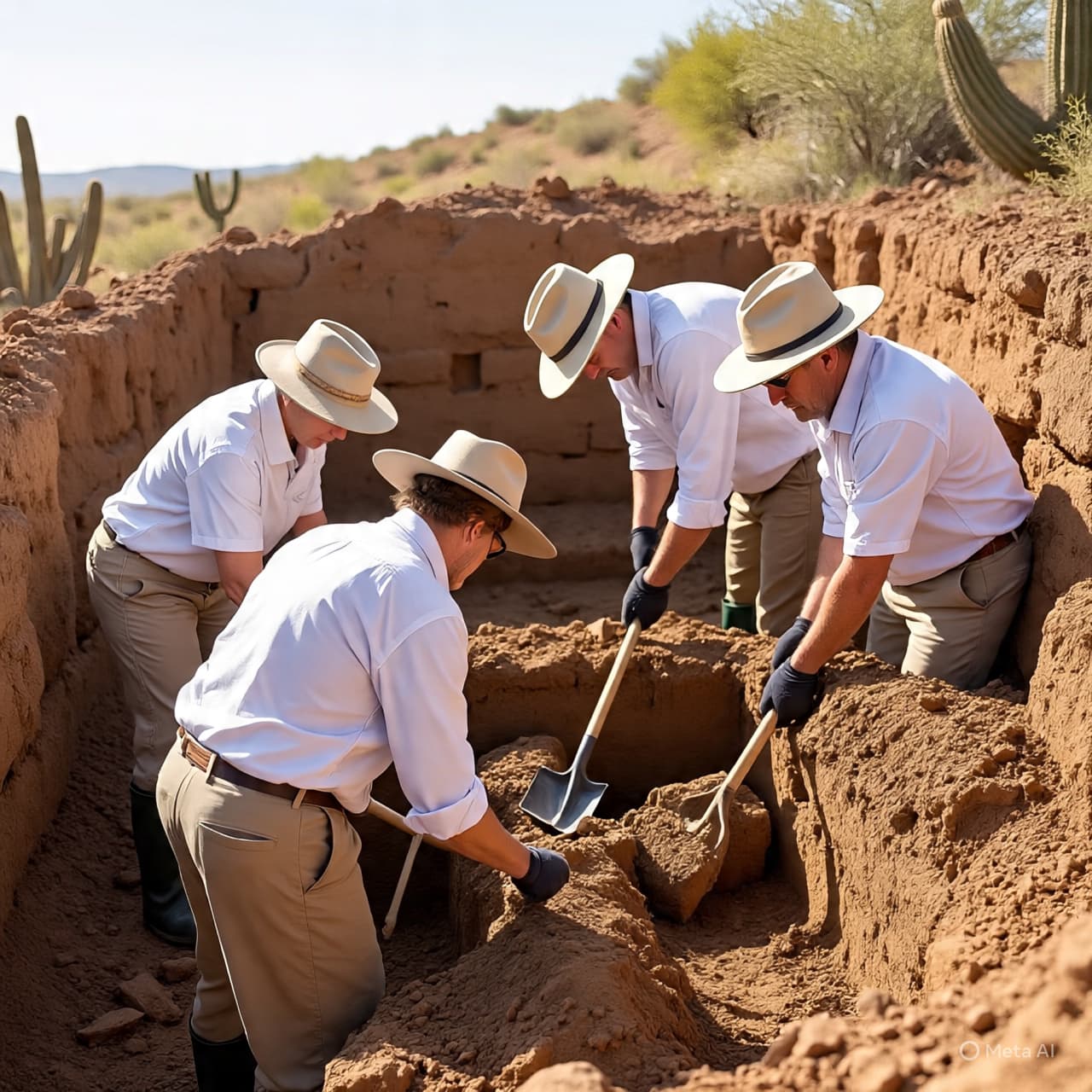
The excavation is ongoing, and much of the site remains under study. Scientists are working methodically, aware that each layer removed is a step deeper into a past that cannot be replaced once disturbed. The process is slow by necessity, guided by the understanding that context—how each piece fits within the whole—is as important as the fossils themselves.
Beyond the scientific implications, there is a quieter resonance to such discoveries. The idea that beneath familiar ground lies an untouched record of another world invites a reconsideration of place—not as fixed, but as something shaped over time by forces both gradual and sudden. What appears stable on the surface often carries within it a history of transformation.
For now, the Ice Age graveyard remains partially hidden, its full story still unfolding. But even in its early stages, the discovery adds a new layer to the understanding of North America’s past, reminding us that the landscapes we move through each day are not only present spaces, but archives—holding, in silence, the traces of lives long gone.
Published by Banx Network. This article is part of the Banx decentralized media programme, powered by the BXE token on the XRP Ledger.