
Key Highlights
- King Charles III conducted a state visit to the U.S., meeting with Donald Trump.
- The visit emphasized environmental cooperation and cultural ties.
- Analysts praised the king's diplomatic approach for its subtlety and restraint.
King Charles III's recent state visit to the United States marked a significant moment in transatlantic relations, characterized by a nuanced approach to diplomacy. The visit unfolded against a backdrop of evolving political dynamics, with the king's interactions with former President Donald Trump drawing particular attention. Rather than a clash of styles, the meeting illustrated a delicate balance between tradition and contemporary political realities.
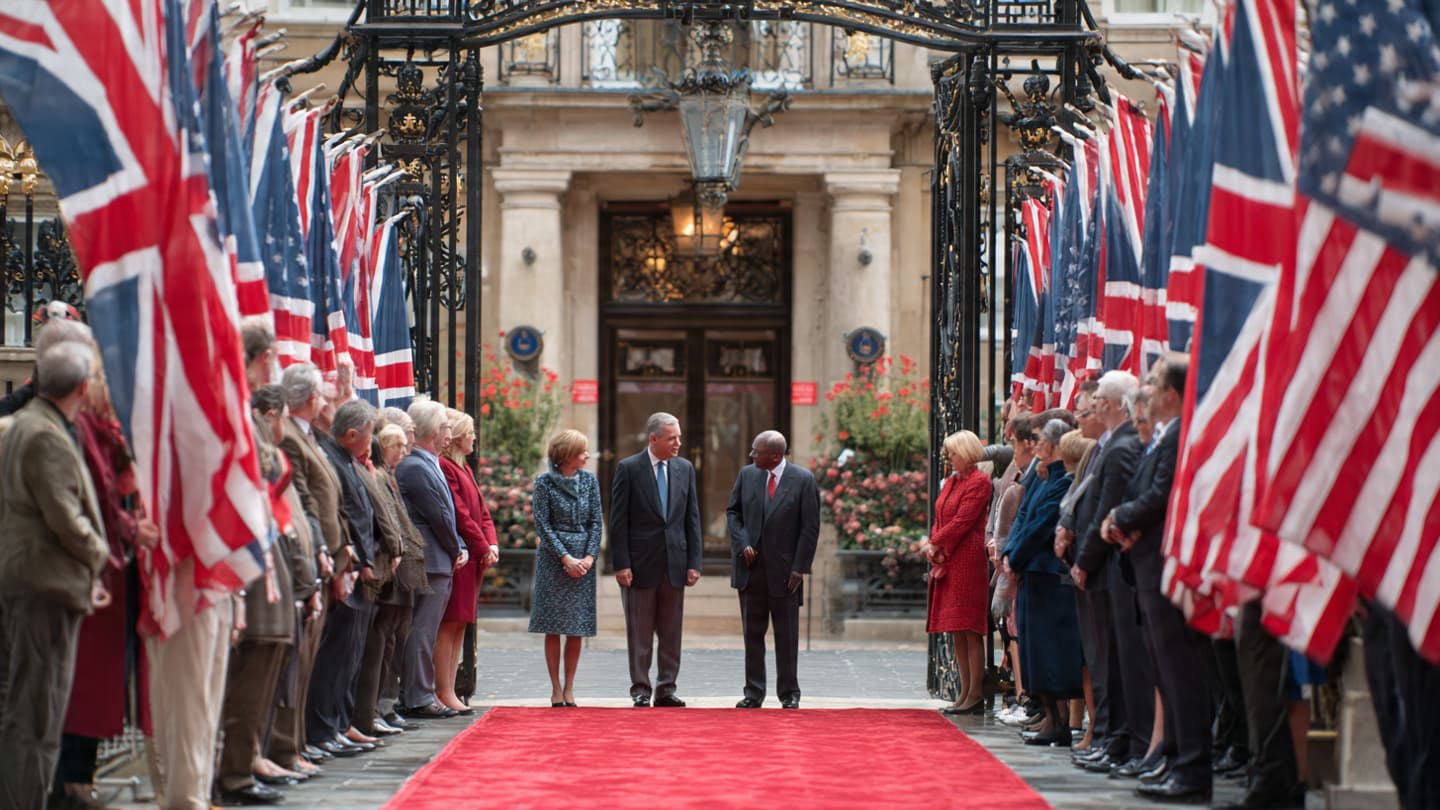
The ceremonial aspects of the visit were meticulously orchestrated, with flags displayed and anthems played, setting the stage for formal exchanges. However, the true essence of the encounter lay in the subtleties of communication. Observers noted how King Charles navigated the meeting with a quiet confidence, emphasizing shared values and historical ties between the two nations. His remarks, while formal, were delivered with a sense of ease that avoided confrontation, allowing for a constructive dialogue.
In the context of recent tensions in transatlantic relations—marked by differing trade priorities and political rhetoric—the king's approach was particularly significant. His ability to maintain a steady tone amidst potential discord showcased the monarchy's role as a stabilizing force. The visit served as a reminder that diplomacy often thrives in the spaces between words, where gestures and tone can convey as much meaning as formal statements.
During the discussions, King Charles highlighted the importance of environmental cooperation and cultural connections, themes that have long been central to his public persona. These topics were woven into the conversation not as opposing viewpoints but as integral components of a broader narrative of collaboration. Trump's responses, consistent with his administration's focus on national interests, complemented the king's themes without overtly clashing, illustrating how two distinct diplomatic styles can coexist.
Diplomatic analysts remarked on the king's skillful handling of the encounter, noting that successful diplomacy often goes unnoticed precisely because it avoids spectacle. In an era where political interactions frequently escalate into conflict, the absence of visible tension during this meeting was itself a noteworthy achievement. The king's ability to foster a space for dialogue, even amid differing perspectives, underscored the importance of maintaining open lines of communication.
As the visit concluded, the imagery that resonated was not one of confrontation but of continuity—two leaders standing together, framed by the ceremonial backdrop, their interaction marked by mutual respect and restraint. This quieter form of diplomacy, characterized by careful timing and tone, serves as a reminder that the art of statecraft often lies in what is left unsaid.
In summary, King Charles III's state visit to the U.S. was a testament to the power of subtle diplomacy. His approach, marked by an emphasis on cooperation and shared history, has drawn praise for its effectiveness in navigating complex political landscapes. Ultimately, the visit reaffirmed the enduring ties between the United Kingdom and the United States, highlighting the significance of dialogue in maintaining strong international relationships.
Published by Banx Network. This article is part of the Banx decentralized media programme, powered by the BXE token on the XRP Ledger.



