In the long corridor of human history, there are chapters written not in ink but in molecules — fragments of inheritance carried quietly through generations. In laboratories far from the caves where ancient people once sheltered, researchers continue to trace those fragments, mapping stories that predate language itself.
This week, new genetic research added a subtle but intriguing detail to that story. Scientists analyzing ancient DNA have found evidence suggesting a directional pattern in interbreeding between Neanderthals and early modern humans. The data indicate that male Neanderthals and human females may have paired more frequently than the reverse combination.
The finding emerges from comparative studies of both nuclear DNA and mitochondrial DNA — the latter passed down exclusively through maternal lines. While modern non-African populations are known to carry small percentages of Neanderthal ancestry, researchers have long observed a relative absence of Neanderthal mitochondrial DNA in contemporary humans. That absence has prompted questions about how ancient mixing occurred.
By examining high-resolution genomic sequences recovered from fossil remains and comparing them with modern genetic databases, scientists observed patterns consistent with asymmetrical gene flow. In simple terms, the inherited markers suggest that matings between Neanderthal males and Homo sapiens females were more common than pairings involving Neanderthal females and human males.
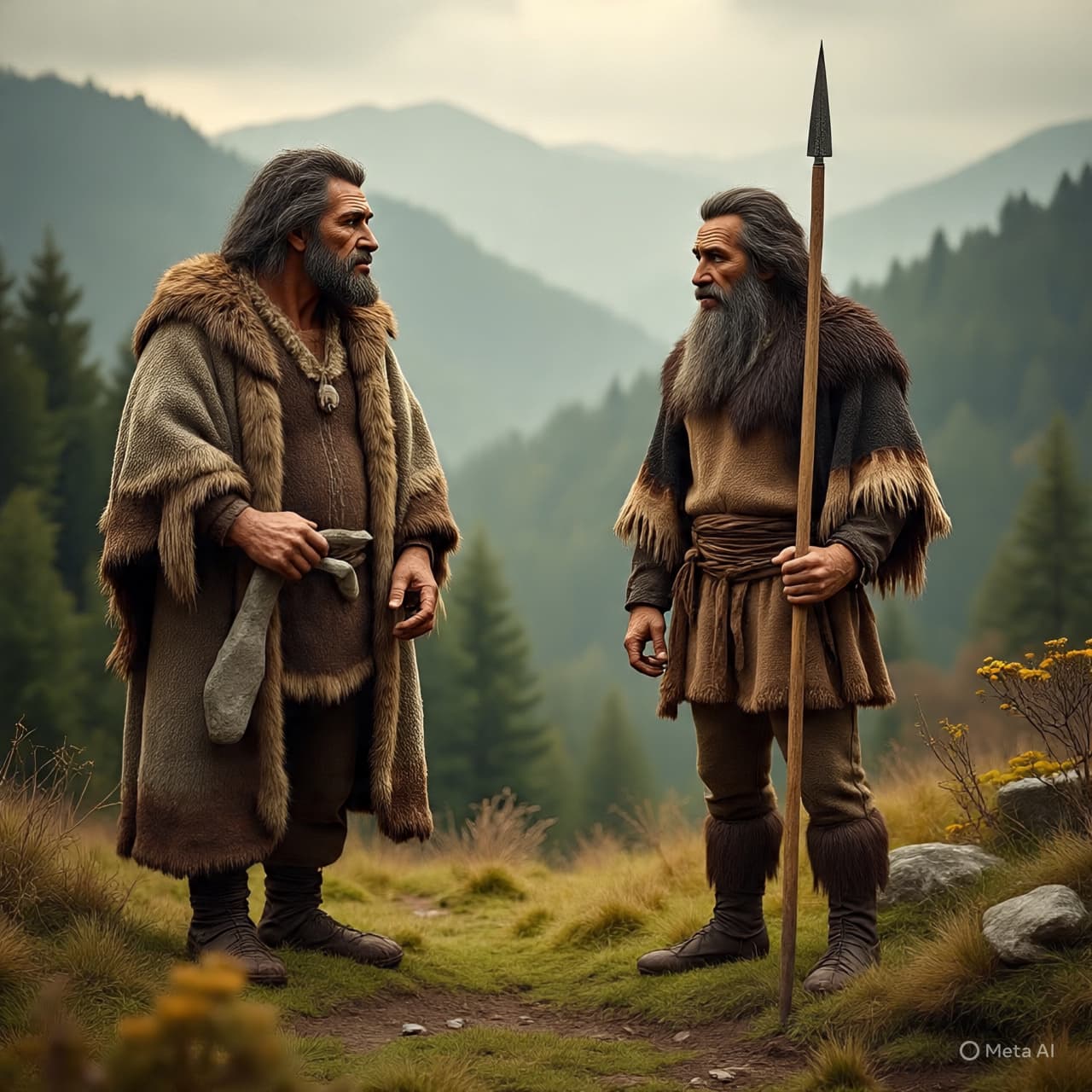
Neanderthals, who lived across Europe and parts of western Asia until roughly 40,000 years ago, overlapped geographically with migrating Homo sapiens populations. Archaeological evidence has shown that the two groups encountered one another over extended periods. The genetic record, first confirmed in 2010 with the publication of the Neanderthal genome, established that interbreeding occurred. Since then, research has refined the picture, exploring how often, where, and under what circumstances those encounters took place.
The newly highlighted mating direction bias may reflect social structures, demographic pressures, or biological compatibility factors, though researchers caution that definitive explanations remain elusive. Population size differences could have influenced patterns, as Neanderthals existed in smaller, more isolated groups. Cultural dynamics may also have shaped interactions during periods of migration and environmental stress.
Importantly, scientists emphasize that the findings do not imply simple or uniform relationships. Ancient interbreeding likely occurred in multiple waves across regions and millennia. Genetic contributions from Neanderthals persist today in traits related to immune response, skin adaptation, and even susceptibility to certain diseases — subtle echoes of Ice Age encounters embedded in modern physiology.
The research underscores how paleogenomics continues to transform understanding of human origins. Advances in DNA extraction techniques now allow fragments once thought irretrievable to be sequenced and analyzed with increasing precision. Each refinement shifts the narrative from speculation toward measurable evidence.
Still, the past resists tidy conclusions. Ancient DNA rarely offers a complete archive; it provides glimpses, patterns, probabilities. The suggestion of a mating direction bias adds nuance rather than finality — a reminder that human evolution was not a straight line but a braided stream, shaped by movement, adaptation, and contact.
As scientists continue to decode genetic remnants from bone and sediment, the story of Neanderthals and modern humans grows less distant and more intertwined. What once seemed like separate branches of a family tree now appears as overlapping limbs, crossing in ways that continue to shape living populations.
In the quiet hum of sequencing machines, the Ice Age speaks again — not through myth or speculation, but through strands of DNA that still carry memory across tens of thousands of years.
Published by Banx Network. This article is part of the Banx decentralized media programme, powered by the BXE token on the XRP Ledger.