Before dawn, when the air is cool and the sky holds the faintest trace of silver, villages across the West Bank stir for Ramadan prayers. Doors open softly. Lights flicker on in courtyards framed by olive trees and worn stone. It is an hour shaped by reflection and restraint, when voices are low and footsteps careful.
In one such village, that stillness was interrupted by smoke.
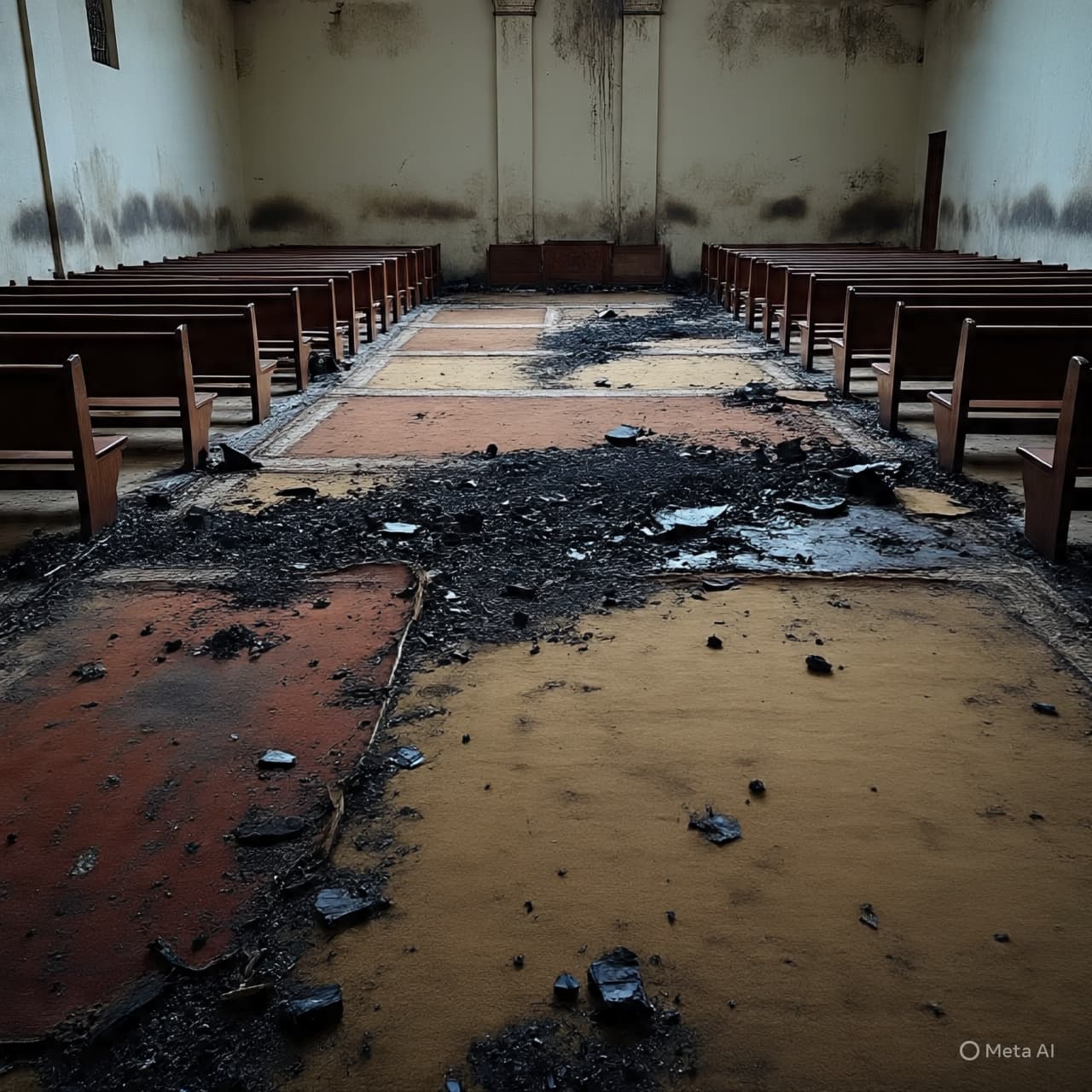
Residents awoke to find a local mosque defaced and partially burned. Charred marks climbed along its outer walls. Windows were blackened, and carpets inside were damaged by fire. Graffiti had been scrawled across the structure, its symbols and slogans jarring against the pale stone. The attack, which took place during the holy month of Ramadan, has drawn condemnation from Palestinian officials and concern from international observers.
According to local authorities and eyewitness accounts reported by multiple news outlets, Israeli settlers are suspected of carrying out the vandalism and arson. Israeli police have said an investigation is underway. No injuries were reported, but the damage to the mosque—an anchor of communal life—was visible in soot and splintered glass.
The West Bank has seen periodic tensions involving settler outposts and nearby Palestinian communities. Human rights organizations and monitoring groups have documented incidents ranging from property damage to physical confrontations. Israeli authorities have, at times, pledged to address extremist violence, while Palestinian leaders have called for greater protection of civilians and religious sites.
During Ramadan, mosques carry an added resonance. They become places not only of daily prayer but of evening gathering, shared meals, and extended recitation. The damage to this mosque occurred in a month defined by fasting and spiritual focus, lending the act a deeper symbolic weight for residents.
Israeli officials have not publicly identified suspects, and investigations into similar incidents in the past have produced mixed outcomes. International actors, including European and United Nations representatives, have frequently urged restraint and accountability in cases involving religious sites, emphasizing their sensitivity and importance.
By midday, villagers were already sweeping debris from the entrance and assessing what could be repaired before evening prayers. The scent of smoke lingered, but so did the quiet determination to reopen doors before sunset. In places shaped by long histories, restoration often begins with small gestures: a bucket of water, a replaced pane of glass, a call to prayer rising again into open air.
In direct terms, a mosque in the occupied West Bank was defaced and set on fire during Ramadan, with Israeli settlers suspected of involvement. Israeli police have opened an investigation, and no injuries have been reported.
AI Image Disclaimer
These images were generated using artificial intelligence and are intended as visual representations only.
Source Check (Media Names Only) Reuters BBC News The Guardian Associated Press Al Jazeera
Published by Banx Network. This article is part of the Banx decentralized media programme, powered by the BXE token on the XRP Ledger.