
Key Highlights
- New Research:Scientists have identified a second critical point in water.
- Liquid States:This point suggests water can exist in two distinct liquid states.
- Implications:Findings may reshape our understanding of water's unique properties.
Water is a substance that surrounds us daily, yet its complexities often go unnoticed. It fills our glasses, flows through rivers, and forms clouds, creating an illusion of simplicity. However, beneath this surface lies a wealth of scientific intrigue, particularly regarding its behavior under varying conditions.
For decades, researchers have observed that water behaves in ways that defy conventional expectations. Unlike most substances, water expands when it freezes, reaches its maximum density at a temperature slightly above freezing, and exhibits peculiar responses to changes in temperature and pressure. These anomalies have sparked interest in the scientific community, suggesting that there is more to water than meets the eye.
Central to this exploration is the concept of a critical point—a threshold where the traditional distinctions between liquid and gas blur. While one critical point has long been recognized for water, recent studies indicate the existence of a second critical point, hidden within extreme conditions that are challenging to replicate.
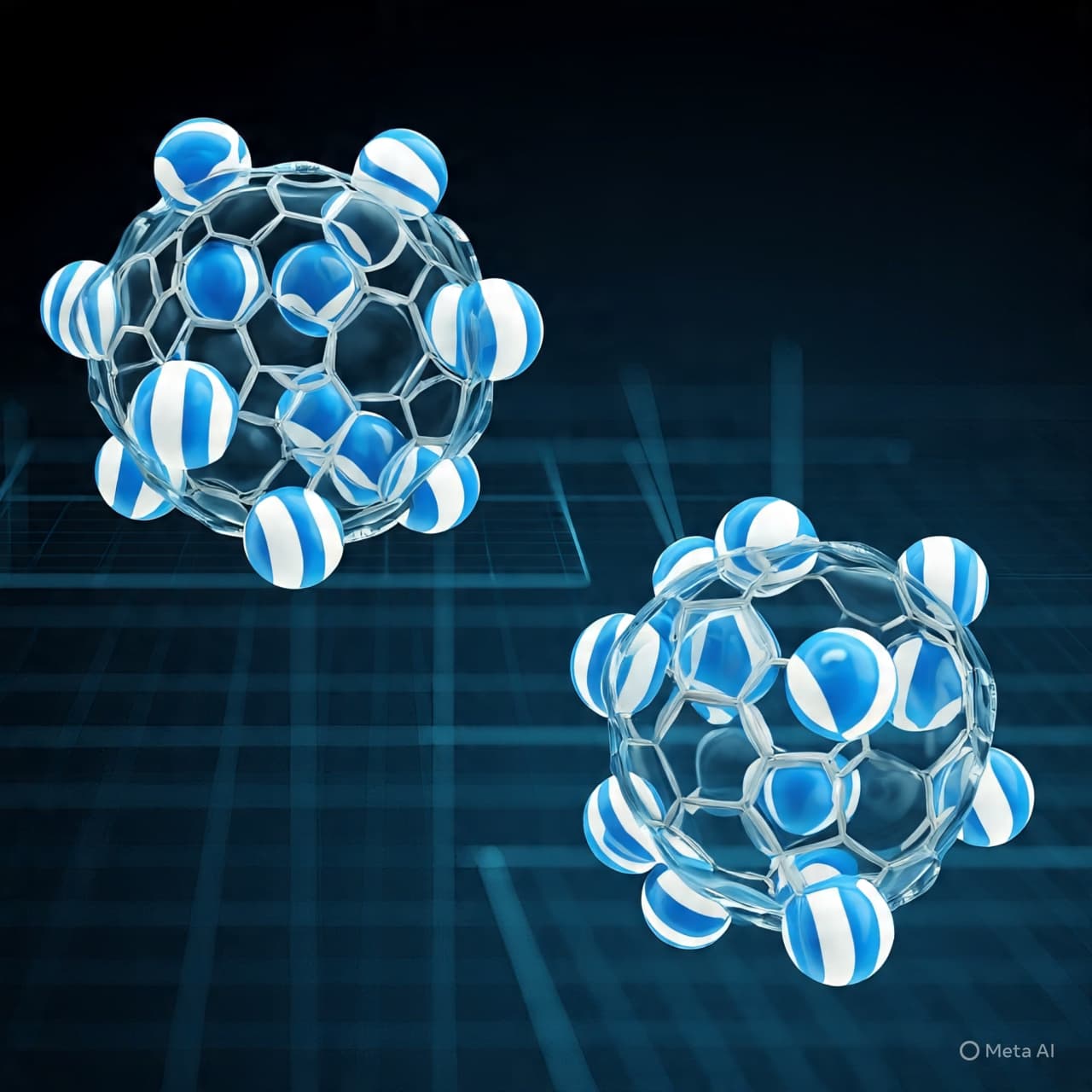
Research published in journals like Nature Physics has proposed that this second critical point occurs at very low temperatures and high pressures. Within this unique environment, water may separate into two distinct liquid states: one denser and one less dense. This phenomenon, known as the Liquid-Liquid Phase Transition, could provide insights into the unusual properties of water, suggesting that its behavior at more familiar conditions may be influenced by this deeper structural complexity.
However, observing this second critical point presents significant challenges. Water tends to crystallize into ice before reaching the necessary conditions for this transition, prompting researchers to employ indirect methods. Techniques such as computer simulations, rapid cooling, and studies of water confined in small spaces are being utilized to investigate this elusive state.
The evidence supporting the existence of a second critical point is gradually accumulating. Reports from reputable sources like Scientific American and BBC Science highlight these findings as some of the strongest indications yet that this phenomenon may be real. While definitive proof remains elusive, the research is moving closer to acceptance, providing a framework for understanding water's behavior in a more coherent manner.
This shift in perspective is profound. What were once viewed as exceptions to the rules of physics may now be interpreted as manifestations of a more intricate system. The familiar characteristics of water—its density variations and temperature responses—are part of a broader pattern that extends beyond everyday experiences.
As scientists continue to unravel the complexities of water, they reveal another layer of this essential substance. Rather than altering its fundamental nature, this research expands our understanding of how water behaves under various conditions, potentially reshaping our approach to studying this vital resource.
In summary, the growing evidence for a second critical point in water suggests that its unusual properties may stem from the existence of two distinct liquid states under extreme conditions, offering a new lens through which to view this ubiquitous substance.
Published by Banx Network. This article is part of the Banx decentralized media programme, powered by the BXE token on the XRP Ledger.



