In the quiet interplay of photons and crystals, scientists often find clues to the grandest questions of measurement and motion. Time itself — a concept so familiar, yet so elusive — depends on our ability to measure it with extraordinary precision. Today, researchers have taken a meaningful step forward by asking a simple yet profound question: can we make lasers so stable that they help us read time and space with unprecedented clarity?
At the core of this inquiry, a team spanning institutions including JILA and the Physikalisch‑Technische Bundesanstalt has introduced an innovative way to stabilize lasers by using crystalline mirrors in optical cavities — the tiny spaces where light is bounced back and forth to lock a laser’s frequency. Unlike traditional dielectric mirrors, which can introduce noise through subtle thermal fluctuations, crystalline coatings made from materials such as crystalline aluminum gallium arsenide dramatically reduce mechanical loss. When incorporated into a silicon optical cavity cooled to near‑cryogenic temperatures, these mirrors enabled lasers to maintain a remarkably stable frequency — roughly four times more stable than earlier designs.
This isn’t merely a refinement of existing tools, but a gentle reimagining of what stability means in light‑based systems. Ultra‑stable lasers are already the heartbeat of cutting‑edge optical clocks — devices that track time by measuring the oscillations of light rather than the microwave “ticks” of traditional atomic clocks. The more stable the laser, the better these clocks can perform, reaching accuracies that push into realms where timekeeping becomes a pure expression of fundamental physics.
Going further, such lasers also serve as foundational elements for technologies that rely on finely controlled light waves, including precision navigation systems that might one day operate independently of current satellite‑based signals. In environments where GPS is unavailable — deep sea, underground, or in the vast reaches of space — lasers stabilized by crystalline mirrors could help future clocks and sensors maintain accurate positioning and timing.
That precision doesn’t arise overnight. The research builds on decades of work refining optical cavities and exploring materials and cooling techniques that tame thermal noise. By pushing these boundaries with crystalline coatings, the recent findings suggest a path toward lasers that not only uphold exceptional stability but also inspire new applications across science and technology.
In the end, this advance feels almost poetic: by choosing to reflect light from mirrors fashioned with crystalline order, scientists have found a way to quiet the restless fluctuations that once limited performance. As the frontier of measurement stretches onward — whether in tracking the flow of time or charting the course of distant spacecraft — these ultra‑stable lasers could help light the way with an enduring glow of clarity and precision.
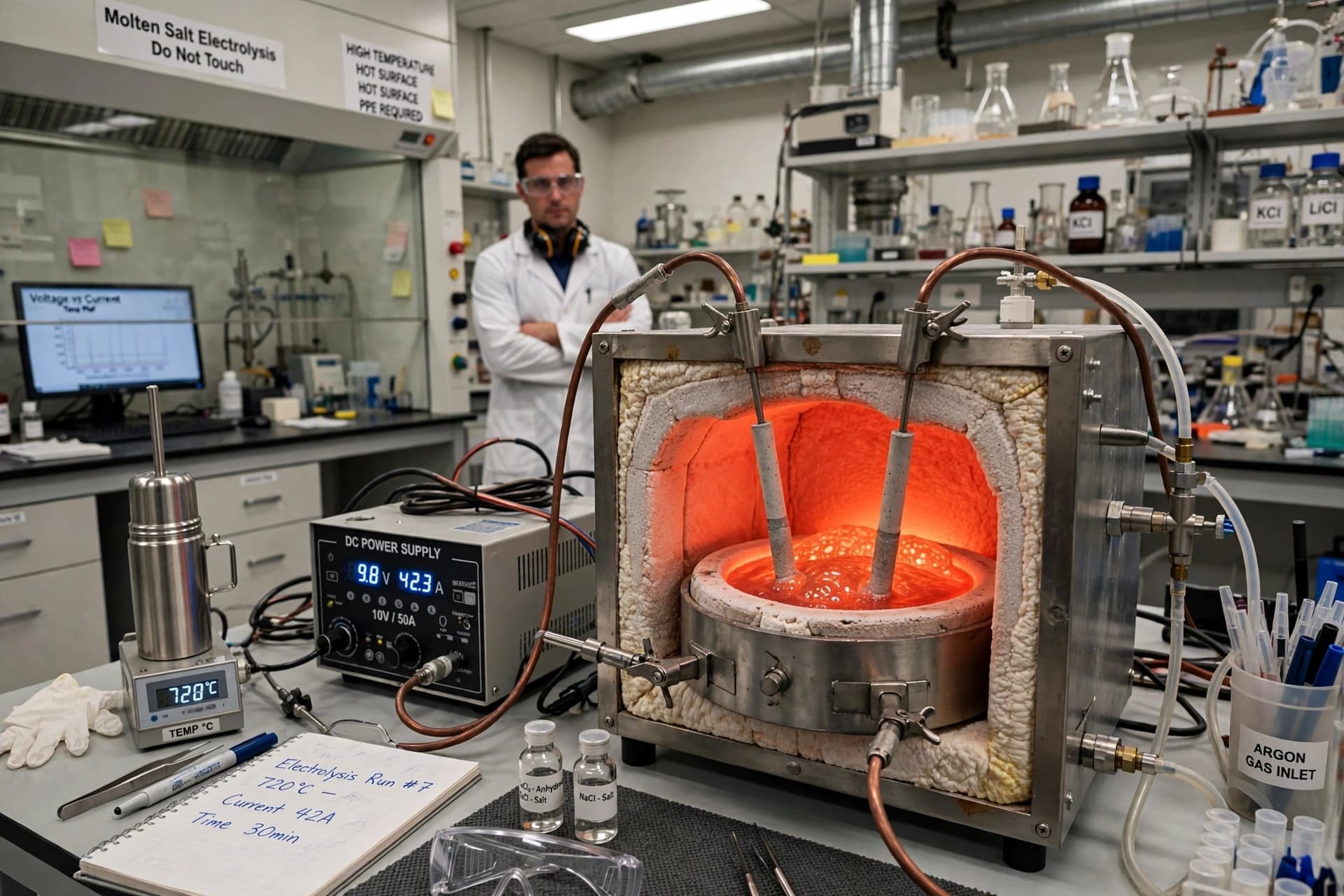
AI Image Disclaimer Images are AI‑generated illustrations and are not real photographs or actual experimental images.
Sources:
Phys.org
Published by Banx Network. This article is part of the Banx decentralized media programme, powered by the BXE token on the XRP Ledger.