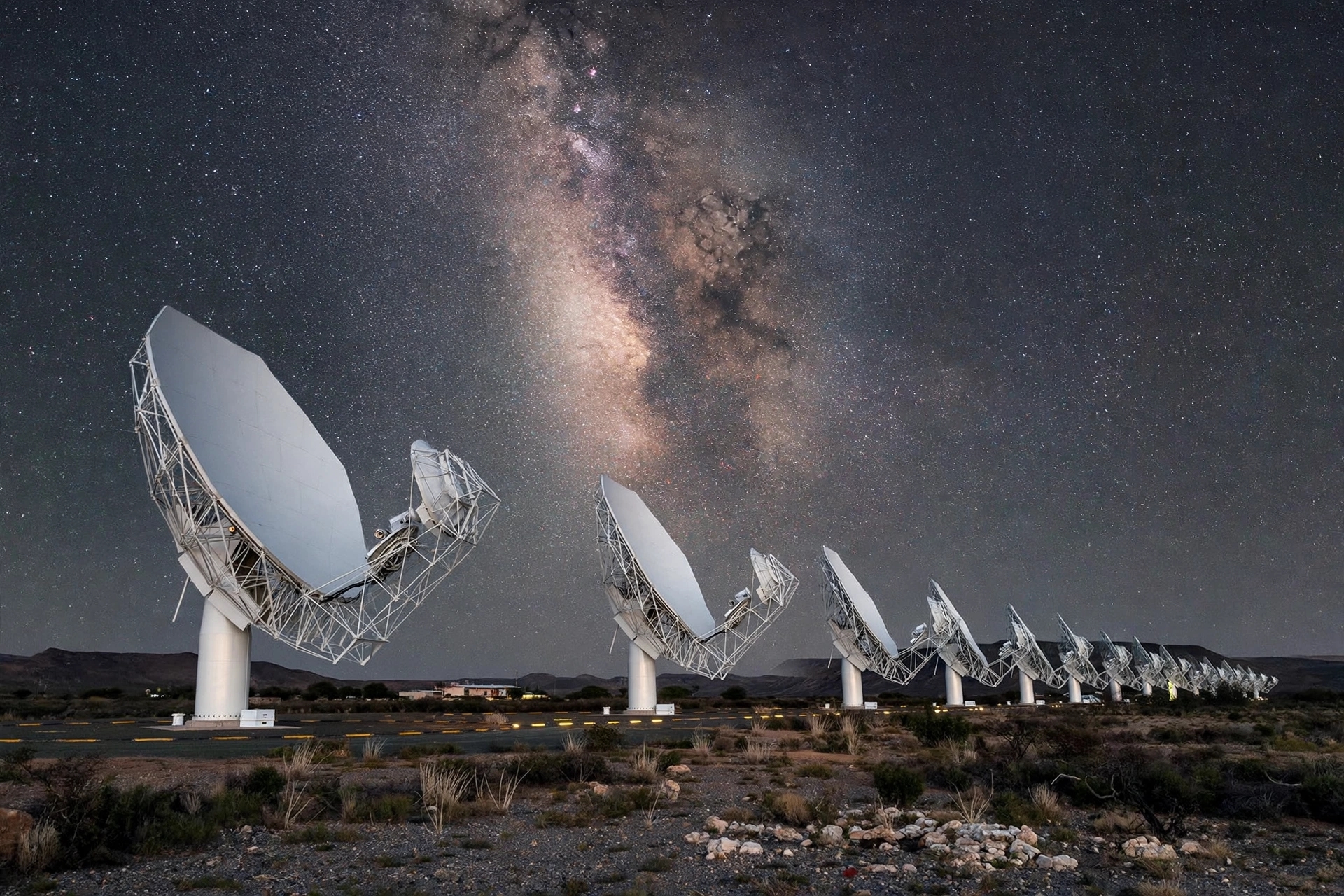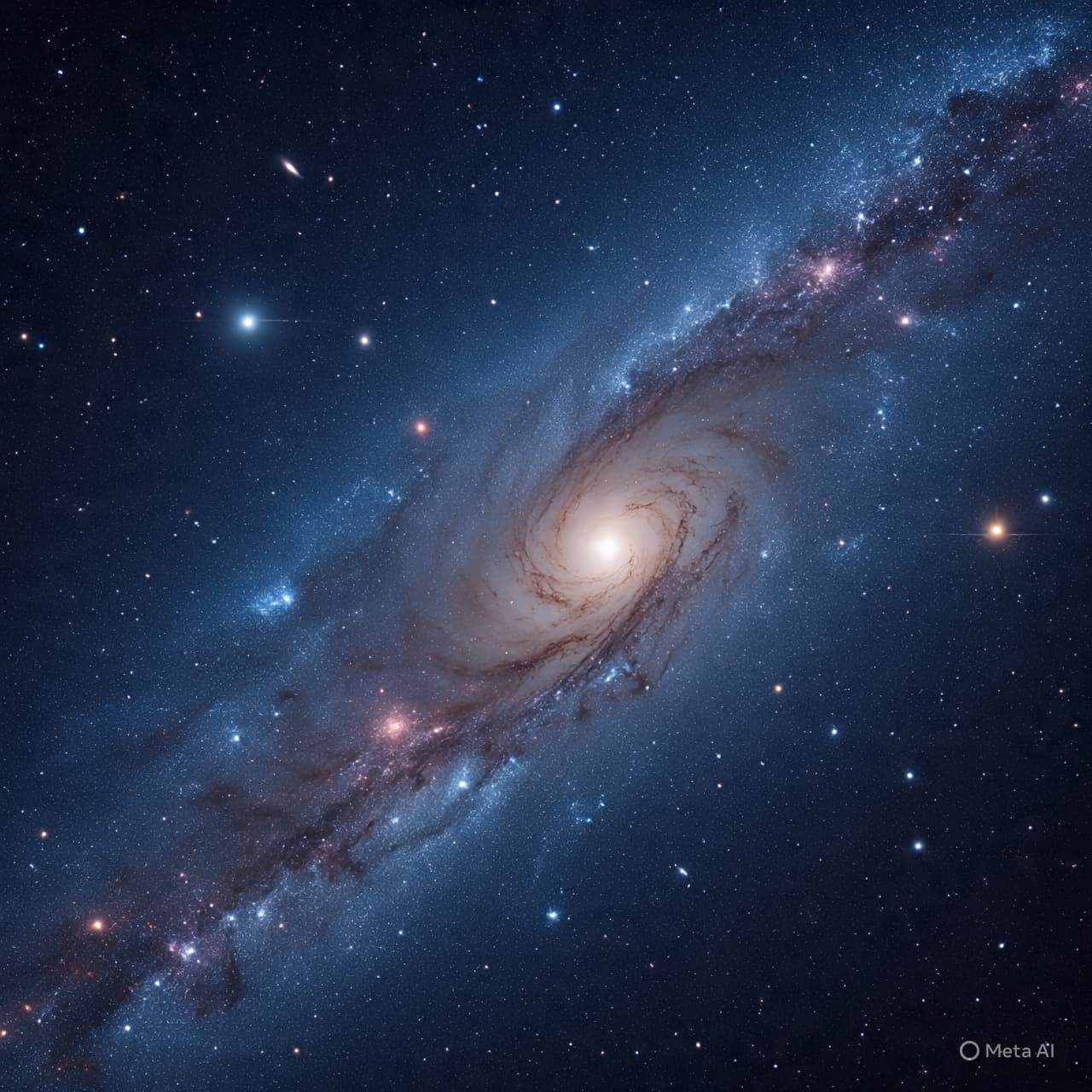
Imagine the cosmos as a grand balloon—ever inflating, stretching outward in silent majesty. Yet some whisper that the stretch may one day halt, then slowly reverse as if the balloon were gently drawn inward. This reversal, the “Big Crunch,” has long been speculative. But now, a new theoretical framework suggests we might even assign a time to that cosmic contraction. The universe, it seems, may not expand forever.
This fresh prediction emerges from a model where dark energy is not a fixed constant, but a dynamic field. The authors—drawn from institutions including Cornell University and Shanghai Jiao Tong—propose an axion Dark Energy (aDE) model, combining an ultralight axion field with a negative cosmological constant. Under this scheme, current expansion is driven by the axion component; over time it fades, allowing the negative cosmological constant to dominate and reverse expansion. (From The Lifespan of our Universe preprint)
Plugging observational constraints into this framework, the researchers find a total cosmic lifespan of roughly 33 billion years. In that projection, the universe will continue expanding for about 7 billion more years before it reaches its maximum size (approximately 69 percent larger than today), then gradually contracts until it collapses into a singularity. (This yields about 20 billion years of contraction following the expansion phase)
In another variant of their analysis, the contraction phase might begin sooner—after 10 billion years—meaning that much of the collapse lies ahead. But the consistent result is that the Big Crunch, in this model, lies tens of billions of years in the future.
This vision contrasts sharply with the prevailing cosmological constant (ΛCDM) model, in which dark energy is static and drives endless, accelerated expansion—the so-called “heat death” or “big freeze.” Recent data from surveys such as DES and DESI have hinted that dark energy might be weakening—giving room to models like aDE. (Observations suggest dark energy’s strength may have peaked earlier and is now on a mild decline)
Still, the calculations rest on uncertain foundations. The geometry, equation of state, and evolution of dark energy remain deeply unsettled. The fit to data allows degeneracies (multiple parameter sets). And alternate fates—Big Freeze, Big Rip, cyclic models, or even eternal expansion—are not fully ruled out.
Yet the new claim is audacious: not just a narrative of cosmic fate, but a timetable. It invites us to imagine the universe’s midpoint: that we may already have passed more than half its duration. The whisper that expansion may slow, then reverse, is no longer purely speculative—it enters the domain of quantifiable conjecture.
A new cosmological model (axion Dark Energy + negative cosmological constant) predicts the universe could end in a Big Crunch at a cosmic age of about 33 billion years. In that scenario, expansion halts in ~7 billion years and contraction persists for ~20 billion years. The model challenges the conventional assumption of eternal expansion, though significant uncertainty remains and alternative cosmic fates are not excluded. AI Image Disclaimer “Illustrations were produced with AI and serve as conceptual depictions.”
Sources The Lifespan of our Universe (preprint) ScienceAlert LiveScience Discover Magazine The Guardian
Published by Banx Network. This article is part of the Banx decentralized media programme, powered by the BXE token on the XRP Ledger.