There are places in biology where change does not arrive alone. It comes instead in pairs, in sequences, in quiet interactions that only reveal themselves when viewed together. Within the folded architecture of a protein, where each curve and angle carries consequence, even the smallest variation can shift the balance—not by itself, but through its relationship with another.
In the enzyme TEM-1 β-lactamase, a protein long studied for its role in antibiotic resistance, this interplay has drawn renewed attention. Researchers have turned their focus to a single α-helix within its structure, a modest segment by appearance, yet one that carries a dense network of functional relationships. Here, mutations do not simply add their effects in isolation. They combine, reinforce, or counteract one another in ways that reshape the enzyme’s behavior.
This phenomenon, known as pairwise epistasis, describes how the impact of one genetic change depends on the presence of another. It is a concept that moves beyond linear thinking, suggesting that biological systems operate through layers of interaction rather than simple cause and effect. Within the α-helix of TEM-1, these interactions appear both widespread and varied, forming a landscape where outcomes are contingent, not fixed.
The study explores the origins and extent of these epistatic relationships by systematically examining combinations of mutations. What emerges is a pattern that reflects the underlying structure of the protein itself. Amino acids positioned along the helix influence one another through spatial proximity and shared roles in maintaining stability and function. Some interactions enhance activity, while others diminish it, revealing a balance shaped by both physical constraints and evolutionary history.
There is a quiet precision in this arrangement. The α-helix, often depicted as a simple spiral, becomes instead a site of layered communication, where structural integrity and biochemical performance are negotiated through multiple connections. Mutations that seem minor when considered alone may take on greater significance when paired, their combined effects altering how the enzyme folds, binds, or catalyzes reactions.
For TEM-1 β-lactamase, these dynamics carry practical implications. The enzyme’s ability to confer resistance to β-lactam antibiotics depends on its structure and efficiency, both of which can be influenced by epistatic interactions. Understanding how mutations interact within specific regions of the protein may help explain the pathways through which resistance evolves, and why certain combinations of changes are more likely to persist.
More broadly, the findings contribute to a growing recognition that protein evolution is shaped by networks of interaction rather than isolated events. The breadth of pairwise epistasis observed within a single α-helix suggests that complexity is embedded even at small scales, guiding how proteins adapt and function over time.
There is, perhaps, a certain stillness in this realization. Beneath the apparent simplicity of a helical strand lies a system of relationships, each one subtle, each one consequential. Change, in this context, is less about singular events and more about the spaces between them—where one variation meets another, and something new takes form.
The study reports that pairwise epistasis is widespread within an α-helix of TEM-1 β-lactamase, with mutation interactions significantly influencing protein function. Researchers found that these effects are shaped by structural relationships and contribute to understanding how proteins evolve and develop antibiotic resistance.
AI Image Disclaimer
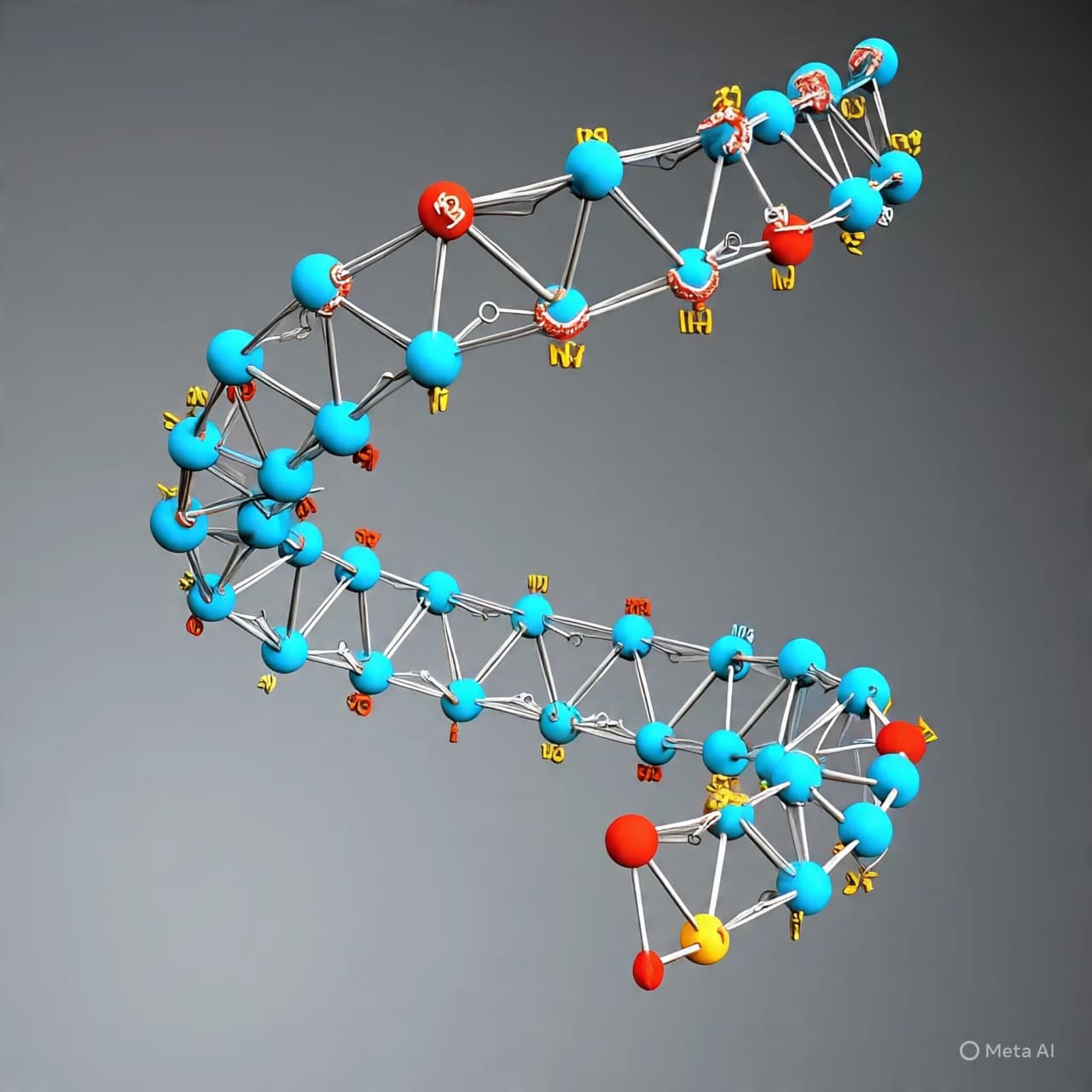
Visuals are AI-generated and serve as conceptual representations.
Source Check
Nature Communications PNAS eLife Science ScienceDaily
Published by Banx Network. This article is part of the Banx decentralized media programme, powered by the BXE token on the XRP Ledger.