There are moments when the pace of the natural world invites us to think about time in ways we seldom do. Standing on a quiet forest path, a hummingbird’s wings beat like living strobe lights, while a snail glides almost imperceptibly across a leaf. Though they share the same ticking seconds, their experience of those seconds may be profoundly different — as if each creature lives within its own temporal melody. A new study published in Nature Ecology & Evolution gently unfurls this idea, revealing that how fast an animal’s metabolism runs — and how fast it lives — corresponds in a surprising way to how quickly it can perceive the world around it.
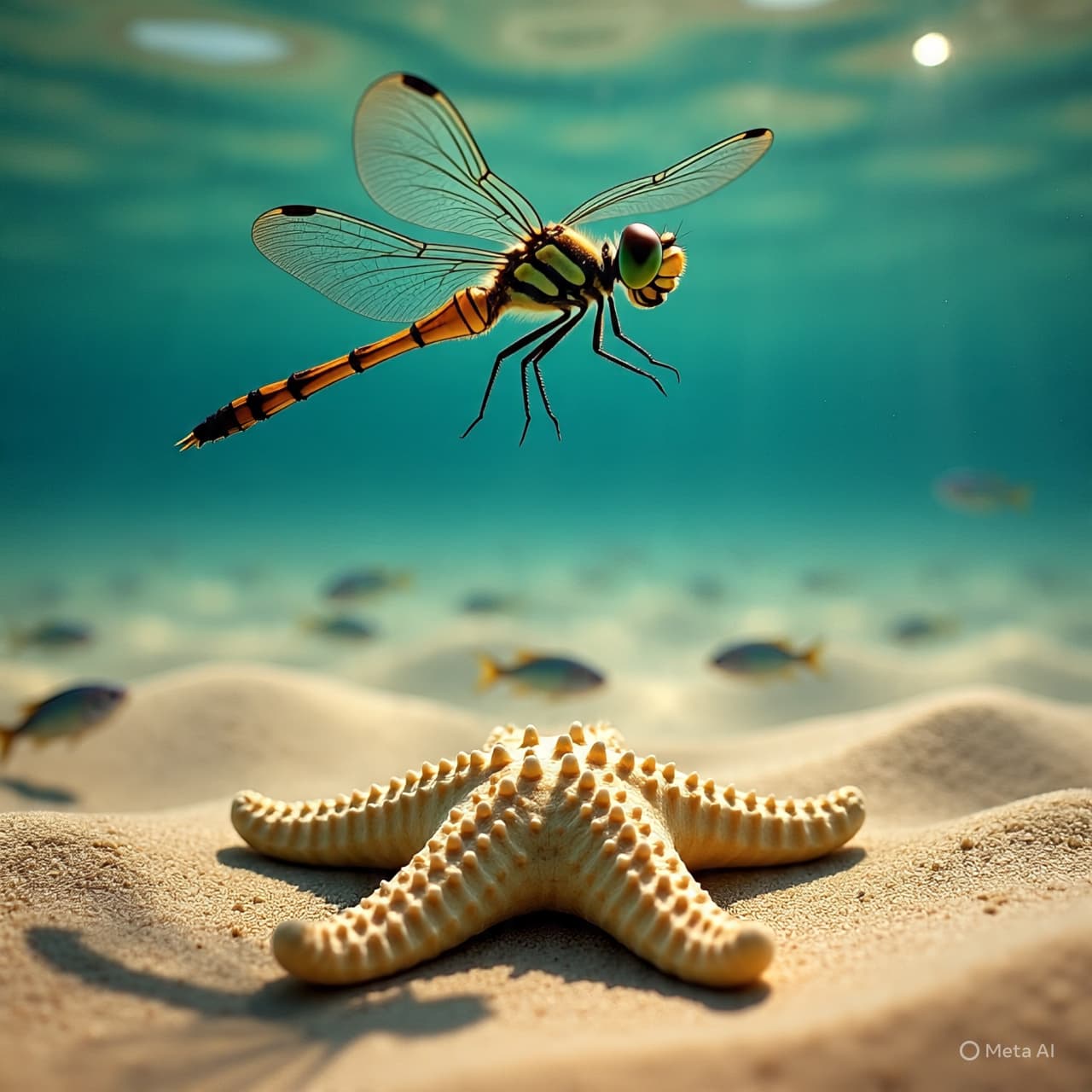
Imagine a dragonfly chasing its prey through a summer sky: to our eyes it moves with a blur of iridescent flashes, yet to its own senses that chase may unfold with astonishing clarity. Scientists measured something called critical flicker fusion — the fastest rate at which a pulsing light is still seen as separate flashes rather than one continuous glow — across more than 200 species. These measurements show that small, agile animals with fast lifestyles often register visual changes hundreds of times per second, while slower, more sedentary creatures see fewer pulses in that same span. In essence, what we call a second contains vastly different amounts of “perceptual frames” for different animals, shaped by their ecological roles and the pace of life they lead.
At the heart of this research is a simple yet evocative thought: perception and scaling in nature are not merely biological traits, but reflections of evolutionary rhythm. A bird in swift pursuit, a tuna slicing through currents, or an insect wheel-winged in daytime flight all benefit from rapid processing of visual information that matches their kinetic tempo. Their neural systems are tuned to capture more moments within each heartbeat, allowing them to chase and dodge in a world that to them feels slower, richer in detail, and more open to reaction. But for creatures like starfish or giant snails, whose movements unfold on scales of patience and stillness, time is stitched more broadly; their flicker fusion rates are a fraction of those seen in spry aerialists.
Yet this variation in “perceptual pace” isn’t merely about speed for its own sake. It reflects a balance between energy use and ecological need. Rapid processing, like a fast metabolism itself, requires fuel — and is favored only where that investment yields survival advantages. A creature that hunts and flees in fast motion must see in fine temporal granularity, while one that lingers in dim light or slow currents prioritizes sensitivity over instantaneous updates.
Sometimes the everyday world seems fixed and uniform: one minute equals sixty seconds no matter where we stand. But beneath that uniform beat lies a mosaic of sensory experiences — each species living within its own tempo of perception, shaped by how it moves, hunts, and engages with its environment. In this view, the tapestry of life is woven not only of flesh and feather but of sensory rhythms as varied as the places they inhabit.
In gentle scientific terms, the study reminds us that the passing of time is as much a matter of experience as of minutes and hours. The physical second is universal, but the way it is perceived — shaped by metabolism, ecology, and evolution — varies widely. These insights help researchers understand behavior, adaptation, and how animals navigate their worlds, offering a poetic glimpse into how time may unfold differently across the natural world.
AI Image Disclaimer “Visuals are created with AI tools and are not real photographs.”
Sources Based on Source Check Nature Ecology & Evolution, Phys.org (The Conversation republish), Earth.com, NatureWorldNews, LabManager.
Published by Banx Network. This article is part of the Banx decentralized media programme, powered by the BXE token on the XRP Ledger.