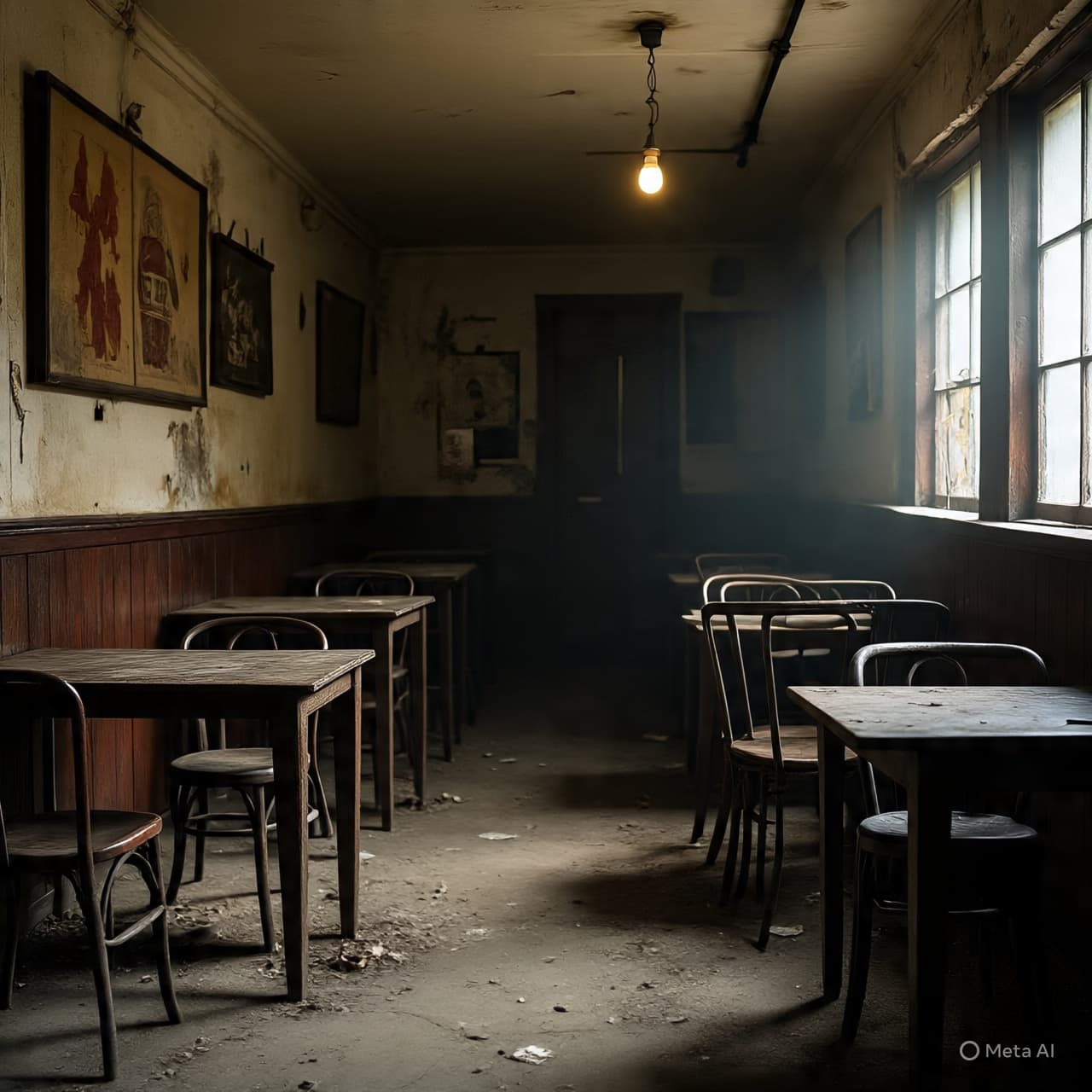
Evening in Damascus has always carried a certain elasticity, as though time itself lingers a little longer between the call to prayer and the quiet clinking of glasses behind half-closed doors. Cafés glow softly beneath aging facades, and conversations drift into the streets, braided with memory, habit, and the slow persistence of ordinary life. It is in these small rituals—often unnoticed—that a city reveals how it holds itself together.
In recent days, those rituals have become the center of something more visible. Small but notable protests have unfolded in parts of the capital, where residents gathered to voice concern over newly imposed restrictions on alcohol sales. The measures, introduced by local authorities, have narrowed when and where alcohol can be sold, reshaping a practice that, for many, has long existed quietly within the city’s layered social fabric.
The gatherings have not swelled into vast crowds, nor have they carried the intensity of earlier chapters in Syria’s recent history. Instead, they move with a different rhythm—measured, localized, and reflective of a tension that is less about confrontation and more about continuity. Participants have described the restrictions as a shift that touches not only commerce but the texture of everyday life, particularly in neighborhoods where diverse communities have coexisted for generations.
For decades, Damascus has held within it a delicate balance. Religious traditions and secular habits have overlapped in ways that are rarely uniform but often quietly negotiated. Alcohol, while sensitive in certain contexts, has remained available in designated venues, woven into social life for some residents while remaining peripheral or absent for others. The new limitations, though administrative in form, have been felt as a recalibration of that balance.
Authorities, for their part, have framed the changes as part of broader efforts to regulate public order and align with social norms. In a country still navigating the long aftermath of conflict, governance often arrives in incremental adjustments—policies that seek to stabilize, define, or sometimes reinterpret the boundaries of daily life. The restrictions appear within this wider landscape, where economic strain, reconstruction, and shifting social expectations intersect.
What makes the moment notable is not only the policy itself but the response it has drawn. Public expression, even on localized issues, carries its own weight in a place where silence has often been the default language of survival. The protests, modest as they are, suggest a willingness among some residents to articulate concerns about how their city is changing—not in sweeping declarations, but in quiet insistence on the familiar.
As the days pass, the outcome remains uncertain. The restrictions have not been fully reversed, and discussions continue between local officials and community members. In the meantime, Damascus returns to its evening rhythms, though perhaps with a slightly altered cadence. Some doors close earlier. Some conversations shift indoors. The city adapts, as it has done many times before.
What lingers is less the volume of the protests than the questions they carry: how a city preserves its character while adjusting to new realities, and how small changes ripple through the spaces where people gather, speak, and remember. In Damascus, where history often feels close enough to touch, even a modest policy can echo far beyond its immediate intent—into the quiet, enduring negotiation of what it means to live together.
AI Image Disclaimer Visuals are AI-generated and serve as conceptual representations.
Sources Reuters Associated Press BBC Al Jazeera The Guardian
Published by Banx Network. This article is part of the Banx decentralized media programme, powered by the BXE token on the XRP Ledger.