

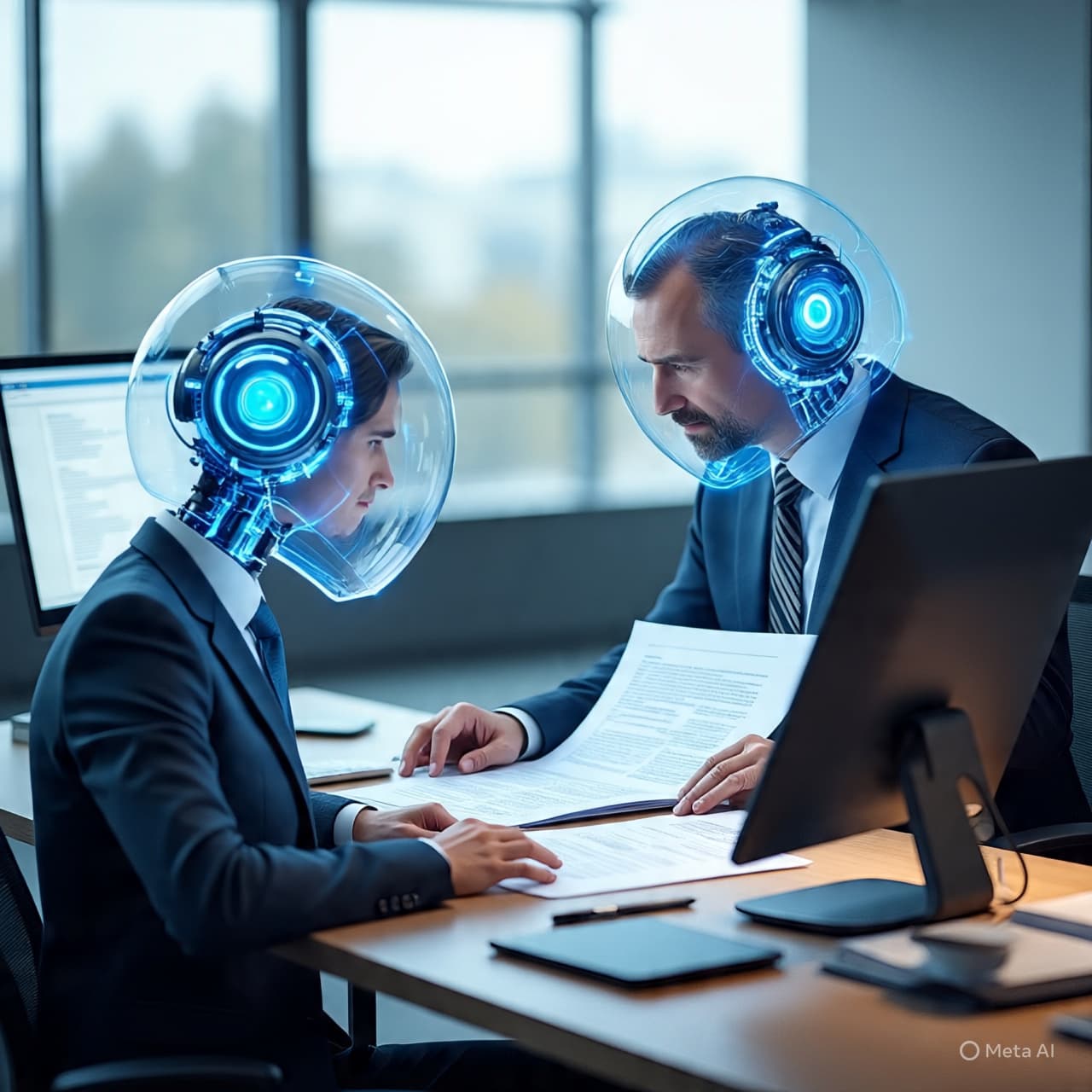
Key Highlights
- Nvidia CEO Jensen Huang asserts AI will not eliminate jobs but transform them.
- Huang emphasizes the importance of adapting to AI tools for competitive advantage.
- The integration of AI is expected to create new job opportunities in various sectors.
[AI's Role in the Future of Work]
In the ongoing discourse surrounding artificial intelligence and its impact on the workforce, Nvidia CEO Jensen Huang has emerged as a prominent voice advocating for a more optimistic perspective. Rather than succumbing to fears of widespread job displacement, Huang argues that AI will fundamentally reshape the nature of work, enhancing productivity and creating new opportunities for workers who embrace these technologies. His insights come at a time when many are grappling with the implications of rapid technological advancement on traditional employment models.
Huang's central thesis revolves around the distinction between tasks and purpose in the workplace. He posits that while AI can automate specific, repetitive tasks, it does not replace the essential human elements of work, such as creativity, empathy, and critical thinking. For instance, in the healthcare sector, AI can assist with data analysis and diagnostics, but the human touch in patient care remains irreplaceable. This perspective encourages a rethinking of how we view the relationship between humans and machines in professional settings.
[Embracing AI as a Productivity Tool]
In various public forums, Huang has urged individuals and organizations to view AI as a tool for enhancement rather than a threat. He famously stated, "You’re not going to lose your job to AI, but you’re going to lose your job to someone who uses AI." This assertion underscores the importance of adaptability in the workforce. Those who leverage AI to augment their capabilities may find themselves at a competitive advantage, while those who resist change risk obsolescence.
Huang's optimism is rooted in the belief that AI can serve as a partner in the workplace, allowing humans to focus on higher-value tasks that require strategic thinking and innovation. By automating mundane aspects of work, AI frees up time for employees to engage in creative problem-solving and decision-making, which are critical for personal fulfillment and organizational success.
[The Economic Landscape of AI Integration]
Moreover, Huang emphasizes that the integration of AI should be viewed within the broader context of economic growth and infrastructure development. He points to the expansion of data centers and advanced computing facilities as indicators of a burgeoning demand for new types of jobs. As industries evolve, there will be a need for roles that require not only technical skills but also innovative thinking and physical capabilities. This mirrors historical trends seen during previous industrial revolutions, where technological advancements led to the creation of new job categories rather than a complete eradication of existing ones.
[Transforming Work, Not Eliminating It]
Within Nvidia, Huang has encouraged employees to embrace AI, advocating for its integration into daily operations. He believes that tasks suitable for AI should be delegated to machines, allowing human workers to concentrate on more complex and rewarding aspects of their jobs. This philosophy aims to foster a work environment where augmented roles become the norm, ultimately transforming the workforce landscape.
In summary, Jensen Huang's insights present a compelling argument against the narrative of job loss due to AI. Instead, he envisions a future where AI reshapes work, emphasizing the need for adaptation and reskilling. As industries navigate this transformation, the focus will likely shift toward how individuals can harness technology to enhance their roles and create new opportunities in partnership with AI.
Published by Banx Network. This article is part of the Banx decentralized media programme, powered by the BXE token on the XRP Ledger.




