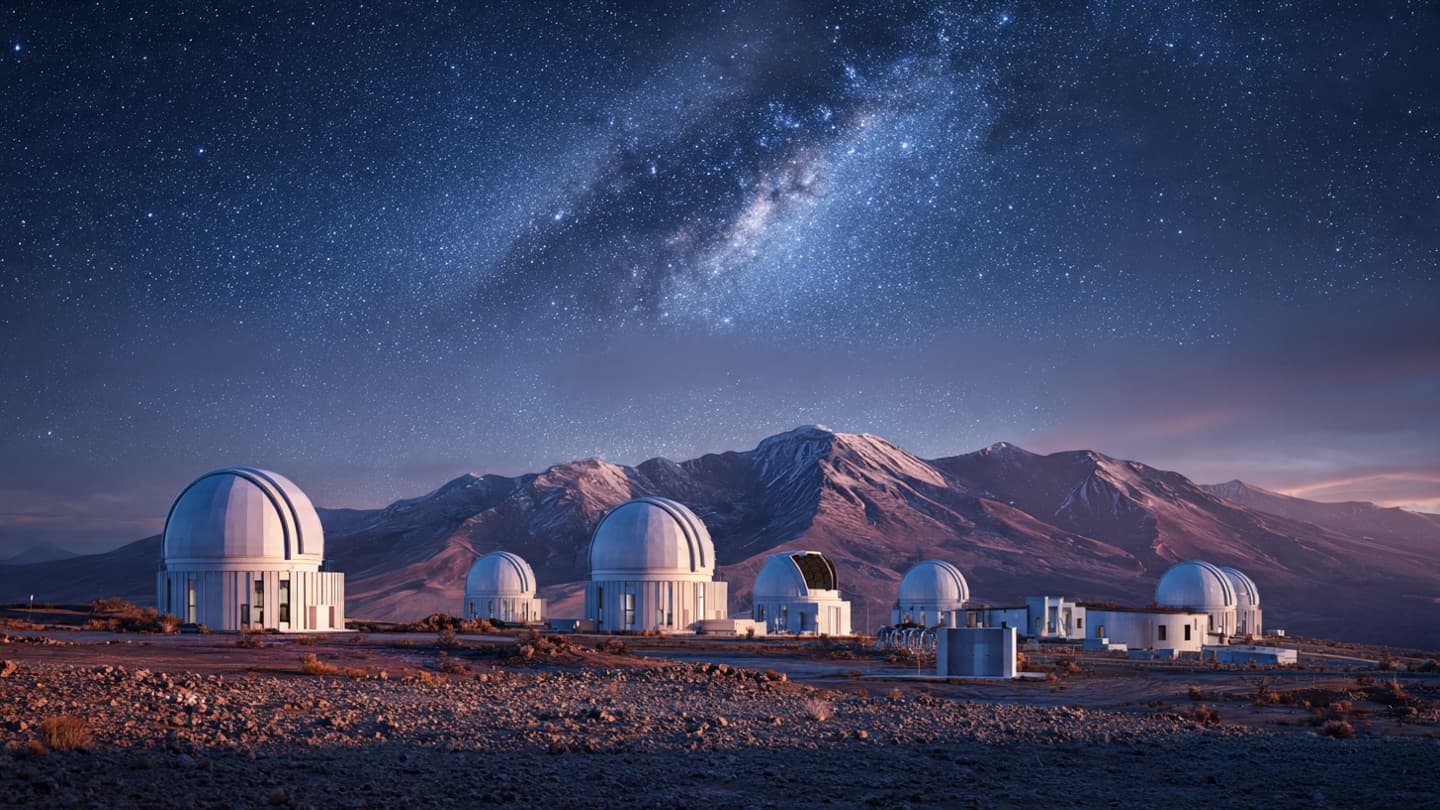
The Atacama Desert is a place where Earth can sometimes resemble another planet. Vast stretches of dry terrain, distant mountains, and exceptionally clear skies create an environment unlike almost anywhere else. Within this dramatic landscape, astronomers work in facilities that have inspired comparisons to the futuristic hideouts often seen in spy films.
The description stems from the unique architecture and remote setting of major observatories located in northern Chile. These scientific installations are designed to support some of the most advanced astronomical research conducted anywhere in the world.
The Atacama Desert offers extraordinary viewing conditions because of its high altitude, dry atmosphere, and minimal light pollution. These characteristics make it one of the premier locations for observing the universe.
Scientists living and working at these facilities often spend extended periods in remote environments. Residential and operational buildings are designed to support research teams while protecting sensitive instruments from harsh environmental conditions.
Among the most prominent installations are observatories equipped with powerful optical, infrared, and radio telescopes. These instruments allow researchers to investigate distant galaxies, planetary systems, black holes, and other cosmic phenomena.
The comparison to a fictional villain's lair reflects the striking appearance of some facilities, which feature modern architecture integrated into isolated desert landscapes. However, the purpose of these structures is entirely scientific, focused on expanding human understanding of the cosmos.
Daily life at such observatories involves a balance between advanced technology and environmental adaptation. Researchers coordinate observations, analyze data, maintain equipment, and collaborate with colleagues around the world.
The Atacama region has become increasingly important to international astronomy. Many groundbreaking discoveries in recent decades have relied on observations conducted from the desert's observatories.
Far from fiction, the facilities represent a global effort to study the universe. Their dramatic setting may evoke cinematic imagery, but their mission remains firmly rooted in science and exploration.
AI Image Disclaimer: Some illustrations may be AI-generated artistic interpretations inspired by observatory facilities and desert landscapes.
Sources Verification Check:
ESO (European Southern Observatory) Nature Scientific American Space.com Astronomy Magazine
Published by Banx Network. This article is part of the Banx decentralized media programme, powered by the BXE token on the XRP Ledger.