Night settles differently in mining towns. It arrives not only through the fading of light, but through the slowing rhythm of trucks along mountain roads, through the metallic groan of elevators descending beneath the earth, through the faint dust that clings to coats long after shifts have ended. In the coal regions of northern China, entire communities have long moved according to these underground tides, where labor disappears into tunnels before dawn and resurfaces under pale evening skies.
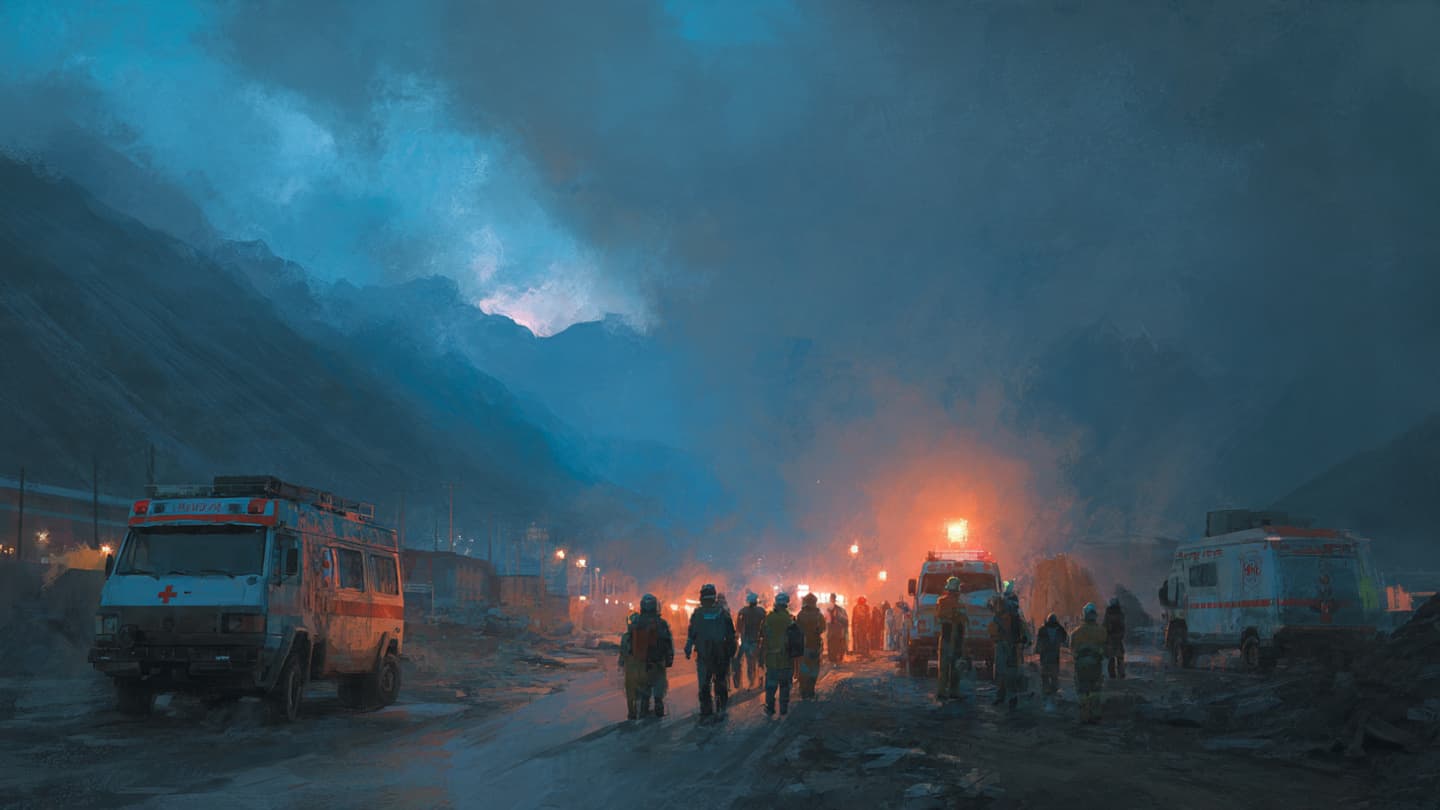
This week, those familiar rhythms were interrupted by a sudden rupture deep underground. A coal mine explosion in China killed around 90 people, according to state media reports, turning another industrial site into a place of mourning. Rescue crews moved through smoke, debris, and unstable shafts as families gathered outside the mine, waiting through long hours marked by sirens and uncertain silence.
The explosion unfolded in one of the country’s vast mining regions, where coal remains tied closely to both economic momentum and daily survival. China continues to rely heavily on coal for energy production, powering factories, apartment towers, rail systems, and cities whose skylines glow late into the night. Across the country, mines stretch beneath mountains and plains alike, forming an invisible network beneath the visible pace of modern development.
Yet beneath that momentum lies a quieter story of physical risk and industrial fatigue. Mining accidents have declined over recent decades as safety regulations tightened and oversight expanded, but disasters still emerge with unsettling regularity, especially in remote operations where production pressures often move faster than reform. Explosions caused by gas accumulation, structural collapse, or equipment failure remain among the gravest dangers facing miners working kilometers beneath the surface.
In the aftermath of the blast, emergency teams reportedly continued recovery operations while investigators began examining the cause. State media described scenes of damaged tunnels and difficult rescue conditions underground. Around the mine, cold air carried the noise of generators and emergency vehicles through nearby settlements where many residents have direct ties to the industry. In such towns, nearly every household knows the cadence of mining life — the early departures, the blackened boots at doorways, the constant understanding that the earth itself can become unpredictable.
China’s relationship with coal has always carried a dual image: one of industrial endurance and another of hidden fragility. Even as the country expands renewable energy projects and modernizes infrastructure, coal production has remained central to energy security concerns, particularly during periods of economic uncertainty or rising electricity demand. Mines continue operating at immense scale, feeding power plants that illuminate distant cities far removed from the landscapes where extraction occurs.
For many workers, mining is less an abstract industry than a generational inheritance. Entire counties have been shaped by shafts carved decades earlier, with schools, markets, rail lines, and apartment blocks built around the movement of coal. The work is dangerous, but often deeply woven into local economies where alternatives remain limited.
As news of the explosion spread across Chinese media, the tragedy joined a longer history of industrial accidents that periodically interrupt the nation’s narrative of relentless growth. Such moments arrive suddenly, but they linger quietly afterward — in memorial services, in government investigations, in empty seats at dinner tables, and in the stillness that settles over mining entrances once rescue lights fade.
By the end of the day, state media confirmed that dozens had died in the explosion while rescue efforts continued for others believed trapped or missing. Authorities pledged investigations into safety conditions and operational responsibility. Across the region, however, the most immediate reality remained simpler and heavier: another community waiting beside the mouth of the earth, listening for news rising slowly from below.
AI Image Disclaimer
Illustrations were generated using AI and are intended as visual interpretations of the reported events.
Sources
Xinhua News Agency Reuters Associated Press China Daily BBC News
Published by Banx Network. This article is part of the Banx decentralized media programme, powered by the BXE token on the XRP Ledger.