
Key Highlights
- Rapid Response:Mongolia mobilizes emergency crews to combat grassland fires.
- Community Impact:Smoke and fire threaten rural areas and livestock operations.
- Climate Concerns:Rising temperatures exacerbate wildfire risks across Central Asia.
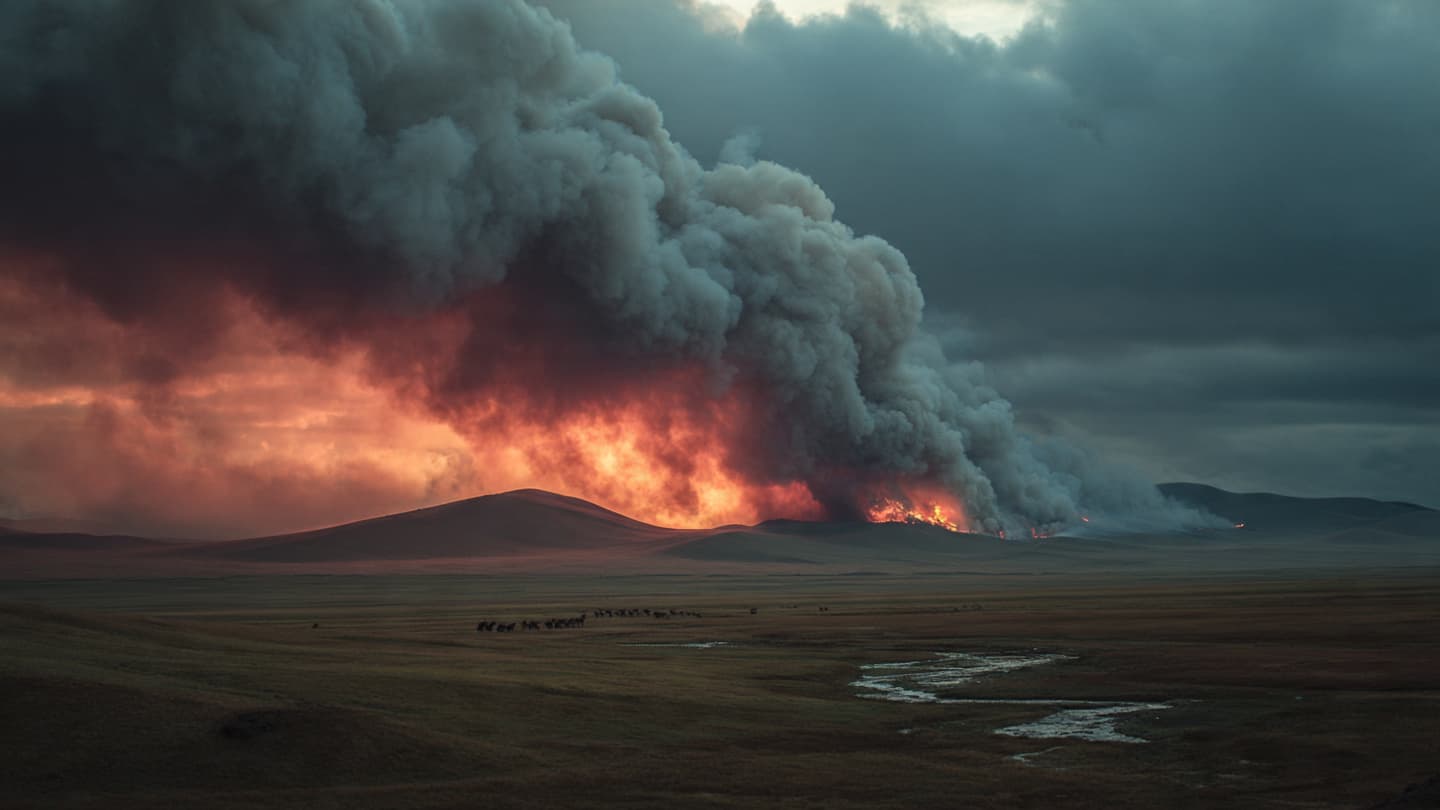
A cross-border grassland fire near Mongolia has triggered a large-scale emergency firefighting response this week as authorities work to contain flames spreading across dry steppe regions close to frontier areas. Emergency crews from multiple jurisdictions are coordinating efforts to prevent the wildfire from advancing toward populated zones and critical grazing land affected by strong winds and unstable weather conditions.
Officials reported that the fire expanded rapidly due to dry vegetation, gusting wind patterns, and limited natural barriers across the open landscape. Firefighting teams have deployed ground units, emergency vehicles, and aerial monitoring systems to track the movement of flames while attempting to establish containment lines through vulnerable grassland corridors.
The blaze has raised immediate concerns for rural communities and livestock operations situated near the affected regions. Residents described heavy smoke drifting across open plains while emergency alerts urged herders and nearby settlements to remain prepared for possible evacuation measures if conditions worsen. In some areas, transportation routes were temporarily restricted as visibility deteriorated beneath smoke-filled skies.
Grassland fires are not uncommon across parts of Mongolia and neighboring border territories, particularly during periods of drought and seasonal heat. However, environmental agencies have warned that rising temperatures and prolonged dry conditions may contribute to increasingly dangerous wildfire behavior capable of spreading across vast distances within short periods of time.
Firefighters are working through difficult conditions shaped by shifting winds and the immense scale of the open terrain itself. Unlike forest fires confined by natural boundaries, grassland blazes often race unpredictably across wide plains, forcing crews to rely heavily upon weather monitoring and rapid coordination between emergency units operating across remote areas.
Beyond the immediate firefighting efforts, the incident also reflects broader concerns surrounding climate-related disaster risks across Central Asia. Drought, wildfire activity, and severe weather fluctuations continue placing pressure on rural economies dependent upon agriculture, livestock grazing, and environmental stability throughout the region.
Even as emergency operations intensify, life across nearby settlements continues carefully beneath smoke-covered skies. Herds are moving farther from affected areas while residents monitor updates through local broadcasts and emergency advisories. Along the steppe, the sound of wind remains constant, carrying both ash and uncertainty across the dry landscape.
Authorities have confirmed that firefighting operations remain ongoing as crews continue working to contain the cross-border grassland fire. Emergency monitoring efforts are expected to continue until weather conditions improve and the risk of further spread declines significantly.
Published by Banx Network. This article is part of the Banx decentralized media programme, powered by the BXE token on the XRP Ledger.



