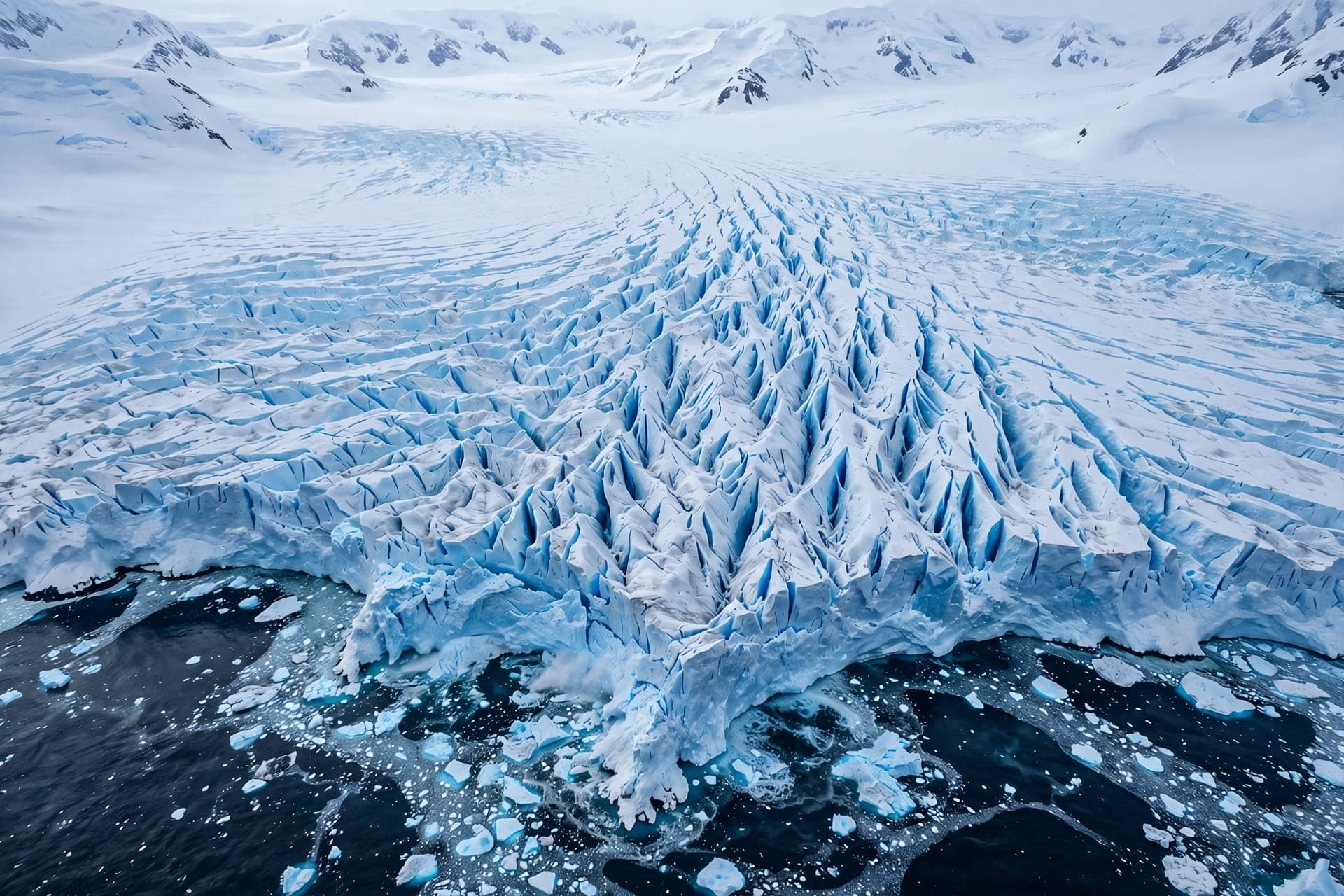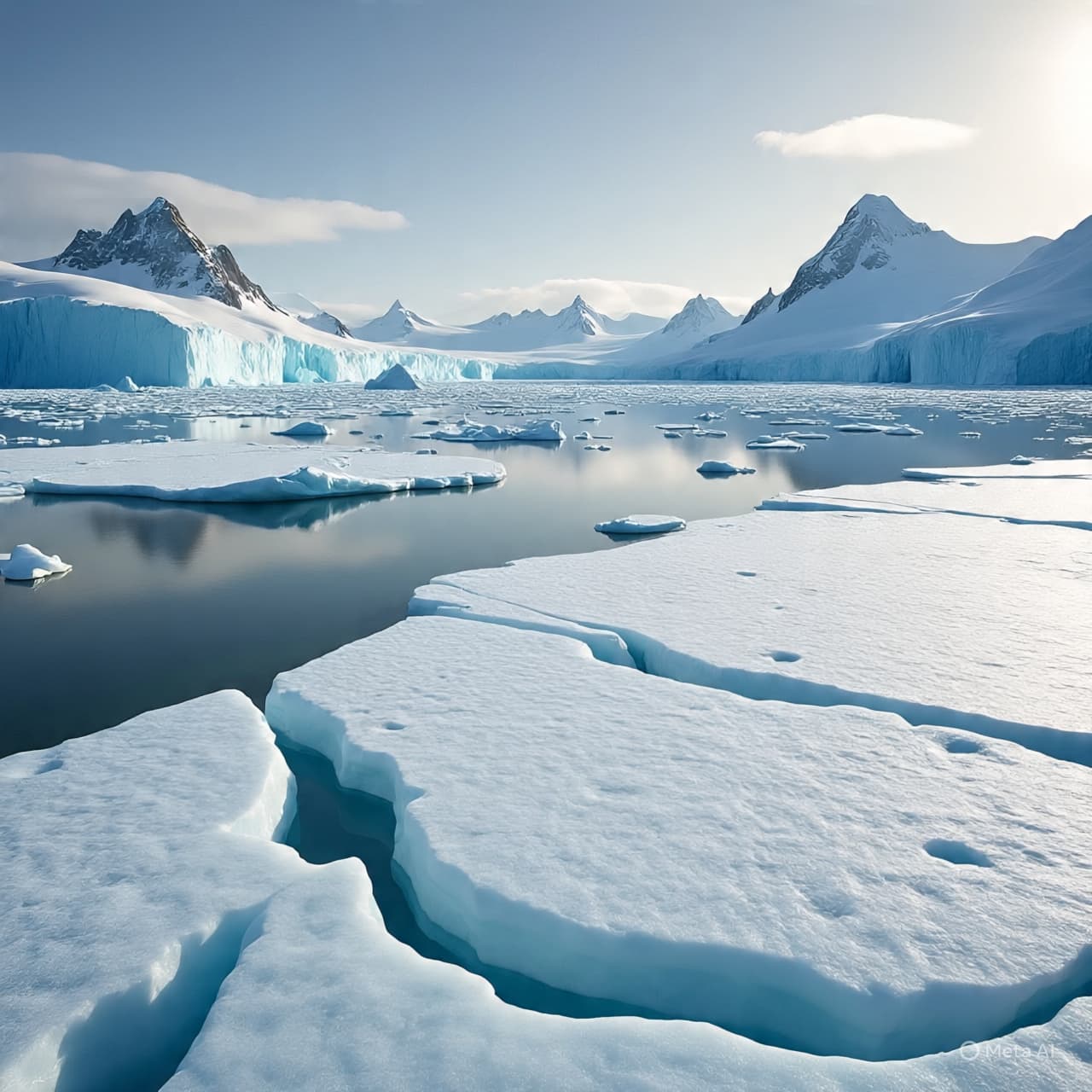
There are places where time seems to move differently, where the surface of the world appears fixed, untouched by the rhythms that shape more familiar landscapes. Antarctica is often imagined in this way—a vast, white stillness, defined by cold and distance. Yet even here, change is present, unfolding slowly across ice, air, and ocean.
The signs are not always dramatic. They do not always arrive as sudden fractures or visible shifts, but as patterns that emerge over years of observation. Temperatures rise and fall, ice shelves advance and retreat, and beneath it all, currents move through the surrounding seas, carrying heat in ways that are not immediately seen.
Much of the research conducted across the continent has focused on these changes, documenting the ways in which the Antarctic environment responds to a warming world. The findings are often stark, pointing to ice loss, shifting ecosystems, and the broader implications for global sea levels. The tone of such work reflects the scale of what is being measured.
And yet, within this landscape of concern, there are also moments that suggest a different kind of story—one that does not contradict the broader trend, but adds nuance to it. In certain regions, ice has shown periods of relative stability. Some ecosystems display an ability to adapt, adjusting to changing conditions in ways that are still being understood.
These observations do not erase the larger patterns of change. Instead, they reveal the complexity of the system. Antarctica is not uniform; it is composed of regions that respond differently to the same forces. Ocean currents, atmospheric conditions, and the shape of the land itself all contribute to variations in how change is expressed.
In some areas, colder water rising from the depths can slow the melting of ice shelves, providing a temporary balance against warming trends. In others, shifts in wind patterns can redistribute sea ice, altering local conditions in ways that are not immediately predictable. These processes operate quietly, often beneath the threshold of casual observation.
What emerges from this work is a picture that resists simplicity. The Antarctic is changing, but it is doing so through a network of interactions that include both loss and resilience. The presence of stability in certain regions offers insight into how the system functions, highlighting factors that may influence its future trajectory.
There is a certain restraint in how scientists describe these findings. The word “hope” appears carefully, not as a conclusion, but as a possibility grounded in observation. It reflects the recognition that while change is ongoing, the outcomes are not entirely fixed. Understanding the mechanisms that support stability may inform how the global community responds to broader climate challenges.
At the same time, the scale of the Antarctic ensures that any shifts within it carry implications far beyond its borders. The ice that holds firm in one region may contrast with loss in another, and the overall balance remains sensitive to changes in temperature and ocean circulation.
In this environment, hope is not a reversal, but a detail—a small but meaningful part of a larger picture. It is found in the persistence of certain patterns, in the capacity of systems to adjust, and in the knowledge that understanding continues to deepen.
Researchers studying Antarctica have identified areas of relative stability and adaptive responses within ecosystems, offering nuanced insight into climate change impacts. While significant challenges remain, these findings contribute to a more detailed understanding of the continent’s evolving environment.
AI Image Disclaimer
The images are AI-generated and intended to illustrate concepts related to Antarctic research, not real photographs.
Source Check BBC The Guardian Nature Scientific American Reuters
Published by Banx Network. This article is part of the Banx decentralized media programme, powered by the BXE token on the XRP Ledger.