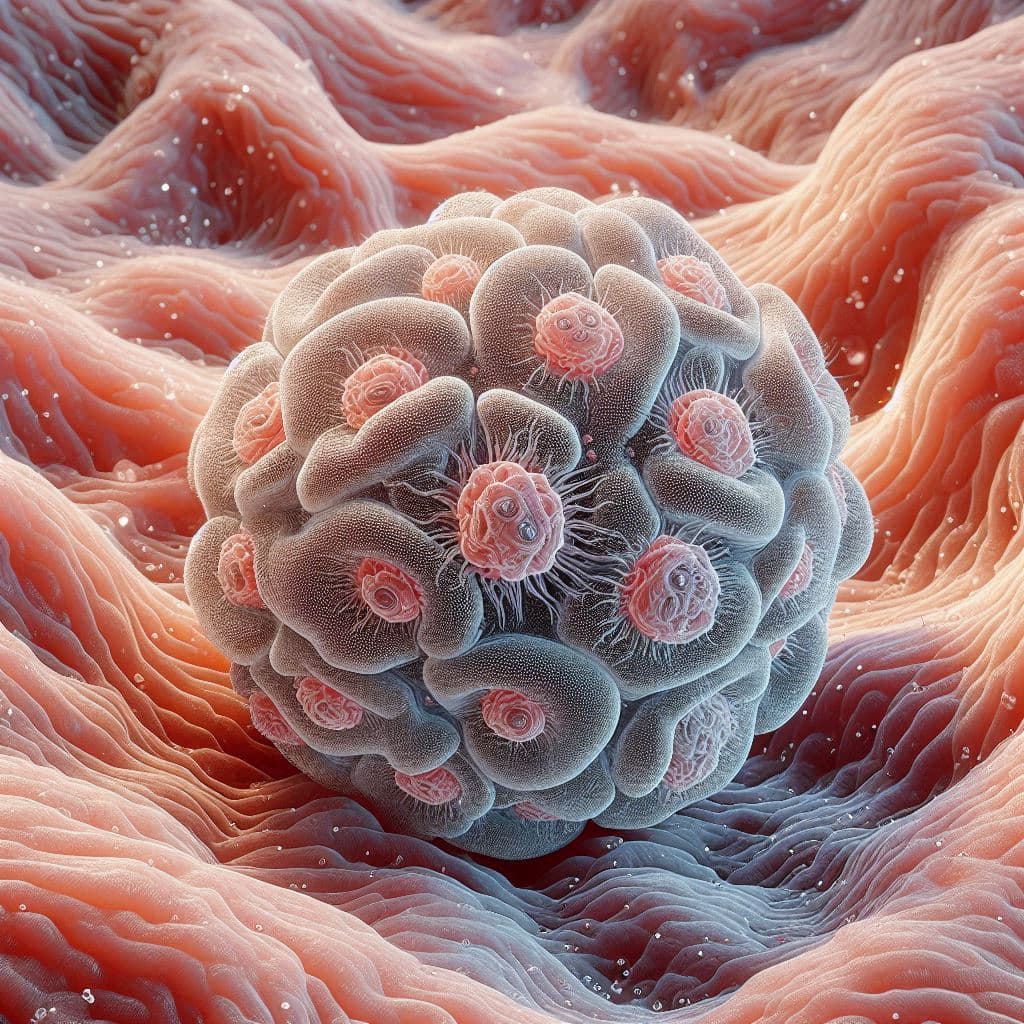
In the soft breath between dusk and dawn, life carries stories that are often invisible to the eye — the rustle of insects across fields, the slow drift of autumn leaves, and sometimes, the subtle movements of a microbial guest lodged deep within our tissues. Among these stories is that of Toxoplasma gondii, a tiny organism that has lived alongside humanity for millennia, a companion in our cellular forests whose presence is as quiet as falling dew.
For many, thinking of this parasite evokes a simple image — a microscopic foreigner with a cat‑tied lineage, transmitted through undercooked meat or soil brushed with a stray paw. Yet recent research has begun to show that what once seemed simple is more like a shifting tapestry, woven with threads of complexity scientists are only now beginning to unravel. At the heart of this tapestry lies a question that feels both biological and existential: how does this unassuming organism, so common that up to one‑third of the world’s population may carry it, quietly cause disease in some and remain unnoticed in others?
A team of researchers at the University of California, Riverside, has turned this question into an invitation to look deeper into the parasite’s life. By examining cysts — clusters where T. gondii hides within neurons and muscle — scientists have discovered an unexpected diversity in how the parasite behaves and expresses its genes. What was once pictured as a simple two‑stage life becomes a more intricate web, suggesting the tiny cyst is not a stagnant refuge but a dynamic place where the parasite may change and prepare for future interactions with its host.
These findings gently shift our understanding of why treating infections has been so difficult. If the cysts are not uniform but host a range of parasite cell types and activities, then efforts to target the parasite may need to be equally nuanced. Like trying to understand a forest by studying only the tallest trees, focusing on one aspect of T. gondii may miss the deeper stories whispered among its many forms.
Meanwhile, other groups are exploring how our own bodies respond to this hidden companion. Research from the University of Virginia Health System and related analyses highlight an ongoing dialogue between the immune system and the parasite — a dance where the body’s defenders recognize and restrain the infection, sometimes without overt symptoms, and other times faltering in people with weakened immunity.
This delicate balance underscores a larger theme in biology: that coexistence and conflict often stretch beyond simple binaries. The immune system’s ability to keep T. gondii in check reveals layers of tolerance and defense that extend our understanding of chronic infection and immune memory.
In this light, the story of Toxoplasma gondii becomes a meditation on the unseen rhythms that shape life and disease. It invites us to see infection not merely as an invasion, but as part of a layered interaction — a subtle conversation between organisms that unfolds over years, sometimes without dramatic fanfare, but always with significance.
As science continues to illuminate these nuances, the hope grows that future therapies will be guided by greater wisdom about how such parasites persist and how the human body responds. In the gentle glow of unfolding research, the mystery of T. gondii becomes not a specter of fear, but a complex companion teaching us about resilience, adaptation, and the many quiet ways life persists.
In summary, scientists are charting new terrain in our understanding of how Toxoplasma gondii causes disease and interacts with its host. The emerging insights emphasize biological complexity within cysts and the nuanced interplay between parasite and immune response. These discoveries may pave the way for more effective treatments while reminding us of the subtle narratives dwelling unseen within our bodies.
AI Image Disclaimer (rotated wording)
“Visuals are created with AI tools and are not real photographs.”
Source Check
Main recent scientific reporting on this topic:
1. UC Riverside News – “Scientists find hidden diversity inside common brain parasite” (2026) 2. News‑Medical – “Scientists offer new insight into how common parasite T. gondii causes disease” (2026) 3. News‑Medical / UVA Health research – “New insight into how our bodies keep brain parasite Toxoplasma gondii in check” (2026) 4. Discover Magazine / related reporting – immune system vs T. gondii summary (2026) 5. Phys.org / LMU/EMBL structural insight on T. gondii infection (2025)
Published by Banx Network. This article is part of the Banx decentralized media programme, powered by the BXE token on the XRP Ledger.