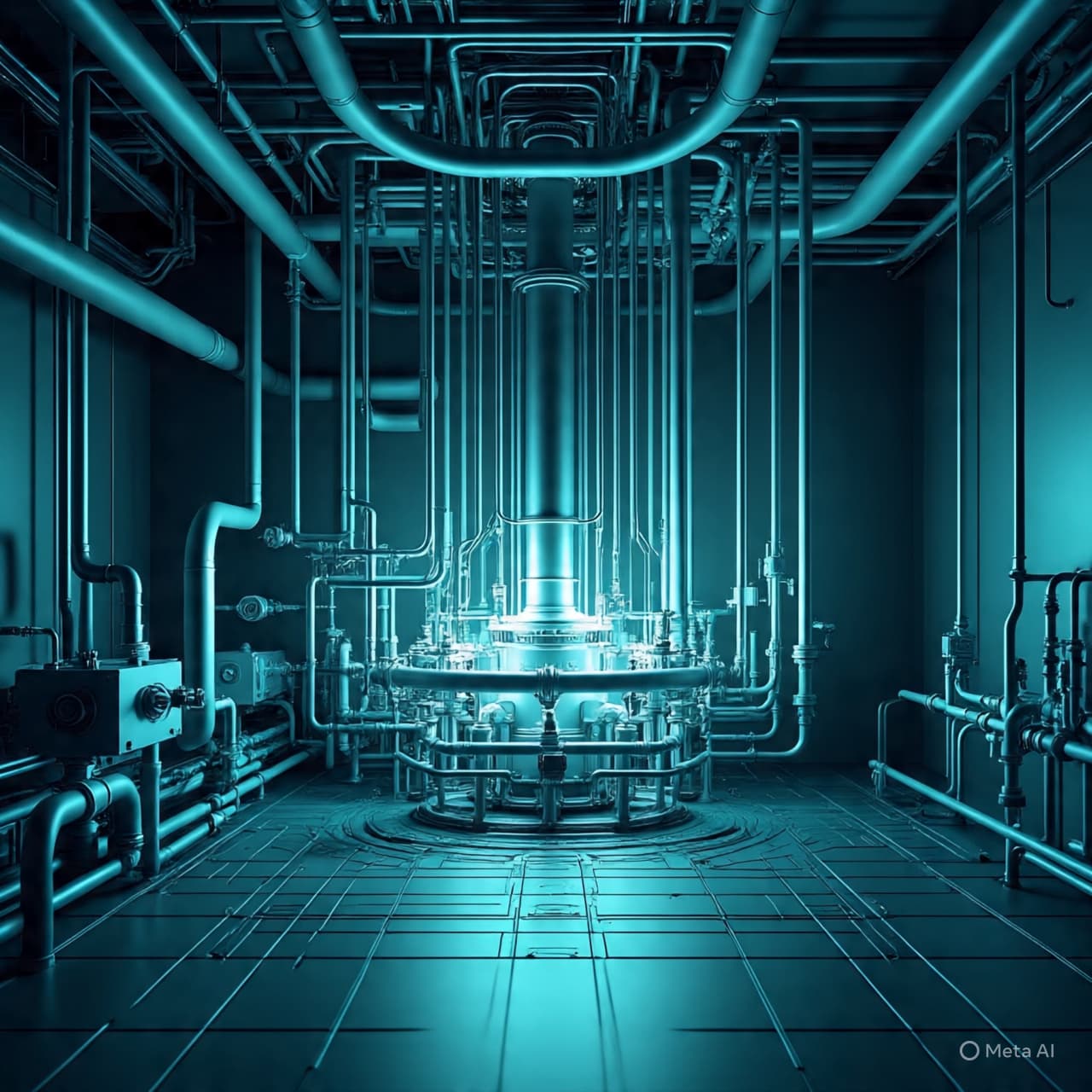
In the vast, wind-brushed expanses of the American West, where sagebrush bends and mountains hold the horizon in steady silhouette, a different kind of fire has been granted permission to burn. It is not the bright flare of fossil fuel, nor the flicker of solar panels catching afternoon light. It is older, denser, quieter — the contained promise of the atom.
A nuclear power project backed by Bill Gates has received formal regulatory approval, marking a significant step for advanced nuclear technology in the United States. The plant, developed by TerraPower, is designed around a next-generation reactor concept intended to be smaller, more flexible, and, in theory, safer than the towering light-water reactors that defined the industry’s 20th-century expansion.
The proposed facility — often described as a sodium-cooled fast reactor paired with energy storage — aims to generate steady, carbon-free electricity while also offering the ability to adjust output more dynamically than traditional nuclear plants. In an era when grids strain under the twin pressures of electrification and renewable intermittency, that flexibility has become part of the pitch: a reactor not only as baseload anchor, but as stabilizing partner to wind and solar.
Approval from federal regulators signals that the design has passed a crucial safety and environmental review phase. For advanced nuclear advocates, the milestone represents more than paperwork; it is a validation of years of research, licensing negotiations, and capital investment. For critics and skeptics, it is a reminder that nuclear energy remains a field where ambition must move in tandem with rigorous oversight and public trust.
The timing is not incidental. Governments and corporations alike are rethinking energy portfolios amid climate targets, geopolitical tensions, and rising electricity demand from data centers and industrial electrification. Nuclear power — long shadowed by high costs, construction delays, and memories of past accidents — has returned to policy conversations with a new vocabulary: resilience, decarbonization, innovation.
Yet approval is not completion. Building a nuclear plant remains a complex undertaking, shaped by supply chains, workforce readiness, financing structures, and community acceptance. Advanced designs promise efficiencies, but they also require new manufacturing ecosystems and regulatory familiarity. The path from blueprint to operational reactor is measured in years, not headlines.
What distinguishes this project, in part, is its framing. Backed by high-profile private capital and rooted in technological reinvention, it reflects a broader effort to reposition nuclear energy as forward-looking rather than legacy infrastructure. In public remarks over the years, Gates has argued that deep decarbonization will require firm, clean power sources alongside renewables — a view shared by many energy analysts who see nuclear as one of the few scalable, low-emissions options available today.
Still, the atom carries its own history — of promise, protest, pride, and precaution. Communities asked to host reactors weigh economic opportunity against long-term stewardship. Regulators balance innovation with caution. Investors measure timelines against return. In this layered calculus, approval is both a beginning and a test.
If the plant moves from license to construction and from construction to operation, it could become a reference point for the next generation of nuclear development in the United States. Not a revolution in a single stroke, but a gradual reshaping of how power is imagined — dense, disciplined, and designed for a grid that must grow cleaner without growing fragile.
In the quiet language of regulatory filings, a threshold has been crossed. Under open sky and distant ridgelines, the groundwork for a new reactor may soon begin — an effort to contain immense energy within steel and concrete, and perhaps to contain, too, a measure of the world’s warming trajectory.
AI Image Disclaimer Visuals are AI-generated and serve as conceptual representations.
Sources (Media Names Only) Reuters Associated Press Bloomberg The Wall Street Journal Financial Times
Published by Banx Network. This article is part of the Banx decentralized media programme, powered by the BXE token on the XRP Ledger.