
Key Highlights
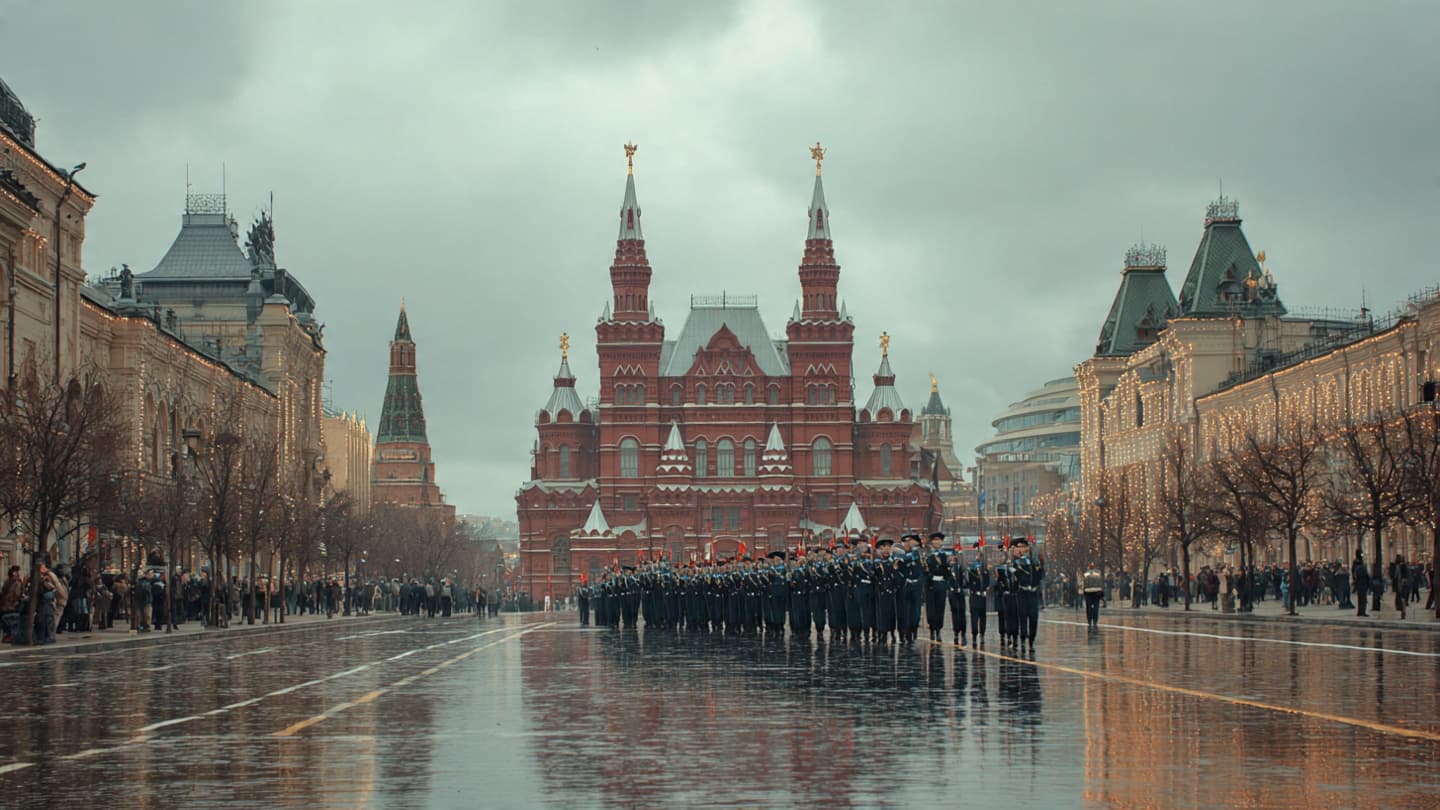
- Historic Omission:For the first time since 1945, Russia's Victory Day parade will not feature military hardware.
- Shift in Focus:The parade will emphasize troops on foot and historical remembrance instead of tanks and armored vehicles.
- Symbolic Change:The absence of machinery alters the tone of the ceremony, highlighting human participation over military display.
This year, the annual Victory Day parade in Moscow, held on May 9, will mark a significant departure from tradition. For the first time since the end of World War II in 1945, the parade will proceed without the iconic display of military hardware, such as tanks and missile systems, which have long been a staple of this commemoration. Instead, the focus will shift to troops marching on foot and ceremonial units, emphasizing historical remembrance over military might.
The absence of military vehicles is particularly striking in a city where the parade has historically served as a powerful symbol of national strength and continuity. The presence of tanks and armored vehicles has not only honored the sacrifices made during the war but also projected an image of military capability that resonates with contemporary geopolitical narratives. This year, however, the visual language of the parade will change dramatically, as officials have opted for a more subdued representation of military power.
While no detailed public explanation has been provided for this decision, it comes at a time when Russia is facing ongoing military commitments and heightened international scrutiny due to its actions in Ukraine. Security concerns have also influenced how public events are organized in recent years, leading to restrictions on large-scale displays in central Moscow. The decision to omit military hardware may reflect a strategic choice to adapt to these evolving circumstances.
Victory Day remains one of Russia's most significant national holidays, commemorating the estimated 27 million Soviet lives lost during World War II. The day has historically blended mourning with national pride, as veterans and families gather to honor their ancestors. The “Immortal Regiment” processions, where citizens carry photographs of wartime relatives, have become a poignant feature of the celebrations, reinforcing the personal connections to the past.
However, the absence of armored vehicles this year subtly alters the balance between memory and display. The focus will now be on the human elements of the ceremony: the boots marching on the cobblestones, the voices of soldiers in formation, and the cadence of their steps. This shift in emphasis may change the tone of the event, drawing attention to the symbolic aspects of the ceremony—flags, uniforms, and speeches that frame the past as both a legacy and a responsibility.
In previous years, the presence of military hardware has often been interpreted by international observers as a demonstration of contemporary military power. With the absence of these vehicles, the emphasis may lean more towards commemoration, although the historical significance of the day remains unchanged. The experience of May 9 in Moscow is deeply sensory, marked by the smell of spring rain and the distant sounds of rehearsals, creating an atmosphere that feels suspended between past and present.
As Russia prepares for this year's parade, officials have reiterated their commitment to honoring those who fought in what is known as the Great Patriotic War. The focus remains on remembrance and continuity of tradition, even as the visual representation of that tradition undergoes a significant change. The decision to remove military hardware from the procession serves as a reminder that even the most established rituals can evolve under the pressures of time and circumstance.
When May 9 arrives, Red Square will still be filled with the spirit of remembrance, albeit in a quieter, more introspective manner. The absence of the expected military display does not diminish the meaning of the day; rather, it invites a deeper reflection on the sacrifices made and the ongoing legacy of those who fought for their country.
Published by Banx Network. This article is part of the Banx decentralized media programme, powered by the BXE token on the XRP Ledger.



