
Key Highlights
- A humpback whale has been stranded in the Baltic Sea, far from its typical migration routes.
- The whale's journey has drawn attention from marine experts and local communities.
- Observers express both awe and concern for the whale's precarious situation.
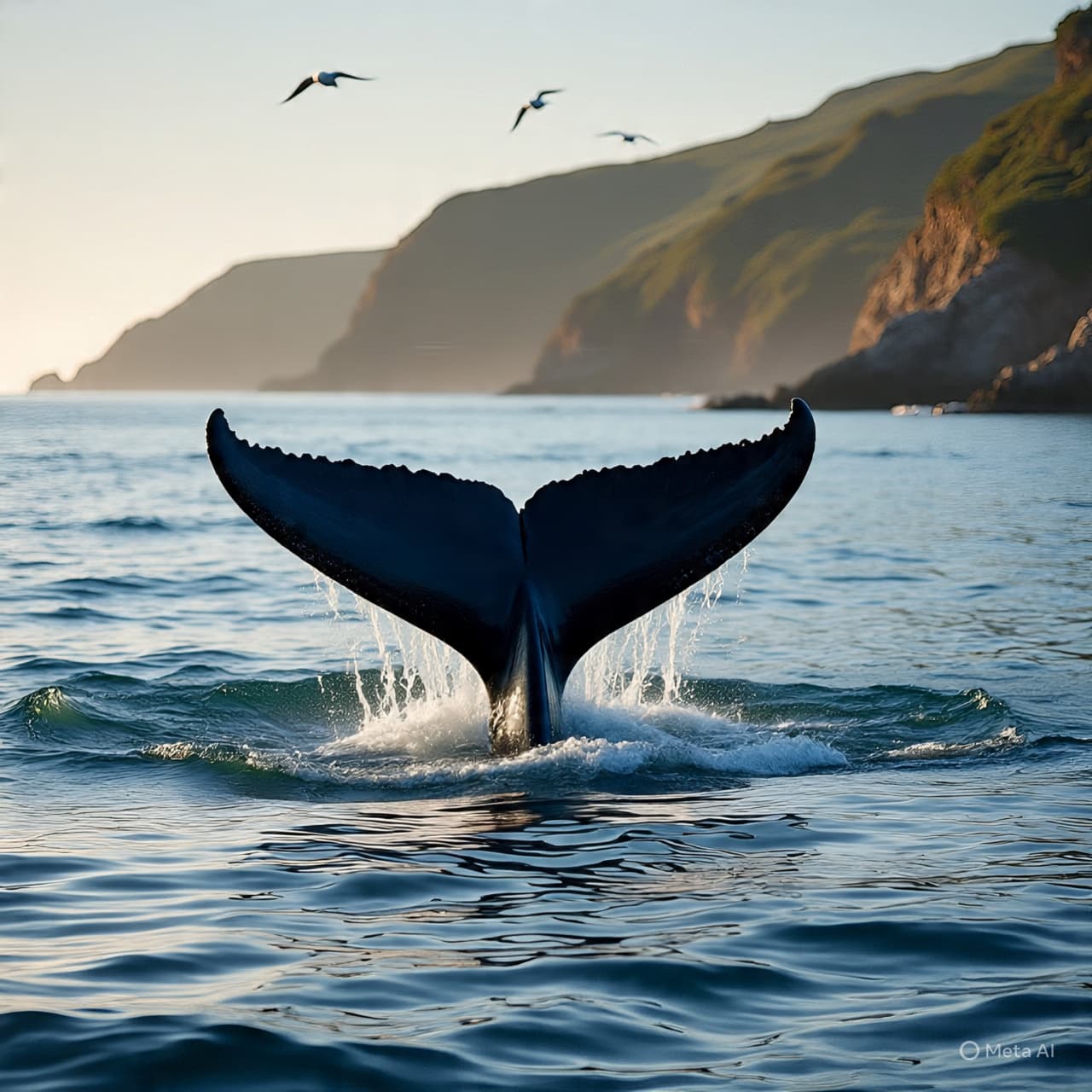
The Baltic Sea, often perceived as a tranquil expanse, has recently become the stage for a remarkable yet troubling event: the stranding of a humpback whale. This majestic creature, typically found in the vastness of open oceans, has ventured into these semi-enclosed waters, raising questions about its journey and the challenges it faces. The whale's presence has captivated onlookers along the coast, who are drawn to the spectacle of such a rare visitor.
Humpback whales are renowned for their extensive migrations, traveling thousands of miles between feeding and breeding grounds. However, the Baltic Sea is not a part of their usual migratory path. The shallow waters and limited space present a stark contrast to the deep ocean environments these whales are adapted to navigate. The sighting of this whale has sparked a mix of fascination and concern, as observers ponder the implications of its unexpected journey.
As the whale's path has unfolded over days and weeks, sightings have varied from hopeful to alarming. The recent stranding is a critical moment in this ongoing saga, suggesting that the whale's journey has become increasingly perilous. Marine experts emphasize that while such occurrences are rare, they are not unprecedented. Factors such as changing ocean conditions, shifts in prey availability, and navigational errors can lead whales to venture into unfamiliar territories.
The challenge for the stranded whale is not just survival but also finding its way back to safer waters. The Baltic Sea's unique characteristics complicate this journey, as the whale must navigate through an environment that does not easily lead back to the open ocean. Experts are closely monitoring the situation, weighing the potential for intervention against the need to minimize stress on the animal. Rescue efforts, when deemed necessary, require careful planning and coordination, reflecting the uncertainty of the whale's circumstances.
For coastal communities, the presence of the whale has fostered a sense of shared experience and connection to the broader marine ecosystem. People gather along the shore, captivated by the sight of the whale and the unfolding narrative of its journey. This event serves as a poignant reminder of the intricate relationships between distant oceanic environments and local communities, highlighting how the movement of a single creature can resonate deeply within human consciousness.
Beneath the surface of this event lies a broader reflection on the state of our oceans. The whale's journey, while singular, mirrors larger patterns of change in marine ecosystems, shaped by environmental shifts and the delicate balance between instinct and habitat. As the situation develops, the uncertainty surrounding the whale's fate remains palpable. It may find its way back to deeper waters, guided by instinct and ocean currents, or it may require human intervention to navigate the challenges ahead.
As observers along the Baltic Sea continue to watch and wait, the stranded humpback whale stands as a symbol of both vulnerability and resilience. Its presence invites contemplation, patience, and a quiet hope that the path ahead, though fraught with uncertainty, may ultimately lead back to the open sea.
Published by Banx Network. This article is part of the Banx decentralized media programme, powered by the BXE token on the XRP Ledger.



