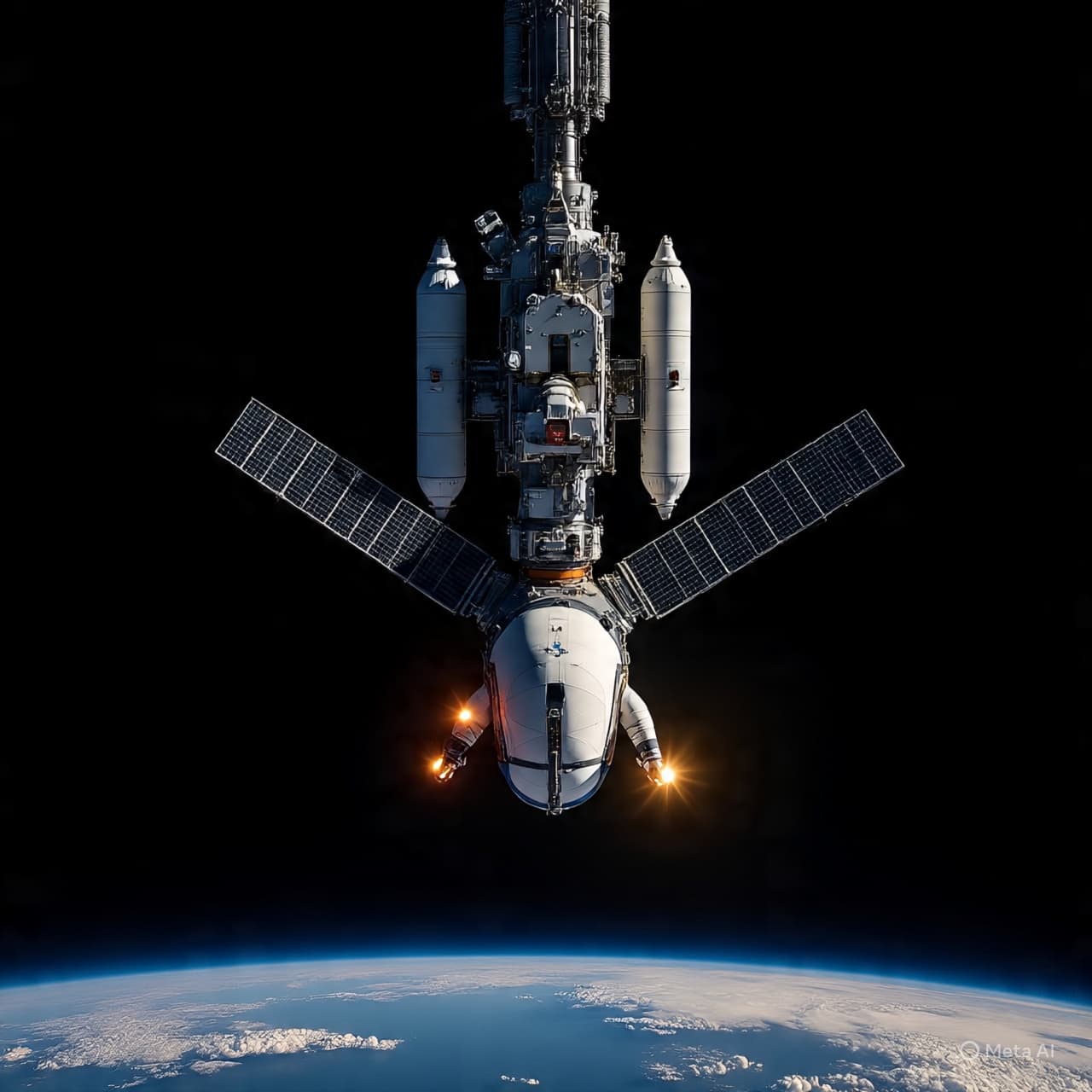
There are journeys that feel both personal and universal at once — voyages that carry the quiet weight of identity alongside the broader arc of exploration. When a spacecraft approaches orbit, it brings with it not only instruments and experiments, but stories shaped by heritage, training, and perseverance. In that narrow passage between Earth and space, history and horizon often meet.
A crew commanded by has successfully docked with the , marking another steady chapter in international cooperation beyond the planet’s atmosphere. The spacecraft, launched aboard a operated by , completed its orbital maneuvers before executing a precise and carefully monitored docking sequence.
Meir, a Jewish American astronaut and marine biologist by training, has long been part of NASA’s evolving generation of spacefarers. During earlier missions, she became widely recognized for participating in the first all-female spacewalk. Now, in a leadership role, she guides a new crew as they transition from launch to life aboard the ISS — a laboratory that circles Earth roughly every 90 minutes.
The docking itself unfolded with characteristic calm. Thrusters fired in measured bursts as the capsule aligned with the station’s port. Engineers on the ground tracked data streams while astronauts inside prepared for arrival procedures. Once contact was confirmed and safety checks were complete, hatches opened and greetings floated gently in microgravity.
Under Meir’s command, the crew is expected to contribute to a range of scientific investigations. Research aboard the ISS spans human health, Earth observation, and advanced materials, among other fields. The station remains one of the few places where sustained international collaboration continues uninterrupted, even amid shifting geopolitical currents on Earth.
Leadership in orbit carries its own subtleties. Commanders coordinate daily schedules, ensure adherence to safety protocols, and maintain morale in confined quarters. In microgravity, even simple tasks require intention; tools must be tethered, movements controlled. The role demands technical precision and interpersonal awareness in equal measure.
Meir’s heritage has also drawn attention, reflecting the diverse backgrounds represented in today’s astronaut corps. While space exploration is often framed in national terms, it is also a mosaic of individual stories. Each astronaut brings personal history into orbit, adding depth to the collective endeavor.
The arrival of this crew continues NASA’s partnership with commercial providers under its Commercial Crew Program. By relying on reusable rockets and private-sector collaboration, the agency has established a regular cadence of missions to and from the ISS. The docking marks both an end to one journey and the beginning of months of research and station maintenance.
According to NASA officials, the launch, flight, and docking operations proceeded as planned. The crew has begun orientation activities and will integrate into ongoing scientific work. As the ISS resumes its steady orbit above continents and oceans, another chapter quietly unfolds — guided by experience, shaped by cooperation, and anchored in the shared pursuit of knowledge.
AI Image Disclaimer: Visuals are created with AI tools and are not real photographs.
Sources: Reuters BBC CNN The New York Times Politico
Published by Banx Network. This article is part of the Banx decentralized media programme, powered by the BXE token on the XRP Ledger.