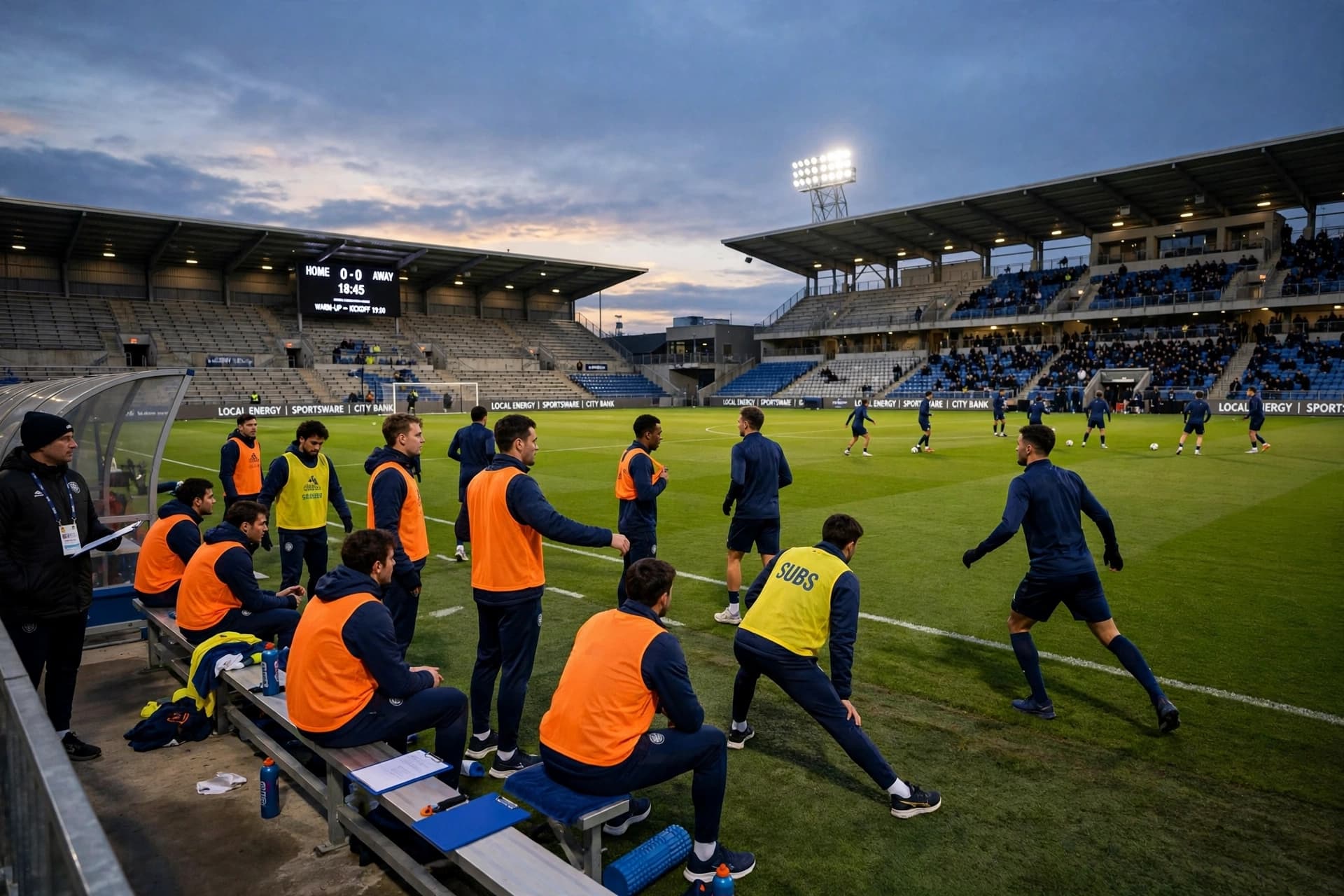
There is a quiet tension that settles over a team when the substitutes begin to outperform the starters. It is not the loud drama of a locker-room rift, but the soft hum of a coach’s mind turning over possibilities. In Chester, Pennsylvania, on a Tuesday evening, the United States women’s national team clawed back from two goals down to draw Spain, and in doing so, they may have shifted the ground beneath their own veterans’ feet.
For much of the first half, Spain looked every bit the world’s top-ranked team. The visitors punished two sequences of American mistakes about five minutes apart, taking a 2-0 lead into halftime . Alexia Putellas, the two-time Ballon d’Or winner, scored on her 150th cap, and Salma Paralluelo added a second . The U.S. midfield, with Claire Hutton inserted as a holding presence, still struggled to contain Spain’s technical superiority .
Then came the substitutions. Emma Hayes made multiple waves of changes around the hour mark, introducing Mallory Swanson, Michelle Cooper, Lily Yohannes, Jaelin Howell, and Alyssa Thompson . The energy shifted almost immediately. Ashley Sanchez, in her first USWNT start since 2023, had already pulled one back in the 49th minute with a clever finish . Swanson, returning from nearly two years away, equalized late with her first national team goal since the 2024 Olympic gold-medal match .
The result was a 2-2 draw, but the implications run deeper than the scoreline. The substitutes did not merely fill space; they changed the game’s rhythm, applying relentless pressure and winning individual duels that the starters had conceded . Cooper, a forward by trade, played out of position and brought a different kind of aggression to the wide areas . Yohannes and Howell added fresh legs and composure in midfield.
Hayes now faces a difficult calculus. The core group that has carried this team through the Olympic cycle—Lavelle, Heaps, Rodman, Wilson—remains talented and experienced. But against Spain, the gap between the first-choice XI and the supporting cast narrowed considerably. The midfield combination of Heaps and Lavelle, in particular, has been a persistent puzzle; both are attack-minded creators, and pairing them leaves defensive gaps that elite opponents exploit .
Ahead lies November’s Concacaf W Championship quarterfinal against El Salvador, a World Cup qualifying playoff with little margin for error . The depth Hayes has discovered is a gift, but it also means the comfortable certainties of the past are gone. Every starting position is now a question, and every substitute a potential answer.
The images accompanying this article are AI-generated for illustrative purposes only.
Sources: The New York Times, USA Today, Yahoo Sports, NBC Sports
Published by Banx Network. This article is part of the Banx decentralized media programme, powered by the BXE token on the XRP Ledger.