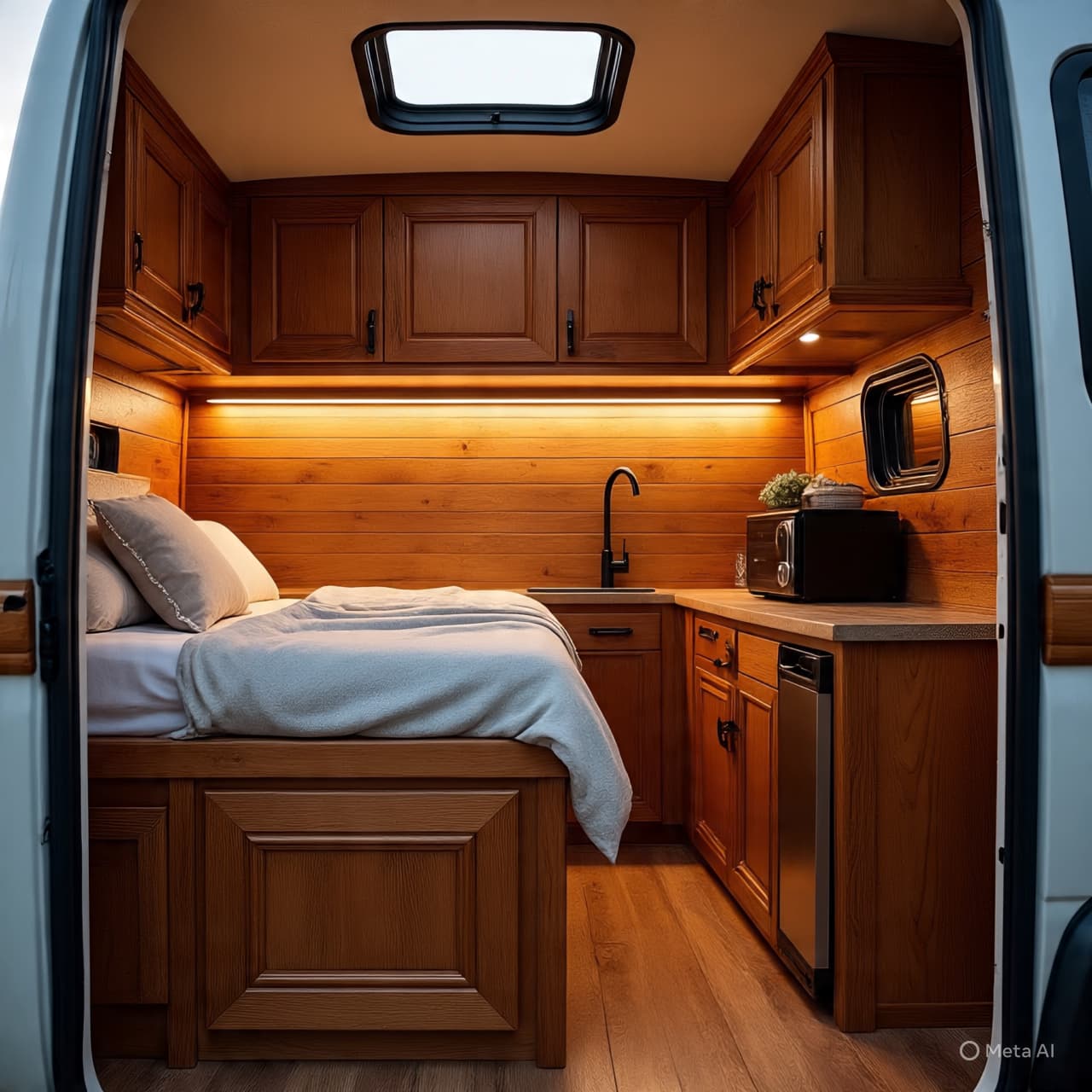
At dawn, before highways fill and rest stops stir, there is a particular stillness to a parked van. Curtains drawn, kettle warming on a compact stove, a faint line of light slipping through a skylight—inside, it feels less like a vehicle and more like a room waiting to be lived in. The romance of the open road has always carried this quiet promise: that movement need not mean leaving comfort behind.
A newly unveiled handcrafted camper van leans fully into that promise. Built by a small team of specialist converters, the vehicle transforms a standard cargo chassis into a compact dwelling, blending cabinetry, insulation, and discreet engineering into a space designed for long-term travel. Unlike mass-produced motorhomes, this build emphasizes bespoke detail—custom woodwork, integrated storage, and soft, domestic lighting that shifts the interior mood from utility to warmth.
The van’s layout reads like a small apartment in motion. A fixed bed anchors the rear, raised above concealed storage compartments and electrical systems. Beneath the mattress, lithium battery packs connect to rooftop solar panels, offering off-grid capability for lighting, refrigeration, and device charging. Along one wall, a galley kitchen tucks in a sink, induction cooktop, and refrigerator drawer, framed by handcrafted cabinetry that echoes the grain and tone of a traditional home kitchen.
Water tanks are hidden beneath the floor, feeding a compact shower and cassette toilet housed behind a sliding partition. The design prioritizes efficiency—every hinge, latch, and fold-out surface serves more than one purpose. A dinette converts to an additional sleeping area; a swivel seat transforms the driver’s cabin into part of the living room. Double-glazed windows and insulated paneling moderate temperature, reducing reliance on external hookups.
The rise of such builds reflects a broader cultural current. In recent years, interest in van life has grown across North America, Europe, and Australia, driven by remote work flexibility, housing affordability pressures, and a renewed appetite for mobility. Social media has played its part, turning minimalist interiors and desert backdrops into aspirational imagery. Yet behind the photographs lies a more technical story—one of engineering codes, weight distribution calculations, and careful compliance with road safety regulations.
Handcrafted conversions occupy a particular niche within this movement. They are often commissioned rather than purchased off a lot, tailored to individual needs—surfboards stored beneath beds, office desks folded into walls, pet spaces integrated into cabinetry. The cost can rival that of a small apartment deposit, reflecting both materials and labor. Still, for many buyers, the appeal lies in autonomy: the ability to wake beside a coastline one week and in a forest clearing the next, without surrendering the small comforts of domestic life.
Manufacturers note that demand has remained steady even as travel patterns shift. Some owners treat their vans as weekend retreats; others embrace full-time mobility. The handcrafted approach, though slower and more resource-intensive, offers durability and character that mass production cannot easily replicate. Each van becomes less a model number and more a personal address—albeit one that changes latitude.
There is a quiet poetry in that idea. A home traditionally stands still, rooted to a plot of land. A van home moves, yet carries its sense of place within four insulated walls. The morning coffee tastes the same whether brewed in a driveway or beside a mountain pass. The bed remains familiar even as scenery turns unfamiliar beyond the window.
As highways unfurl and fuel stations glow against the night, this handcrafted camper van represents more than clever design. It reflects an evolving understanding of comfort—one that values adaptability as much as permanence. In the gentle hum of tires on asphalt, the boundaries between travel and dwelling soften. And somewhere along the road, a small light flicks on inside a van, as steady and reassuring as any porch lamp left burning at home.
AI Image Disclaimer Visuals are AI-generated and serve as conceptual representations.
Sources Recreational Vehicle Industry Association National Caravan Industry Association of Australia International Energy Agency Tiny House Association
Published by Banx Network. This article is part of the Banx decentralized media programme, powered by the BXE token on the XRP Ledger.