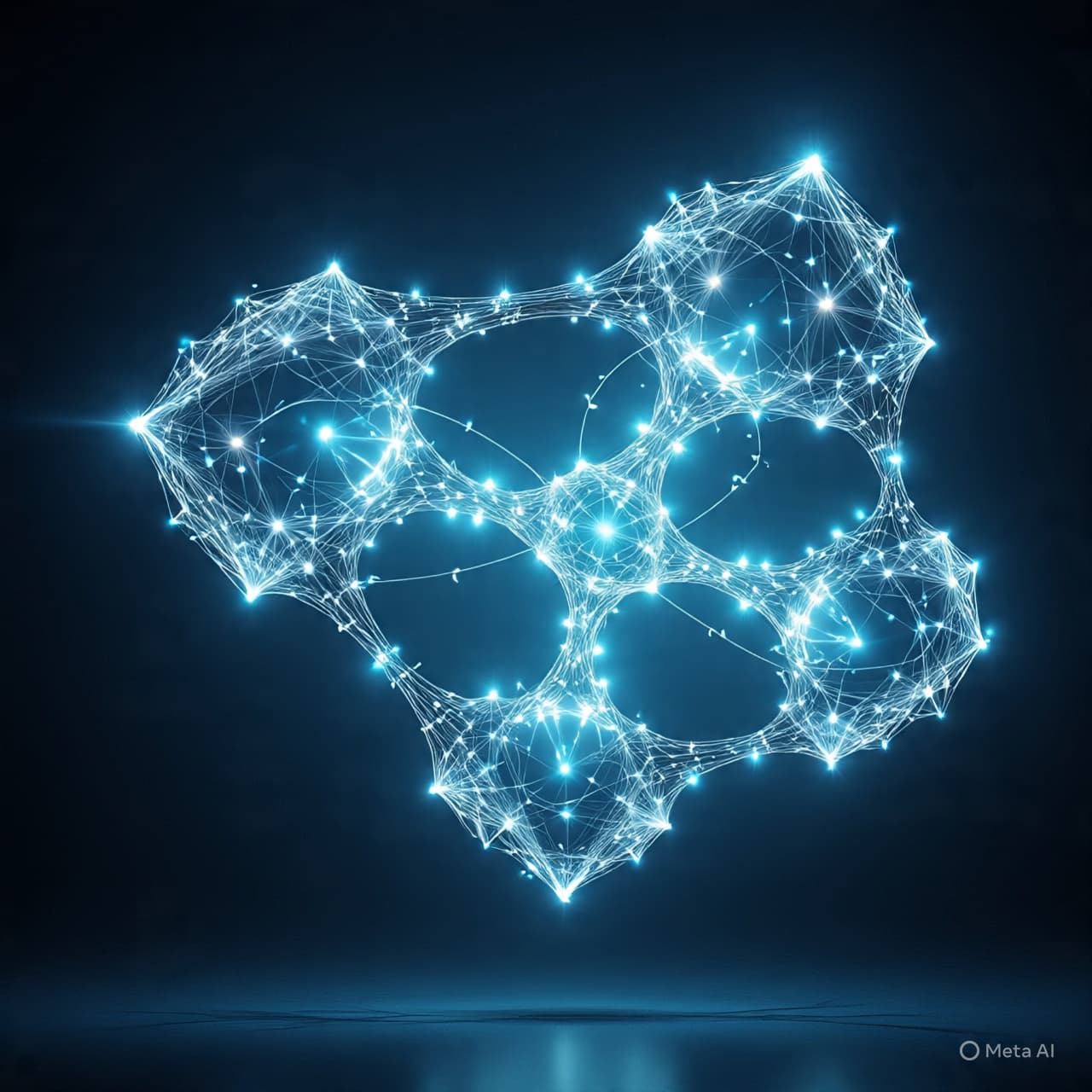
There is a long-standing symmetry in the way motion is understood, a quiet agreement that every action carries with it an equal and opposite response. It is a principle so deeply embedded in the language of physics that it often feels less like a rule and more like an expectation, a balance that holds across scales from the smallest interactions to the movement of planets.
And yet, in carefully constructed systems, there are moments when this balance appears to shift—not in violation of the broader laws that govern nature, but in ways that invite closer examination of how those laws are expressed.
Within this space of inquiry, researchers have turned to what are known as time crystals, a state of matter that does not remain static, but instead exhibits motion that repeats in time. Unlike conventional crystals, whose structure is defined by spatial patterns, time crystals are characterized by periodic changes, a kind of rhythm embedded within their very existence.
In recent experiments, a floating time crystal system has been observed to behave in ways that seem to depart from the familiar symmetry described by Newton's third law of motion. Forces within the system do not appear to produce equal and opposite reactions in the expected manner, creating an impression of imbalance.
This effect, however, does not represent a breakdown of fundamental physics. Rather, it reflects the complexity of systems that are driven out of equilibrium. In such systems, energy is continuously supplied and dissipated, allowing for behaviors that differ from those observed in isolated, static conditions.
The floating nature of the time crystal adds another layer to this behavior. By reducing the influence of friction and external constraints, the system allows internal interactions to become more visible. The result is a form of motion that appears to sustain itself, maintaining its periodicity while exhibiting directional effects that would not arise in simpler contexts.
At the heart of this phenomenon is the way energy flows through the system. Instead of remaining balanced at every instant, interactions can be distributed over time, leading to situations where the immediate response to a force is not mirrored in a straightforward way. The symmetry, rather than disappearing, is expressed across a broader temporal framework.
There is a certain subtlety in this distinction. The familiar law remains intact when considered in its full context, but the path through which balance is achieved becomes less direct. What appears as a local imbalance is part of a larger, ongoing exchange.
The study of such systems opens a window into behaviors that lie beyond equilibrium, where traditional intuitions must be adjusted to account for continuous energy input and dynamic structure. Time crystals, once a theoretical concept, now provide a platform for exploring these conditions in controlled settings.
In this sense, the findings do not overturn established principles, but extend them. They reveal how the same underlying laws can give rise to new patterns when the conditions change, when systems are allowed to evolve in ways that are not confined to static balance.
There is something almost quiet in this expansion of understanding. The rules do not vanish; they unfold, revealing layers that were not previously visible. In the steady oscillation of a time crystal, the familiar symmetry of motion is not lost, but reframed, stretched across time in ways that challenge how it is usually perceived.
Researchers have demonstrated that floating time crystal systems can exhibit behavior that appears to violate Newton’s third law locally, due to non-equilibrium conditions and energy flow. The findings offer new insight into dynamic systems and the nature of physical laws.
AI Image Disclaimer
These visuals are AI-generated conceptual illustrations and do not represent real experimental imagery.
Source Check Nature Science Physics Today New Scientist Scientific American
Published by Banx Network. This article is part of the Banx decentralized media programme, powered by the BXE token on the XRP Ledger.