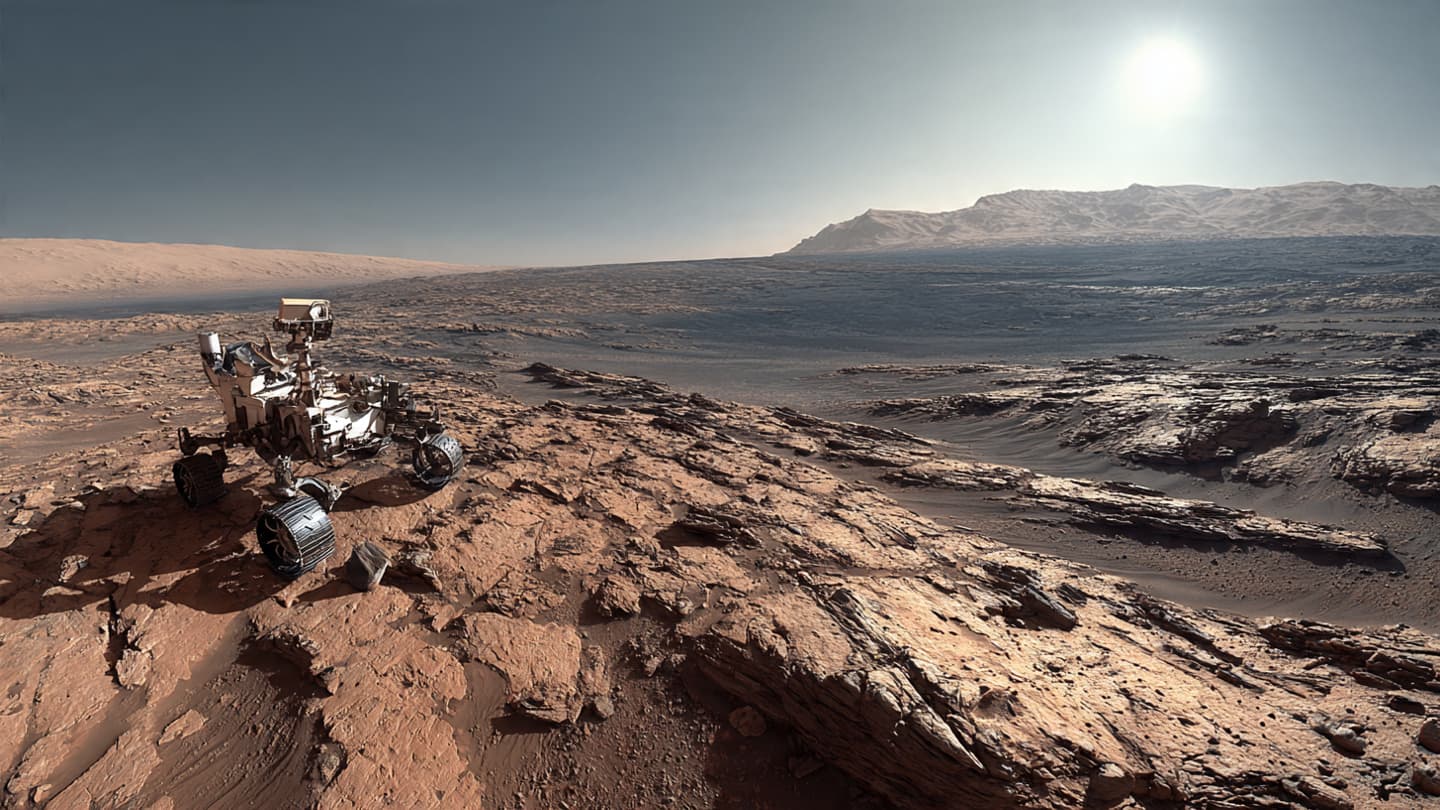
Across the dusty plains of Mars, where silence stretches for miles and time seems to settle into the soil, the search for life continues not with certainty, but with quiet persistence. Each discovery arrives not as an answer, but as another layer in a story still unfolding.
NASA’s Curiosity rover has identified organic molecules on the Martian surface that scientists describe as potentially linked to life-related processes. These compounds, while not evidence of life themselves, contribute to a growing body of data suggesting that Mars once possessed conditions favorable to biological activity.
The molecules were detected in sedimentary rocks within Gale Crater, an area long studied for its geological history. Organic compounds are considered essential building blocks of life, though they can also form through non-biological processes.
Researchers emphasize that the discovery does not confirm past or present life on Mars. Instead, it highlights the planet’s chemical complexity and reinforces the possibility that ancient environments may have supported microbial life.
Curiosity’s findings are part of a broader effort to understand Mars’ habitability over time. Previous missions have already revealed evidence of ancient water, including riverbeds and mineral deposits formed in wet conditions.
The rover’s instruments allow scientists to analyze samples with increasing precision, uncovering details that were once beyond reach. Each measurement adds context to the planet’s environmental history.
This discovery also complements ongoing missions, including those focused on collecting samples for potential return to Earth. By studying Martian material in terrestrial laboratories, scientists hope to deepen their understanding of its chemical and biological potential.
As exploration continues, the distinction between possibility and proof remains carefully maintained, reflecting the cautious approach that defines scientific inquiry in planetary research.
While the question of life on Mars remains open, findings like these quietly expand the horizon of what may once have been possible, inviting continued exploration grounded in patience and evidence.
AI Image Disclaimer: Some images in this article are AI-generated depictions of Mars surface exploration.
Sources: NASA, Nature, Science Magazine, Space.com
Published by Banx Network. This article is part of the Banx decentralized media programme, powered by the BXE token on the XRP Ledger.