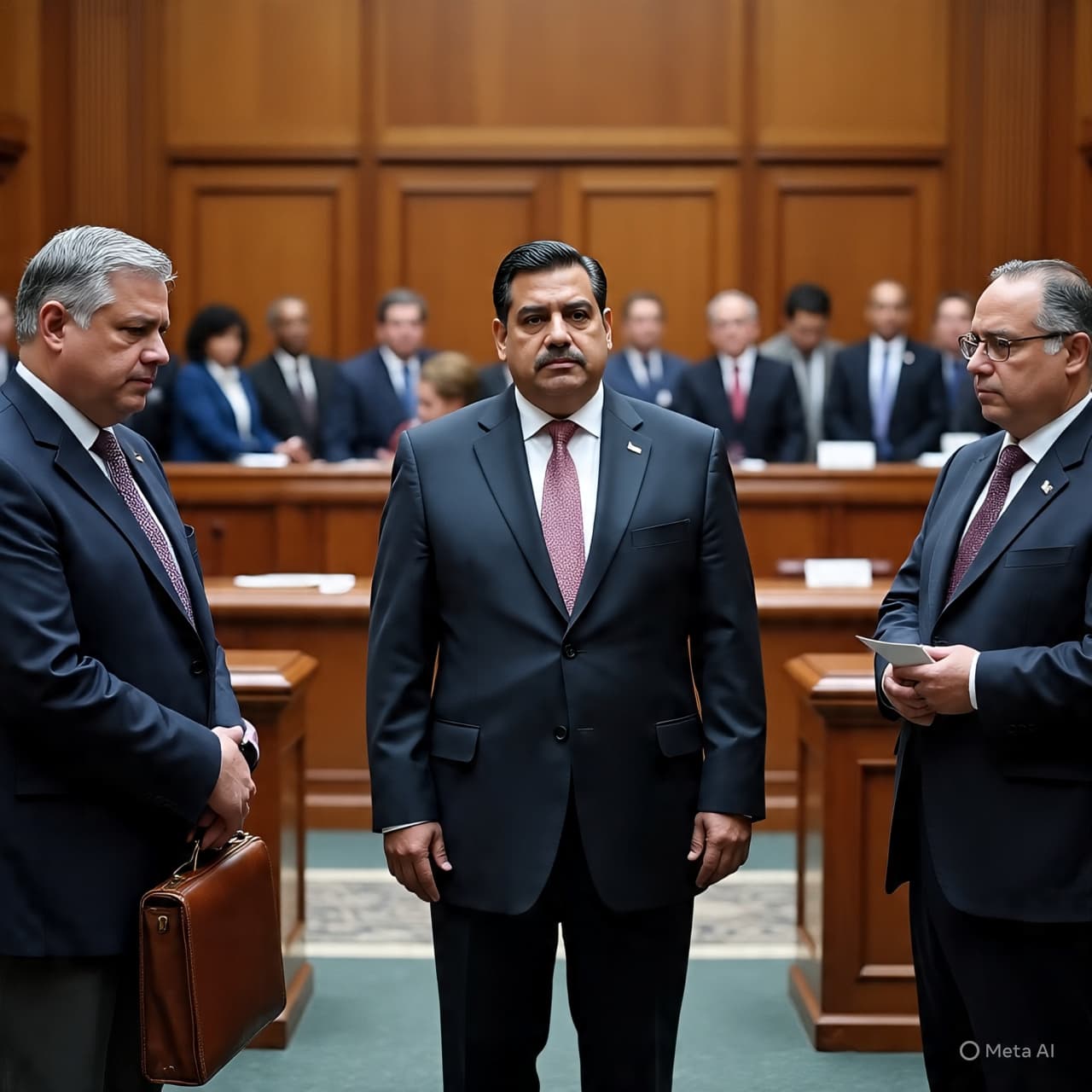
In the hush of a federal courtroom in New York, where law and fate often meet under the watchful gaze of marble and statute, there are moments that feel almost like a relay of history passing from one generation to another. Here, amid the hushed murmurs of counsel and clerk, a name familiar to global legal circles — Barry Pollack — emerged once again in the center of a high‑stakes drama. Just as he once guided another controversial figure through a legal labyrinth, Pollack now stands beside the former Venezuelan president, Nicolás Maduro, in a case that is being watched by governments and jurists around the world.
Maduro appeared in Manhattan federal court this week to plead not guilty to a sweeping indictment that accuses him of involvement in a narco‑terrorism conspiracy, among other serious charges. His choice of legal representation — Pollack, a veteran U.S. trial lawyer — underscores the complex and deeply contested nature of the proceedings. It was Pollack’s work in recent years that ultimately secured the release of WikiLeaks founder Julian Assange from prison in the United Kingdom, after years of international litigation. This legacy now informs his approach to an entirely different kind of legal battle.
The courtroom, where prosecutors and defence counsel converge in methodical exchange, must seem a world away from the dimly lit embassies and diplomatic corridors where Assange’s fate was debated. There, Pollack negotiated terms that brought a long‑running saga to a close, navigating a complex web of national security, press freedom, and international law. For Maduro, Pollack now offers his seasoned experience in addressing challenges that span questions of sovereign immunity, the legality of arrest, and the intricate interplay of domestic and international legal norms.
Observers note that this case, unfolding in the Southern District of New York before Judge Alvin Hellerstein, presents unique and unprecedented legal questions. The former Venezuelan president’s detention followed a controversial U.S. military operation in Caracas, and his legal team is expected to push back against what they describe as procedural and substantive irregularities. In that sense, Pollack’s role is not simply that of defence counsel but of a legal advocate prepared to engage with both court rules and the broader architecture of international law.
As the legal process continues to unfold, the presence of a lawyer with a storied career — one who has stood on similar global stages before — adds a layer of resonance to a trial that will likely shape debates about jurisdiction, accountability, and the reach of U.S. law beyond its borders. In the quiet moments between arguments and rulings, the courtroom remains a place where the echoes of past cases can inform the present, inviting reflection on the enduring interplay between law, politics, and the human stories at their core.
AI Image Disclaimer Illustrations were produced with AI and serve as conceptual depictions.
Sources Reuters, Guardian, Business Insider, AP News, Axios.
Published by Banx Network. This article is part of the Banx decentralized media programme, powered by the BXE token on the XRP Ledger.