
Key Highlights
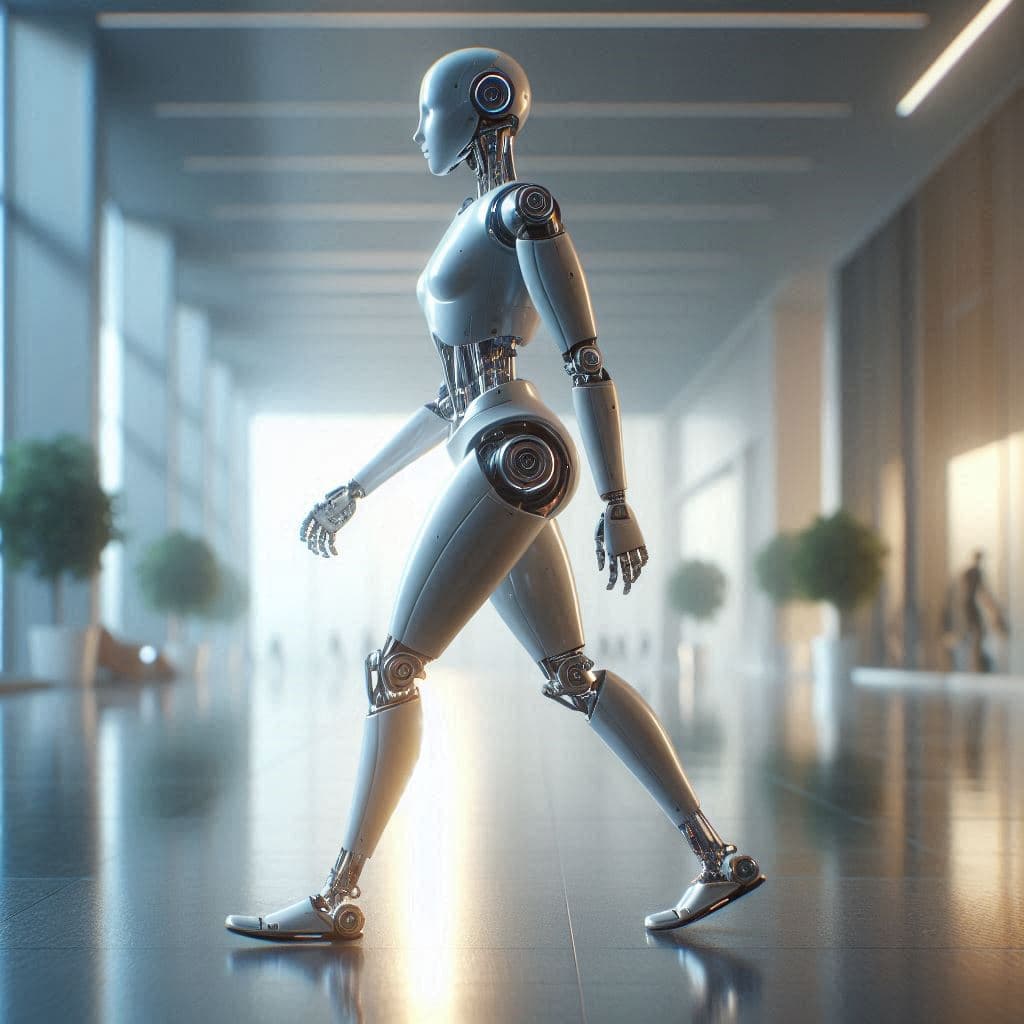
- New Development:Chinese researchers have created a biomimetic AI robot that walks like a human.
- Technological Innovation:The robot uses advanced sensors and adaptive algorithms for movement.
- Broader Implications:This advancement raises questions about the future of human-robot interaction.
Researchers in China have made a significant breakthrough in robotics with the introduction of a biomimetic AI robot capable of walking in a manner that closely resembles human movement. This innovative robot marks a departure from earlier humanoid machines, which often exhibited rigid and mechanical strides. Instead, this new creation showcases a fluid gait that mirrors the natural coordination of human muscles and joints, highlighting the potential for more sophisticated robotic movement.
The design of this robot is rooted in biological principles rather than traditional engineering approaches. It incorporates advanced sensors, adaptive algorithms, and a finely tuned skeletal structure that allows it to distribute weight effectively, adjust its posture, and respond dynamically to varying terrains. Observers have noted that the robot's movements appear less like pre-programmed actions and more akin to learned behaviors, suggesting an evolution in how machines can interact with their environments.
This development is part of a broader trend in artificial intelligence research known as embodied intelligence, where cognitive processes and physical movement are intertwined. Walking is not merely a mechanical task; it involves a complex interplay of balance, perception, and intention. By teaching machines to walk in a manner similar to humans, researchers are delving into how intelligence can emerge through physical interaction with the world.
Public reaction to this technological advancement has been a blend of fascination and contemplation. Many view the robot as a symbol of innovation, with potential applications in various fields such as healthcare, rehabilitation, elder care, and service industries. However, there are also concerns regarding the implications of machines that closely mimic human presence, prompting discussions about coexistence rather than competition between humans and robots.
Despite the excitement surrounding this development, it is essential to temper expectations. The introduction of this robot does not signify the dawn of artificial life or the replacement of human capabilities. Rather, it represents a careful experiment aimed at understanding the nuances of motion, balance, and learning from a mechanical perspective. The robot's ability to walk is not a definitive statement but an ongoing inquiry into the nature of movement and intelligence.
In summary, the recent unveiling of a biomimetic AI robot by Chinese researchers demonstrates significant advancements in robotics technology. By integrating artificial intelligence with physical movement, this project highlights the growing global interest in humanoid robotics and the potential for future innovations in this field.
Published by Banx Network. This article is part of the Banx decentralized media programme, powered by the BXE token on the XRP Ledger.



