
The night sky has always invited humanity to imagine distant worlds. Today, modern astronomy is transforming those distant points of light into places that can be measured, studied, and increasingly understood.
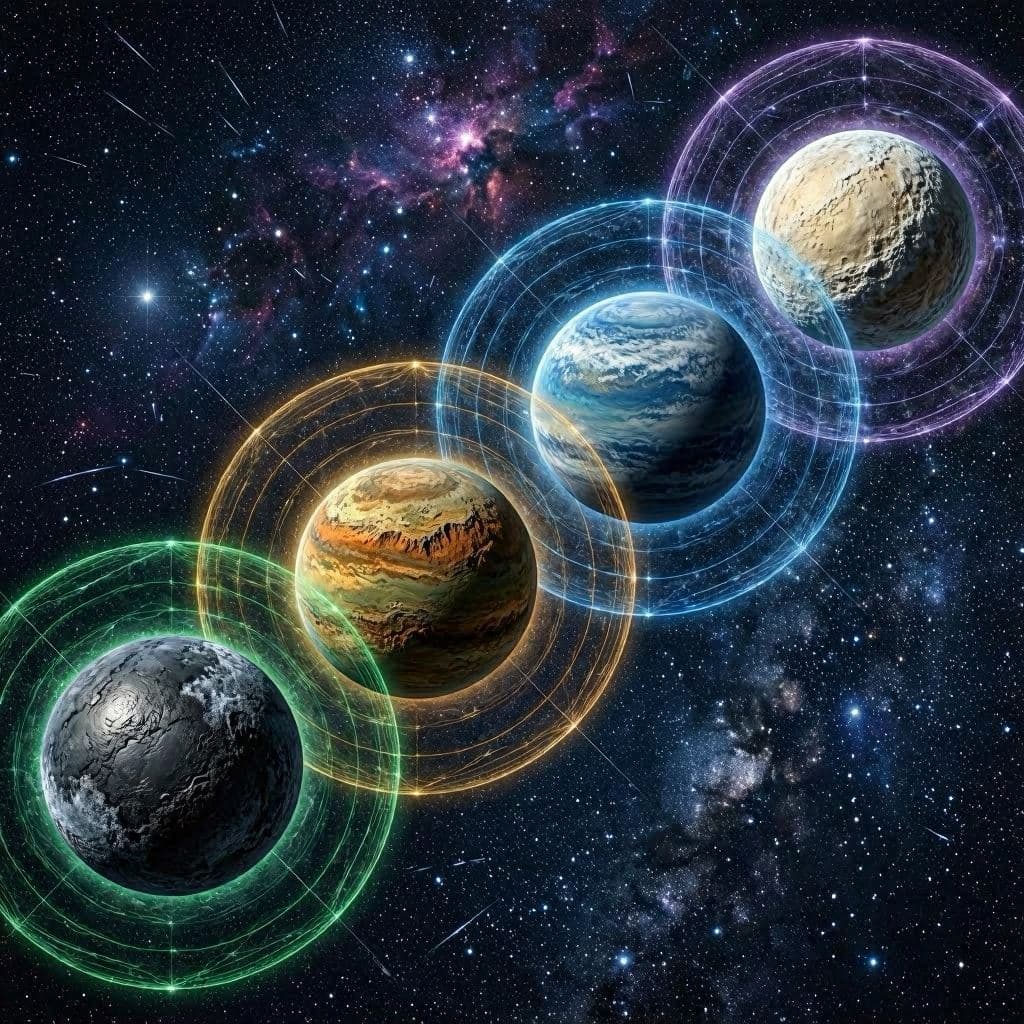
Astronomers have announced the detection of magnetic fields surrounding seven exoplanets located beyond our solar system. Researchers say the discovery could significantly improve understanding of planetary evolution and the potential habitability of distant worlds.
Magnetic fields play a critical role in protecting planets from harmful stellar radiation and charged particles emitted by nearby stars. On Earth, the magnetic field helps preserve the atmosphere and shields life from intense space weather.
Until now, detecting magnetic fields around exoplanets has proven exceptionally difficult due to their vast distances from Earth. Scientists employed sophisticated observational techniques and radio astronomy methods to identify signatures associated with magnetic activity.
The newly detected magnetic fields suggest that some of these planets may possess internal structures capable of generating planetary dynamos, similar to processes occurring inside Earth and other planets in our solar system.
Researchers believe that magnetic protection could be an important factor when assessing whether a planet might support conditions favorable for life. However, scientists caution that habitability depends on many additional variables, including atmosphere, temperature, and chemical composition.
The findings also offer valuable insights into how planetary systems evolve over time. Understanding magnetic behavior may help astronomers refine theories regarding planet formation and long-term stability.
Advances in telescope technology and observational techniques continue expanding humanity's ability to study increasingly distant and faint astronomical objects. Future observatories are expected to provide even more detailed information.
While these seven worlds remain unimaginably far away, their newly revealed magnetic environments bring scientists one step closer to understanding the diversity of planets scattered throughout the galaxy.
AI Image Disclaimer: Illustrative space imagery included in this article has been generated using artificial intelligence to visualize scientific findings.
Source Verification Check: Live Science, Nature Astronomy, Reuters, NASA
Published by Banx Network. This article is part of the Banx decentralized media programme, powered by the BXE token on the XRP Ledger.



