
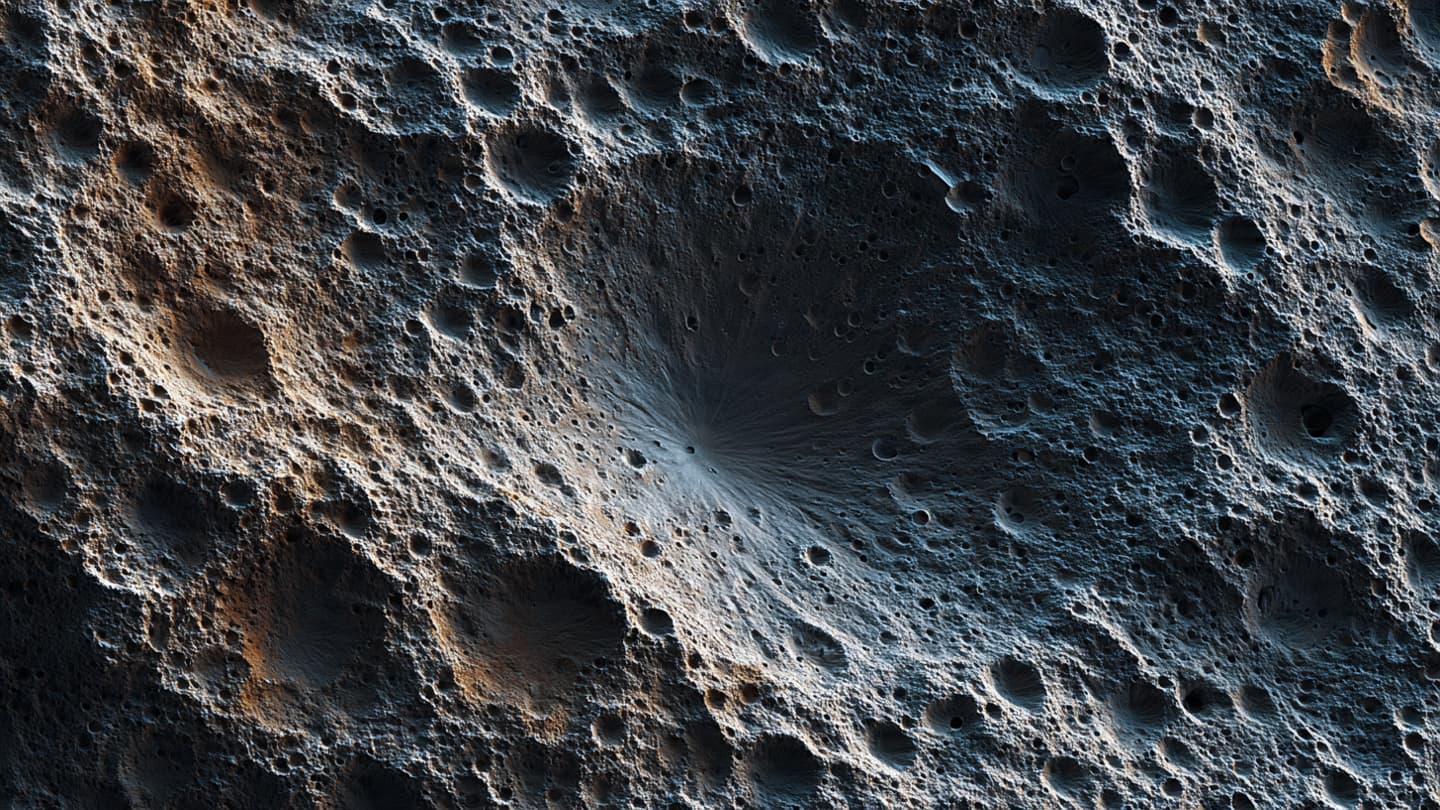
In the stillness of space, where time moves with quiet persistence, even the smallest impacts leave lasting marks. Asteroids, often seen as relics of the early solar system, carry within them subtle records of their encounters—etched not in words, but in layers of dust and mineral change.
Recent analysis of samples from the Ryugu suggests that continuous micrometeoroid bombardment over the past thousand years has altered its surface in unexpected ways. Scientists report the presence of a thin outer layer enriched with sodium, distinct from the material beneath.
The findings are based on data collected by the Hayabusa2 mission, which successfully returned material from Ryugu to Earth. Laboratory studies have enabled researchers to examine the asteroid’s composition with high precision.
Micrometeoroids—tiny particles traveling at high speeds—can gradually modify the surfaces of airless bodies. Over time, repeated impacts can alter both the physical structure and chemical makeup of exposed materials.
In Ryugu’s case, the sodium-rich layer appears to be extremely thin, indicating that the process is ongoing and relatively recent in geological terms. This contrasts with deeper layers that retain a more primitive composition.
Scientists suggest that the enrichment may result from the redistribution of elements during impacts, possibly combined with exposure to solar radiation. However, the exact mechanisms remain an area of active study.
Understanding these surface processes is important for interpreting data from asteroids and other small bodies. It also helps refine models of how materials evolve in space environments lacking atmospheres.
The research contributes to a broader effort to study the history of the solar system through its smaller components, which often preserve information lost on larger, more active planets.
The evolving surface of Ryugu offers a detailed glimpse into the subtle forces shaping celestial bodies, reminding researchers that even the smallest interactions can leave meaningful traces over time.
AI Image Disclaimer: Illustrations in this article include AI-generated imagery designed to visualize asteroid surfaces and may not reflect actual photographs.
Sources: JAXA Nature Astronomy Science Magazine NASA
Published by Banx Network. This article is part of the Banx decentralized media programme, powered by the BXE token on the XRP Ledger.



