

Key Highlights
- Tens of thousands protested in Belgrade this week, demanding political reforms.
- The demonstrations were largely peaceful, with significant student participation.
- Economic pressures and dissatisfaction with governance fueled public frustration.
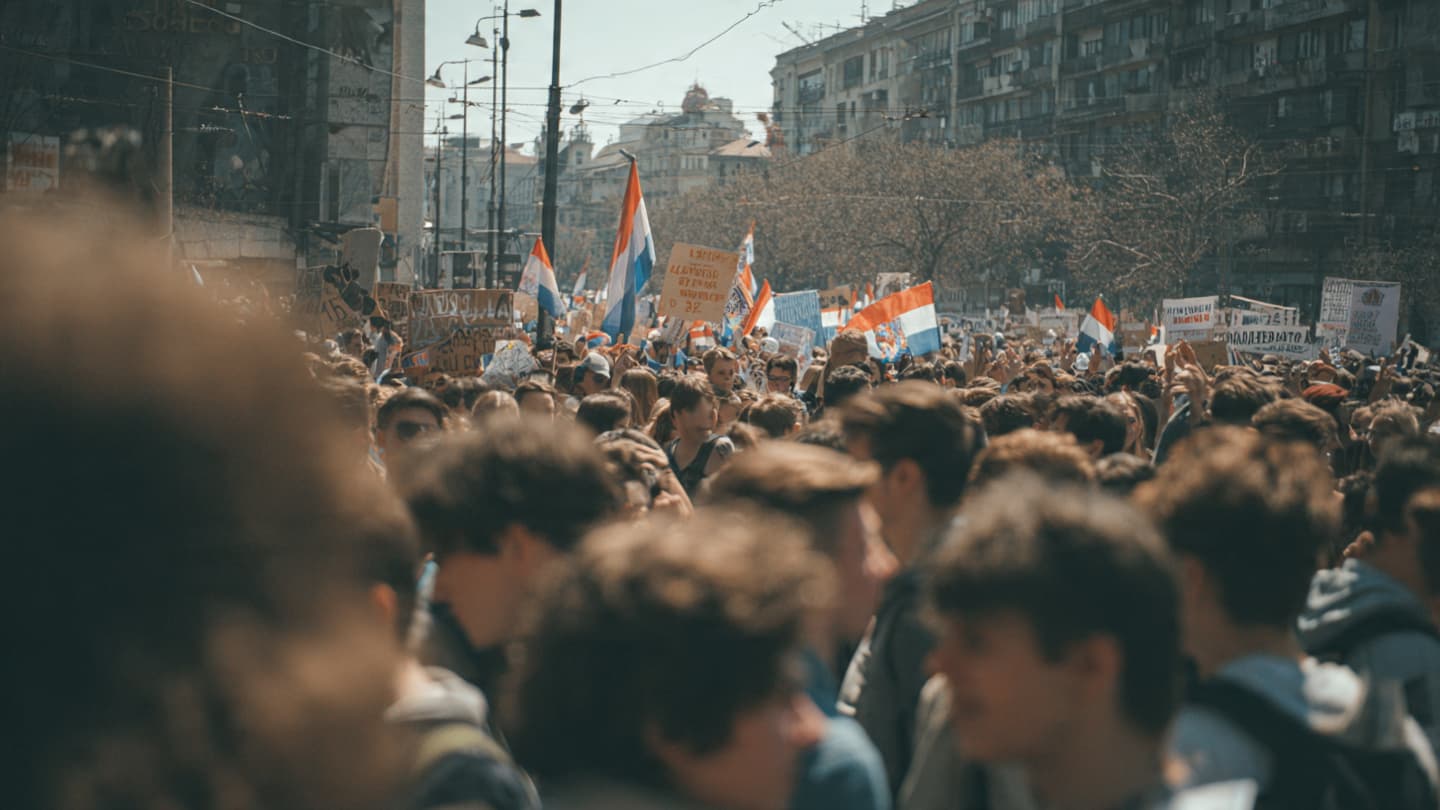
In recent days, Belgrade has become a focal point for public demonstrations, with tens of thousands of citizens taking to the streets to express their frustrations and demand political change. The protests, which have spread to other cities across Serbia, reflect a growing discontent with the current government and its handling of key issues such as governance, transparency, and economic stability.
The protests were primarily organized by student groups and opposition parties, who are calling for earlier elections and comprehensive political reforms. Protesters have voiced their concerns over the government's failure to adequately address public dissatisfaction, particularly regarding issues of institutional accountability and media freedom. As crowds marched through the streets of central Belgrade, they carried flags and banners, signaling their demands for change.
Local media reports indicate that these protests are among the largest Serbia has seen in recent years, highlighting the intensity of public sentiment. The demonstrations have been characterized by a peaceful atmosphere, with police maintaining a visible presence to ensure safety. However, the underlying tensions are palpable, as many citizens express their frustrations over the current political climate.
Political tensions in Serbia have been escalating, particularly in relation to democratic reforms and the country’s relationship with the European Union. As Serbia navigates its ties with both Western institutions and traditional regional partners, the domestic political landscape has become increasingly contentious. The protests underscore a critical moment in Serbian politics, as citizens seek to assert their voices in shaping the future of their country.
A notable aspect of the recent protests is the significant involvement of younger generations. Students have historically played a vital role during periods of political transition, and their participation in these demonstrations reflects a broader desire for civic engagement and electoral reform. Rather than resorting to direct confrontation, many protesters are advocating for constructive dialogue and institutional change.
In response to the protests, government officials have defended their political record, urging calm and stability. While acknowledging the citizens' right to protest, they have criticized opposition figures for allegedly attempting to destabilize the political environment ahead of upcoming elections. This tension between the government and opposition highlights the complexities of Serbia's political landscape.
International observers are closely monitoring the situation in Serbia, recognizing the country's strategic importance within the Balkans. European officials have consistently encouraged democratic dialogue and institutional transparency, emphasizing the need for peaceful political participation. As the protests continue, the international community remains watchful of developments that could impact Serbia's political trajectory.
Economic factors also play a significant role in the current unrest. Rising inflation, employment concerns, and increasing living costs have exacerbated public frustration, not only in Serbia but across Europe. Analysts suggest that economic uncertainty often fuels social and political activism, making the current protests a reflection of broader regional challenges.
As the demonstrations unfold, Serbia finds itself at a crossroads, facing critical questions about its political direction and democratic future. While the outcome of these protests remains uncertain, they have already highlighted a growing desire among citizens to engage more actively in shaping the narrative of their country’s future.
Published by Banx Network. This article is part of the Banx decentralized media programme, powered by the BXE token on the XRP Ledger.




