
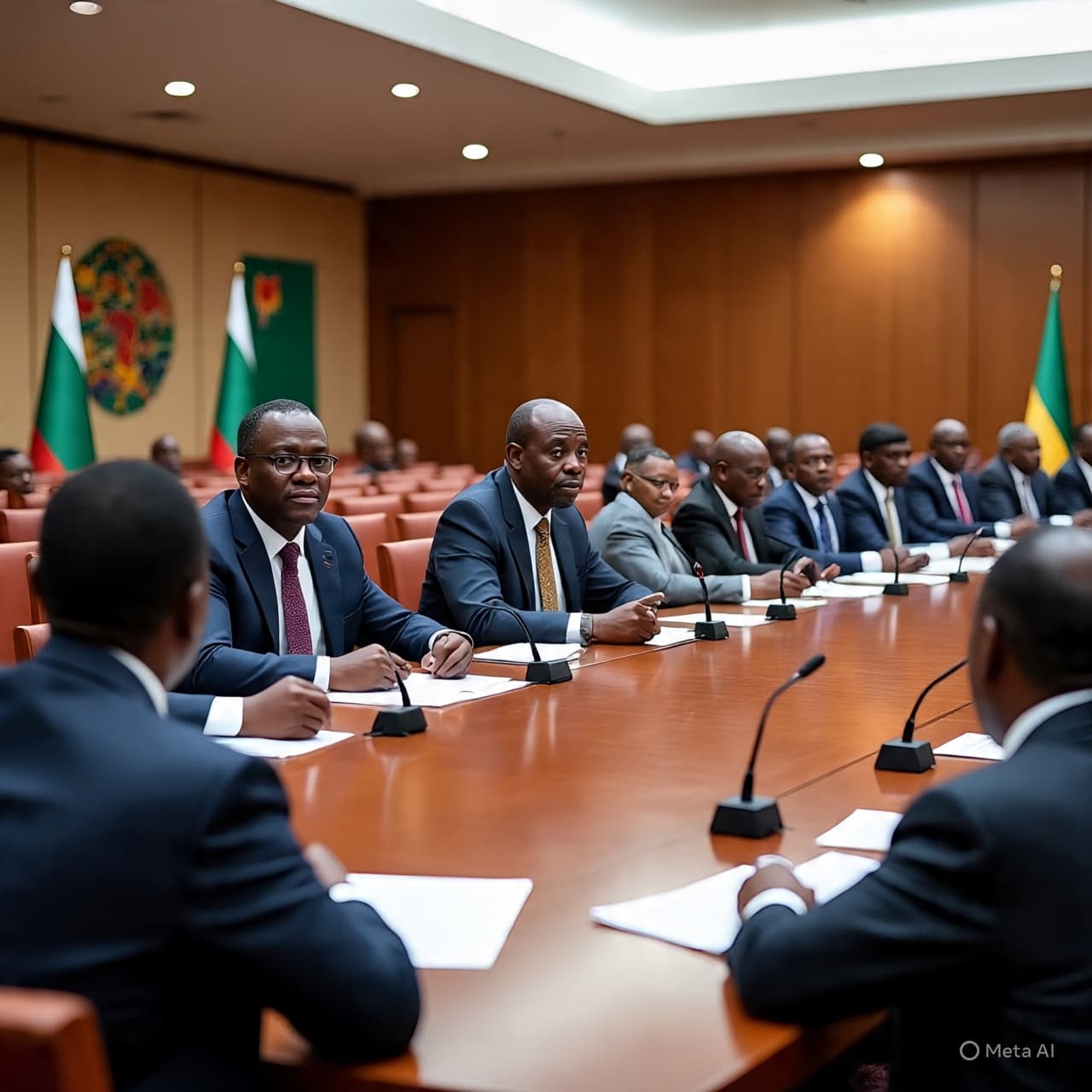
Key Highlights
- Accra Reset:President Mahama calls for urgent implementation of existing African policies.
- Focus on Governance:Emphasizes the need for coordination across various sectors.
- Regional Collaboration:Stresses the importance of collective responsibility for Africa's prosperity.
The city of Accra, where the Atlantic breeze meets the echoes of history, has become a focal point for discussions about Africa's future. Recently, President John Mahama introduced the concept of an "Accra Reset," a term that signifies not a break from the past but a renewed commitment to implementing existing plans and policies. This initiative aims to shift the focus from ambitious declarations to actionable steps that can lead to tangible results.
For years, Africa has been rich in aspirations, articulated through various charters and summit declarations. These ambitions range from enhancing trade integration to expanding infrastructure and embracing digital transformation. However, President Mahama's address underscored the importance of execution over mere ambition. He argued that prosperity will not arise from lofty goals alone but from a disciplined approach to follow-through and implementation.
Central to the Accra Reset is the challenge of delivery. Initiatives aimed at reshaping intra-African commerce hinge on the establishment of harmonized regulations and modernized customs systems. Furthermore, the success of infrastructure projects relies on innovative financing mechanisms that ensure accountability. Thus, the reset is more procedural than ideological, focusing on the transition from declaration to deployment.
Mahama's remarks also highlighted the need for improved governance and institutional efficiency. He pointed out that effective implementation requires coordination among various ministries, regional organizations, and private sector stakeholders. With Africa's youthful population representing both an opportunity and a pressing need for jobs and education, the urgency for policy execution cannot be overstated.
Observers have noted that the language surrounding the Accra Reset resonates with ongoing discussions about credibility across the continent. Investors and development partners are increasingly evaluating not just the scale of ambitions but also the consistency of their execution. By emphasizing timelines and measurable outcomes, Mahama's approach aligns political rhetoric with the necessary administrative rigor to foster trust and accountability.
The regional implications of Mahama's message are significant. West Africa is currently grappling with economic challenges, security issues, and fiscal constraints. In this context, coordinated action among member states is not merely a diplomatic nicety but a crucial necessity for stability and resilience. Mahama framed calls for deeper collaboration as practical steps toward achieving shared goals and overcoming collective challenges.
Interestingly, the address refrained from sharp criticisms of past failures. Instead, it embraced a narrative of collective responsibility, suggesting that Africa's prosperity is not reliant on a single summit or leader but on the cumulative efforts of all stakeholders involved. The Accra Reset, therefore, serves as a reminder that the present must be taken seriously, and that the focus should be on executing existing plans rather than creating new ones.
In the coming days, follow-up meetings and consultations are expected to refine specific pathways for implementation. While no sweeping new frameworks were introduced, the emphasis on urgency and accountability marks a significant tonal shift in the discourse surrounding African development. Officials have indicated that progress reviews and performance benchmarks will likely play a more prominent role in future regional gatherings.
Ultimately, the Accra Reset has emerged as a clarion call for action, rooted in the need for effective execution. Whether this initiative translates into accelerated delivery of Africa's plans will depend on the sustained engagement of governments, businesses, and civil society across the continent. For now, the message from Accra is clear: Africa's plans are plentiful; the challenge lies in bringing them to fruition.
Published by Banx Network. This article is part of the Banx decentralized media programme, powered by the BXE token on the XRP Ledger.



