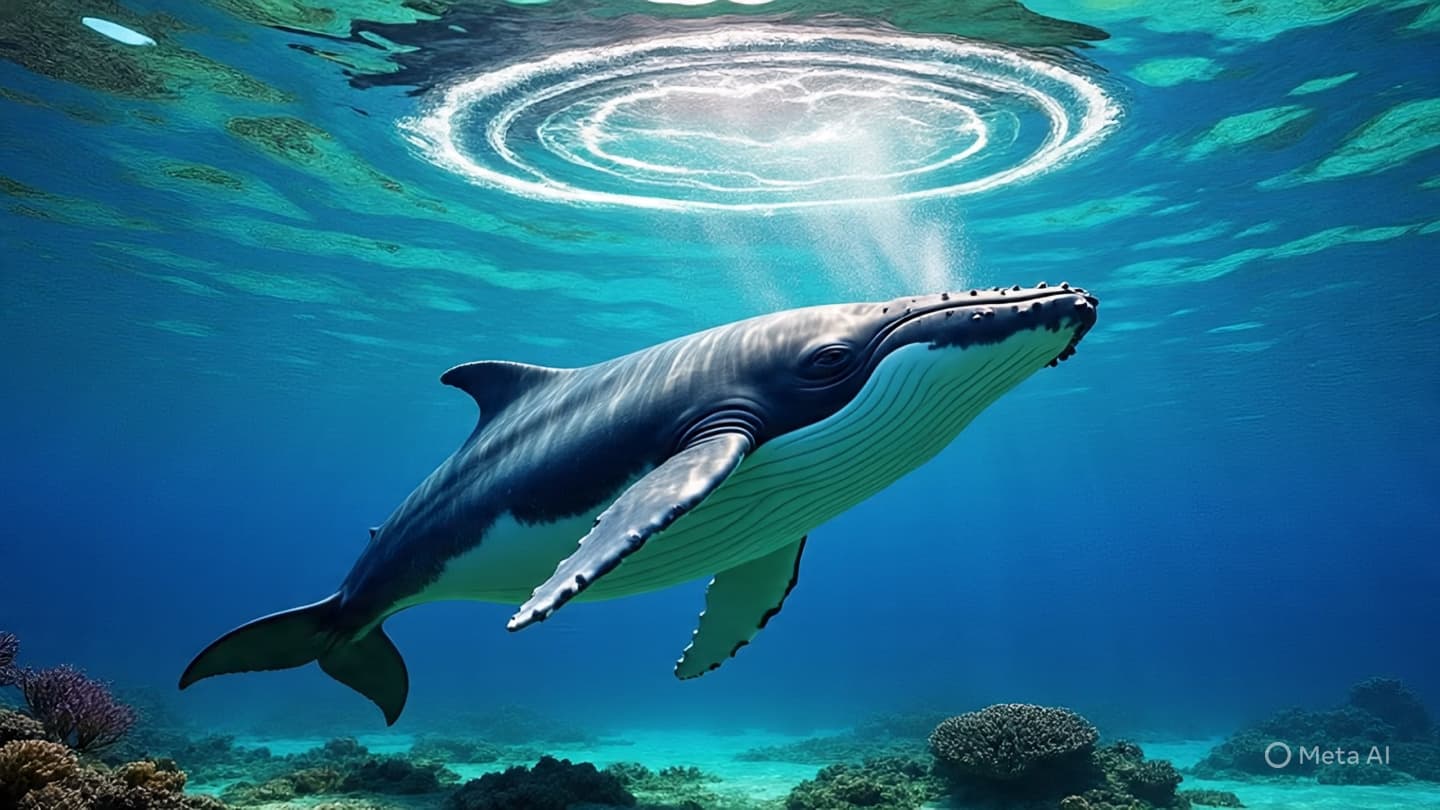
Sound travels differently beneath the surface of the sea, carrying meaning across distances where light cannot reach. In this quiet acoustic world, even a single note can hold layers of information, waiting to be understood.
Researchers studying whales have found that individual whale songs can reveal extensive data about marine environments, behavior, and population patterns. These vocalizations, long recognized for their complexity, are now being analyzed with advanced computational tools.
Each whale song is composed of structured sequences that can vary by species, region, and even individual identity. By examining these patterns, scientists are able to track migration routes and social interactions across vast ocean distances.
Acoustic monitoring has become an important method in marine research, particularly in areas where direct observation is difficult. Hydrophones placed underwater can capture sounds continuously, providing long-term datasets for analysis.
The study of whale communication also offers insight into environmental conditions. Changes in song patterns may reflect shifts in habitat, noise pollution, or other ecological factors that influence marine life.
Researchers emphasize that the value of a single recording lies in its ability to connect with larger datasets. When combined with other observations, it can contribute to a broader understanding of ocean systems.
Advancements in machine learning have further expanded the potential of this research. Algorithms can now identify patterns and anomalies within large volumes of acoustic data, accelerating the pace of discovery.
While the science continues to evolve, the underlying principle remains simple: sound serves as a bridge between observation and understanding in environments that are otherwise difficult to access.
Scientists continue to develop acoustic methods to better interpret whale songs and their role in understanding ocean ecosystems.
AI Image Disclaimer: Some accompanying visuals are AI-generated to illustrate underwater acoustic research and whale behavior.
Sources: National Geographic, NOAA, BBC, Science
Published by Banx Network. This article is part of the Banx decentralized media programme, powered by the BXE token on the XRP Ledger.