There are moments when the world seems to contract into stillness—a drop of water resting on glass, unmoving, almost unremarkable. Yet within that small and silent space, a quiet motion persists, a gathering of lives too small to be seen, yet too vast to be dismissed. It is here, in this nearly invisible theater, that science has begun to listen more closely, tracing the faint signatures of life that have long drifted beyond the edge of human sight.
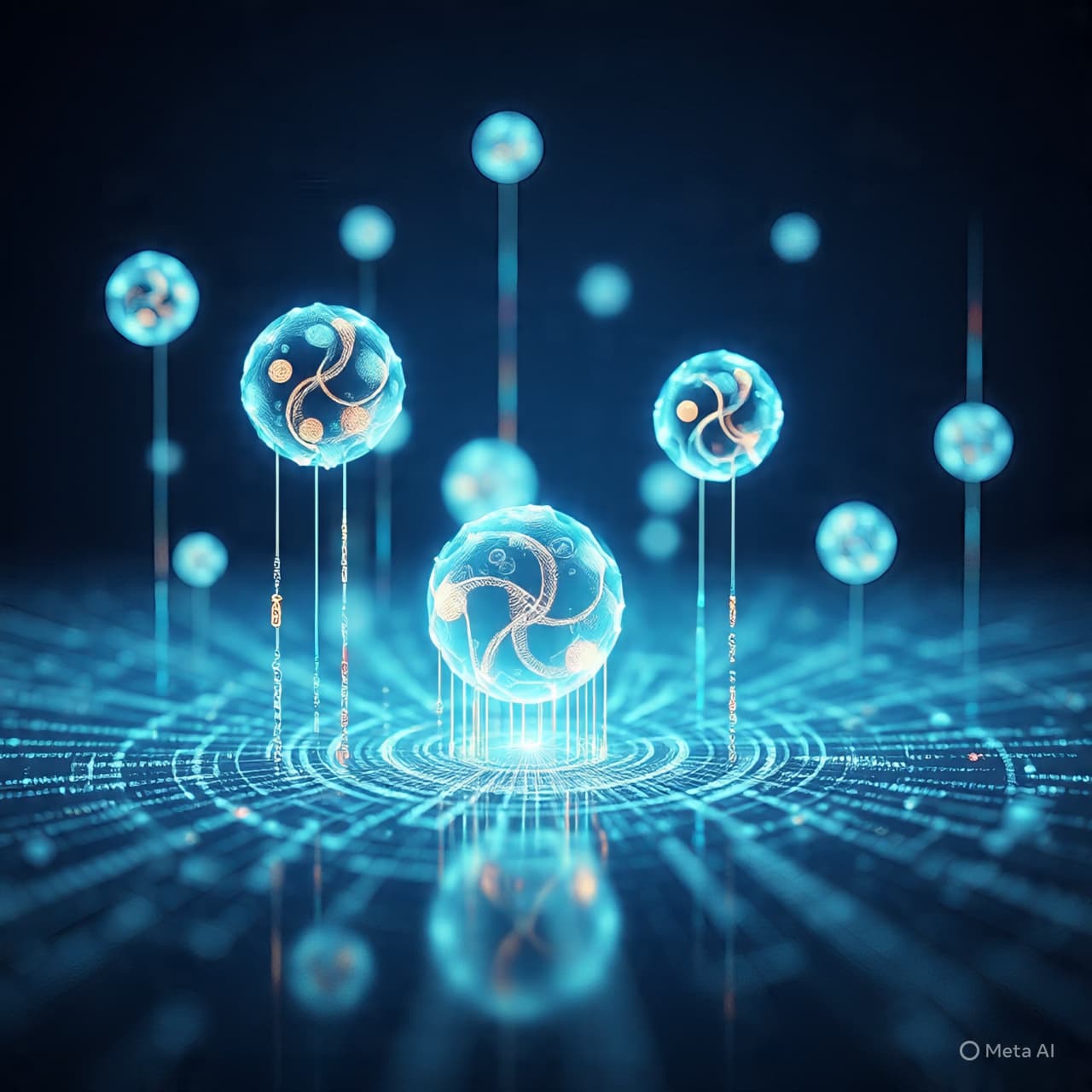
In recent years, the practice of single-cell sequencing has opened a different kind of window—not one that enlarges, but one that listens. Instead of observing shapes alone, researchers now follow the genetic whispers carried within individual cells, isolating them one by one, reading their molecular stories as if turning the pages of a book written in fragments. What emerges is not a simple catalog, but a widening horizon.
Protists—those diverse, often overlooked organisms that exist somewhere between familiar categories—have long occupied an uncertain place in biological understanding. Neither plant nor animal nor fungus, they inhabit a shifting middle ground, populating oceans, soils, and freshwater systems. For decades, their diversity was estimated through what could be seen under a microscope, their forms sketched and classified according to shape and movement. But sight, it turns out, was only the beginning.
Through single-cell sequencing, scientists have begun to uncover a level of diversity that far exceeds earlier expectations. Individual protist cells, once indistinguishable to the eye, reveal distinct genetic identities when examined at the molecular level. Lineages that were once grouped together are now unfolding into separate branches, each carrying its own evolutionary path. Entire groups, previously unknown, are being brought into view—not through discovery in distant lands, but through closer attention to what was already present.
This approach also shifts the pace of discovery. Traditional methods often required culturing organisms in laboratory conditions, a process that left many species unobserved because they could not survive outside their natural environments. Single-cell techniques bypass that constraint, allowing scientists to study organisms directly from their habitats. In doing so, they capture a more immediate and faithful record of life as it exists, rather than as it can be maintained.
The implications extend beyond taxonomy. Protists play essential roles in ecosystems, contributing to nutrient cycling, food webs, and even the regulation of global processes such as carbon flow. As new forms are identified, so too are new relationships—interactions between species, dependencies that shape environments, and subtle balances that sustain larger systems. What was once considered a background presence begins to take on a more defined and intricate role.
There is, perhaps, a quiet recalibration in this work. The more closely life is examined at its smallest scales, the less singular and orderly it appears. Instead, it becomes layered, branching, and continuous—a field of variation rather than a set of fixed categories. In this sense, the study of protists becomes less about classification alone and more about understanding how life organizes itself across gradients too fine to be easily named.
At the same time, the technology itself carries its own kind of movement. Advances in sequencing methods, computational analysis, and sampling techniques have made it possible to process thousands of individual cells in ways that were not feasible even a decade ago. Each dataset adds to a growing archive, a collective effort to map the unseen majority of eukaryotic life.
And yet, for all its precision, the work remains grounded in a simple gesture: the act of looking again, more carefully than before. What was once passed over as uniform or indistinct begins to resolve into difference, into identity, into presence.
Single-cell sequencing is revealing that protist diversity is far greater than previously recognized, identifying new lineages and refining the evolutionary relationships among these organisms. The method allows researchers to analyze individual cells directly from natural environments, overcoming limitations of traditional culturing techniques and providing a more accurate understanding of microbial ecosystems.
AI Image Disclaimer
Illustrations were created using AI tools and are not real photographs.
Source Check Nature Science Cell National Geographic Scientific American
Published by Banx Network. This article is part of the Banx decentralized media programme, powered by the BXE token on the XRP Ledger.