
Key Highlights
- ASEAN leaders adopt a crisis framework to mitigate economic fallout from the Middle East conflict.
- Concerns include rising fuel costs and disruptions to global shipping routes.
- Public sentiment in Southeast Asia is increasingly emotional regarding the humanitarian impact of the conflict.
[ASEAN's Response to Global Tensions]
Across Southeast Asia, diplomacy often moves like a river rather than a storm. Conversations are measured carefully, disagreements softened through consensus, and regional stability treated as something delicate yet deeply valuable. However, as conflict in the Middle East continues to ripple outward through energy markets, migration concerns, and political tensions, ASEAN leaders now appear increasingly aware that distant wars can quickly reshape local realities.
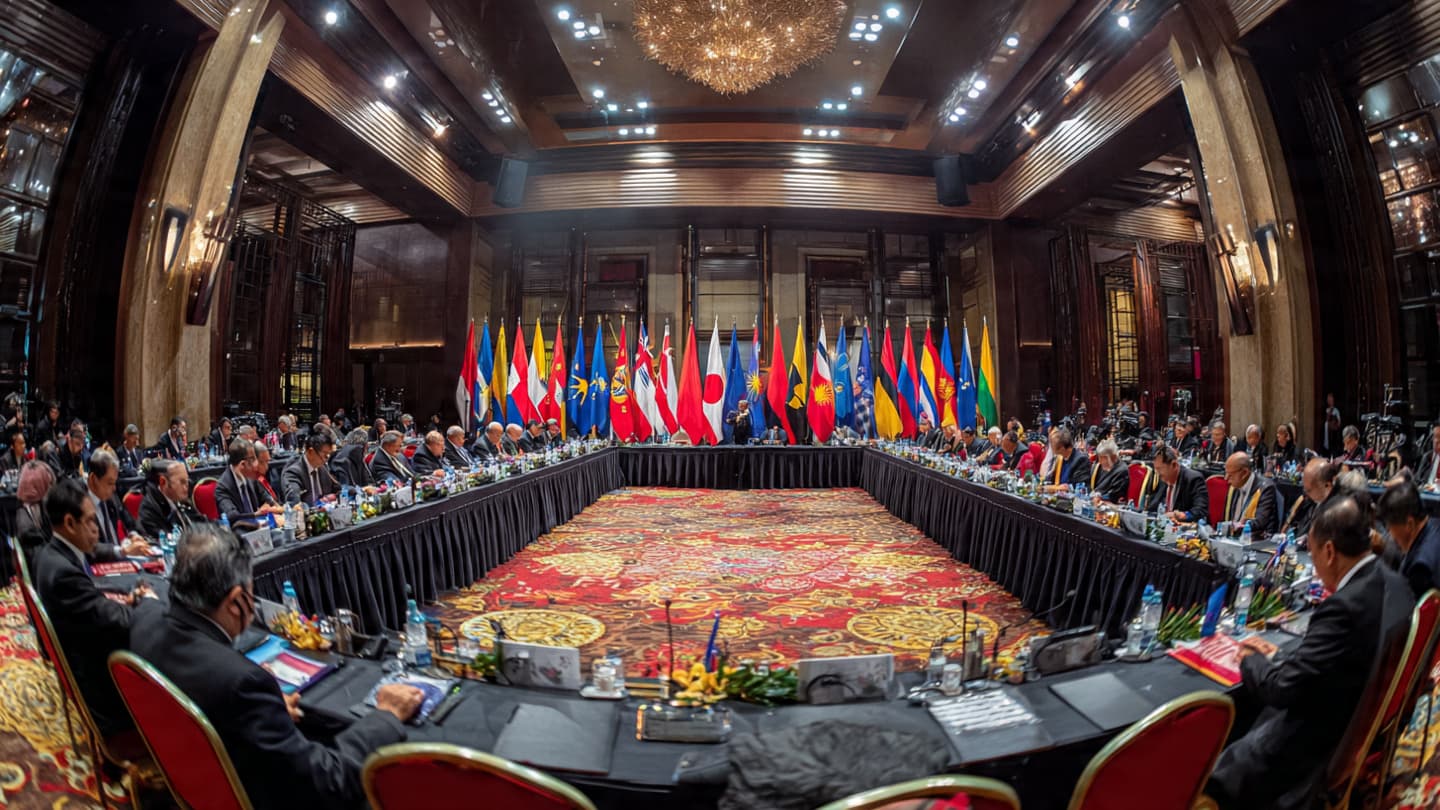
During recent regional discussions, leaders from the Association of Southeast Asian Nations (ASEAN) adopted a coordinated crisis framework aimed at reducing the economic and political fallout linked to the expanding Middle East conflict. Officials expressed concern over disruptions to global shipping, rising fuel costs, and the broader uncertainty surrounding trade routes that connect Asia to Gulf energy supplies. This proactive approach underscores the interconnectedness of global events and their local implications.
For many ASEAN economies, the Middle East remains both a strategic energy source and an important labor destination for millions of Southeast Asian workers. Instability in the region therefore carries consequences that extend far beyond diplomacy. Rising shipping insurance costs, fluctuating oil prices, and fears of prolonged disruption have already prompted governments to reassess economic preparedness measures. The potential for economic instability has led to urgent discussions among member states about how to safeguard their economies against external shocks.
Regional officials reportedly discussed emergency coordination on fuel reserves, maritime security cooperation, and the protection of overseas citizens working across Gulf states. Though ASEAN has historically avoided strongly unified positions on global conflicts, the organization increasingly faces pressure to respond collectively when international crises threaten regional stability and economic growth. This shift reflects a growing recognition of the need for solidarity in the face of external challenges.
There is also a political dimension beneath the economic concerns. Public opinion across Southeast Asia has grown increasingly emotional regarding developments in the Middle East, particularly surrounding civilian casualties and humanitarian conditions. Governments in the region now face the challenge of balancing domestic sentiment with diplomatic relationships involving major global powers. The emotional weight of these issues complicates the diplomatic landscape, as leaders must navigate both public expectations and international alliances.
Observers note that ASEAN’s cautious language reflects its longstanding preference for dialogue over confrontation. The organization was founded during another uncertain era in global politics, and its leaders continue emphasizing negotiation, restraint, and regional resilience as guiding principles. In moments of international tension, ASEAN often seeks not dramatic declarations, but quiet coordination. This approach has historically allowed ASEAN to maintain stability in a region marked by diverse political landscapes and interests.
The current crisis plan reportedly focuses on practical measures rather than symbolic gestures. Member states are expected to strengthen communication channels, monitor supply chain vulnerabilities, and prepare contingency strategies should regional instability expand further. While no single framework can fully shield economies from global conflict, officials hope collective planning may soften the effects of prolonged uncertainty. The emphasis on practical solutions reflects a pragmatic approach to diplomacy in a rapidly changing world.
As the Middle East conflict continues evolving, Southeast Asian governments appear determined to avoid panic while remaining alert to economic and humanitarian consequences. For ASEAN, the challenge now lies not only in responding to a distant war, but in preserving regional balance while the wider world grows increasingly unsettled. The ability to navigate these complexities will be crucial for ASEAN's future stability and influence in global affairs.
Published by Banx Network. This article is part of the Banx decentralized media programme, powered by the BXE token on the XRP Ledger.



