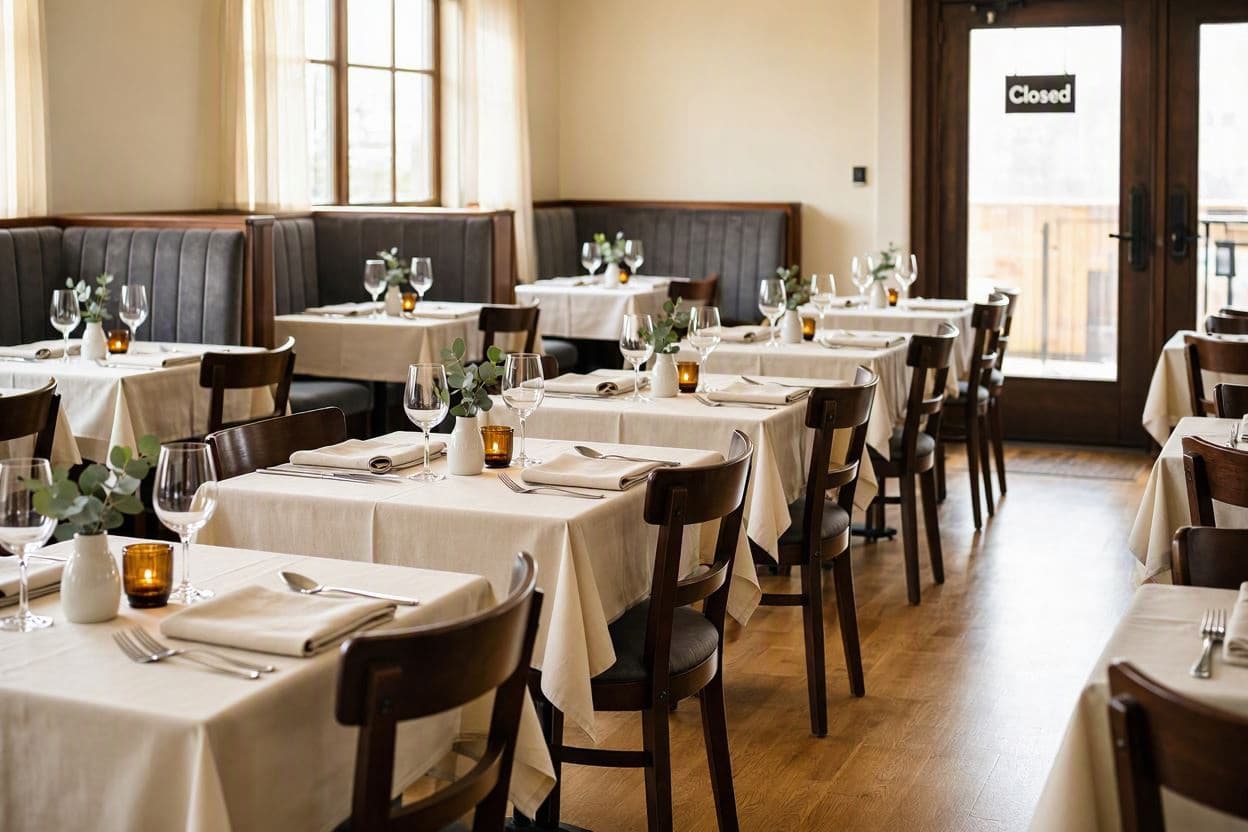
There is a particular sadness in watching a restaurant close. It is not the same as the shuttering of a factory or the failure of a bank. A restaurant is a place where people gather to mark their lives—birthdays, anniversaries, quiet Tuesday dinners, the simple act of being fed by someone who cares. When those doors close, something more than a business disappears. Across Melbourne, a city that has long defined itself by its food culture, a season of closures has left diners and owners alike reflecting on what it means to lose the places that hold our memories.
The list is long and varied. Atlas Dining in South Yarra, a one-hatted restaurant that changed its menu every four months to showcase a new international cuisine, served its final diners on November 28 after nine years. Chef and owner Charlie Carrington said he wanted to end the journey while it was still “at the top of the game,” and he described the decision as “a bit traumatic” . Gray and Gray Bread and Wine in Northcote, a hatted wine bar serving Georgian food, closed in February. Owner Boris Portnoy attributed the closure to a concept that was “too left-of-centre” for diners tightening their budgets. “We’re just not busy,” he said. “Everyone says we’re their favorite place, but I think it’s not the first thing that comes to their mind” .
1800 Lasagne in Thornbury, Melbourne’s first hatted lasagne restaurant, entered voluntary administration in July, citing under-capitalism and cost-of-living pressures . Shoya, a high-end Japanese restaurant that had operated since 2003 and won Best Japanese Restaurant seven years in a row, closed permanently, owing nearly $284,000 to unsecured creditors . And at Southgate, Pure South Dining—which had anchored the precinct for 21 years—turned out the lights, leaving a row of vacant storefronts where six hatted restaurants once stood side by side .
The reasons are not mysterious, though they are painful. Melbourne’s hospitality sector is facing what administrators describe as “ongoing tough trading conditions” post-COVID, compounded by rising costs, changing consumer habits, and a city that has not fully returned to its pre-pandemic rhythms . Victoria has been recording the fastest increase in business failures among mainland states, and hospitality is among the hardest hit . For small operators, the margins were always thin. Now they are thinner still.
What makes these closures feel different is that many of the venues were not failing creatively. Atlas was serving 27 different cuisines over nine years. Gray and Gray was making Georgian bread and honey cake that people remembered. 1800 Lasagne earned a cult following and a visit from Jamie Oliver . These were places that mattered—to their neighborhoods, to their staff, to the diners who celebrated there.
For the owners, the decision to close is rarely simple. Carrington spoke of wanting to “go out with a bang” and close on his own terms . Portnoy said he was proud of what he had built, even if the economics never quite aligned. There is a dignity in choosing the moment of departure, in refusing to let a place fade slowly into decline.
The city will keep eating, of course. New venues will open. The cycle will continue. But for those who loved these places—the servers who learned their customers’ names, the regulars who had their own table, the cooks who gave years to a kitchen—the closures leave a quiet ache. Melbourne’s food culture is not defined only by its successes. It is also defined by what it remembers.
AI Image Disclaimer: The visual elements associated with this article are AI-generated and do not depict actual restaurant interiors or the individuals mentioned.
Sources: Daily Mail, WAtoday, News.com.au, Nine News, Southbank Local News
Published by Banx Network. This article is part of the Banx decentralized media programme, powered by the BXE token on the XRP Ledger.