The Moon is often perceived as a static, unchanging companion in our night sky, a silent witness to eons of history. Yet, it is still being shaped by the cosmos, one impact at a time. Recently, scientists identified a fresh crater on the lunar surface, a new scar formed by a meteoroid strike. This discovery, though small in scale, serves as a poignant reminder that the Moon is a dynamic environment, subject to the same celestial forces that have shaped it for billions of years.
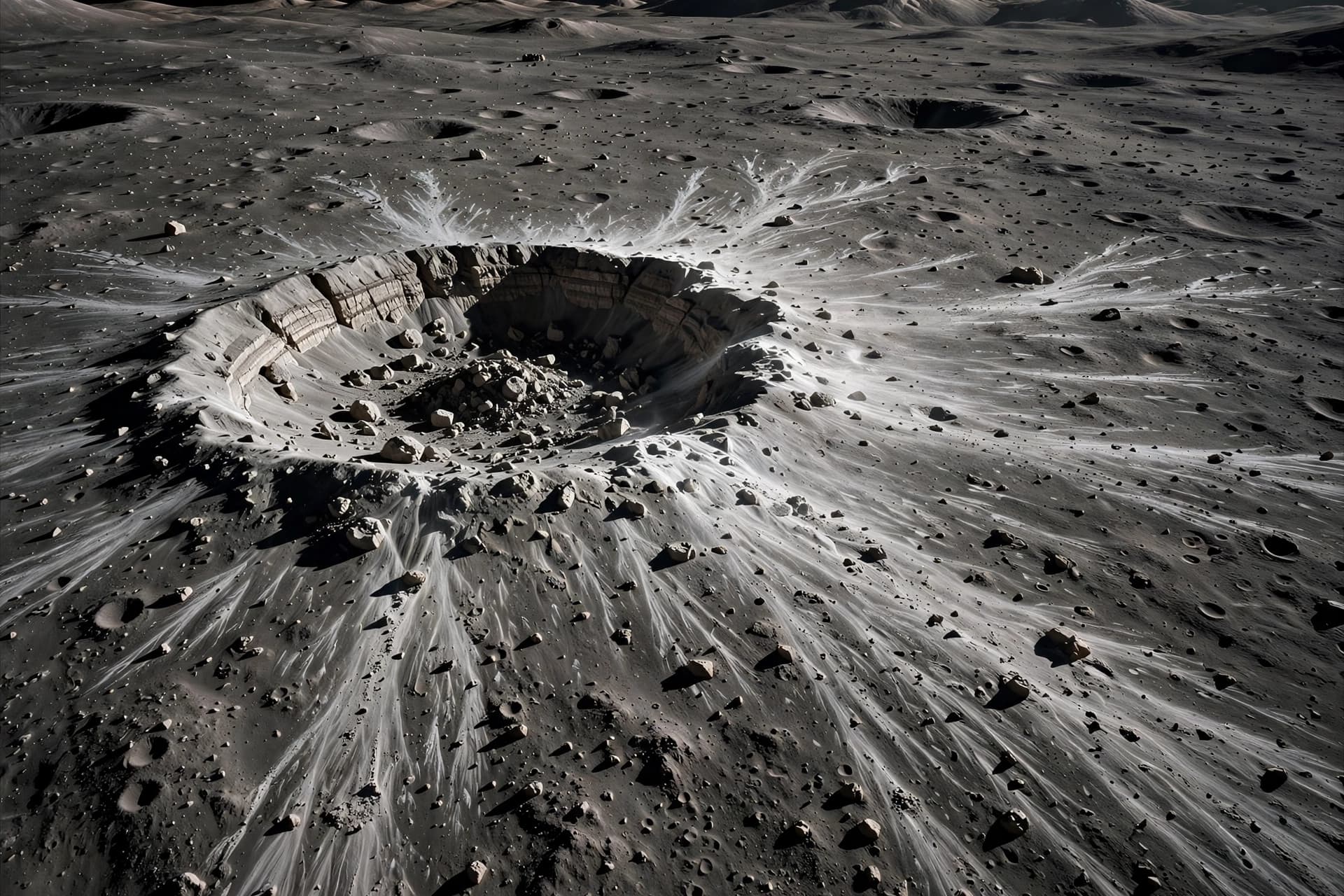
The new crater was detected by NASA’s Lunar Reconnaissance Orbiter (LRO), which has been mapping the Moon’s surface since 2009. By comparing recent images with older ones, researchers noticed a bright, fresh patch of ejecta—a halo of material thrown up during the impact. The brightness indicates that the crater is young, as space weathering has not yet darkened the exposed soil. This method of detection allows scientists to monitor the rate of impacts in near-real time.
Impact events are common on the Moon, which lacks an atmosphere to burn up incoming debris. While most strikes are tiny, creating microscopic pits, occasional larger impacts leave visible marks. Studying these fresh craters helps scientists understand the current flux of meteoroids in the inner solar system. This data is crucial for assessing risks to future lunar missions and infrastructure, ensuring the safety of astronauts and equipment.
The location of the new crater provides additional context. If it is near previous impact sites or geological features, it can offer insights into the subsurface composition. The ejecta blanket, composed of material from beneath the surface, can be analyzed spectrally to determine mineral content. Thus, each new crater acts as a natural drill, revealing layers of lunar history without the need for human excavation.
For the public, the discovery of a new crater is a captivating narrative. It breaks the illusion of the Moon as a dead world, revealing it instead as a place of ongoing change. It invites viewers to look up with renewed curiosity, knowing that the surface they see is not the same as it was yesterday. This sense of immediacy connects us to the cosmic processes that govern our solar system.
The LRO’s ability to detect such changes highlights the value of long-term monitoring. Continuous observation builds a comprehensive database of lunar activity, allowing for trend analysis and predictive modeling. It demonstrates how robotic missions continue to yield scientific returns long after their initial objectives are met, serving as enduring eyes on the lunar landscape.
As humanity prepares to return to the Moon through the Artemis program, understanding the impact environment becomes increasingly important. Knowledge of where and how often impacts occur helps in selecting safe landing zones and designing resilient habitats. The new crater is a small piece of this larger puzzle, contributing to the safety and success of future exploration.
The identification of a new crater on the Moon underscores the dynamic nature of our celestial neighbor. It highlights the importance of continuous monitoring and the practical applications of lunar science. As we look to the future of lunar exploration, such discoveries remind us to respect the active and evolving environment of the Moon.
AI Image Disclaimer: The visual representations in this article are AI-generated illustrations depicting lunar surfaces and impact events, not actual raw images from the Lunar Reconnaissance Orbiter.
Sources: NASA Goddard Space Flight Center Live Science Space.com
Published by Banx Network. This article is part of the Banx decentralized media programme, powered by the BXE token on the XRP Ledger.