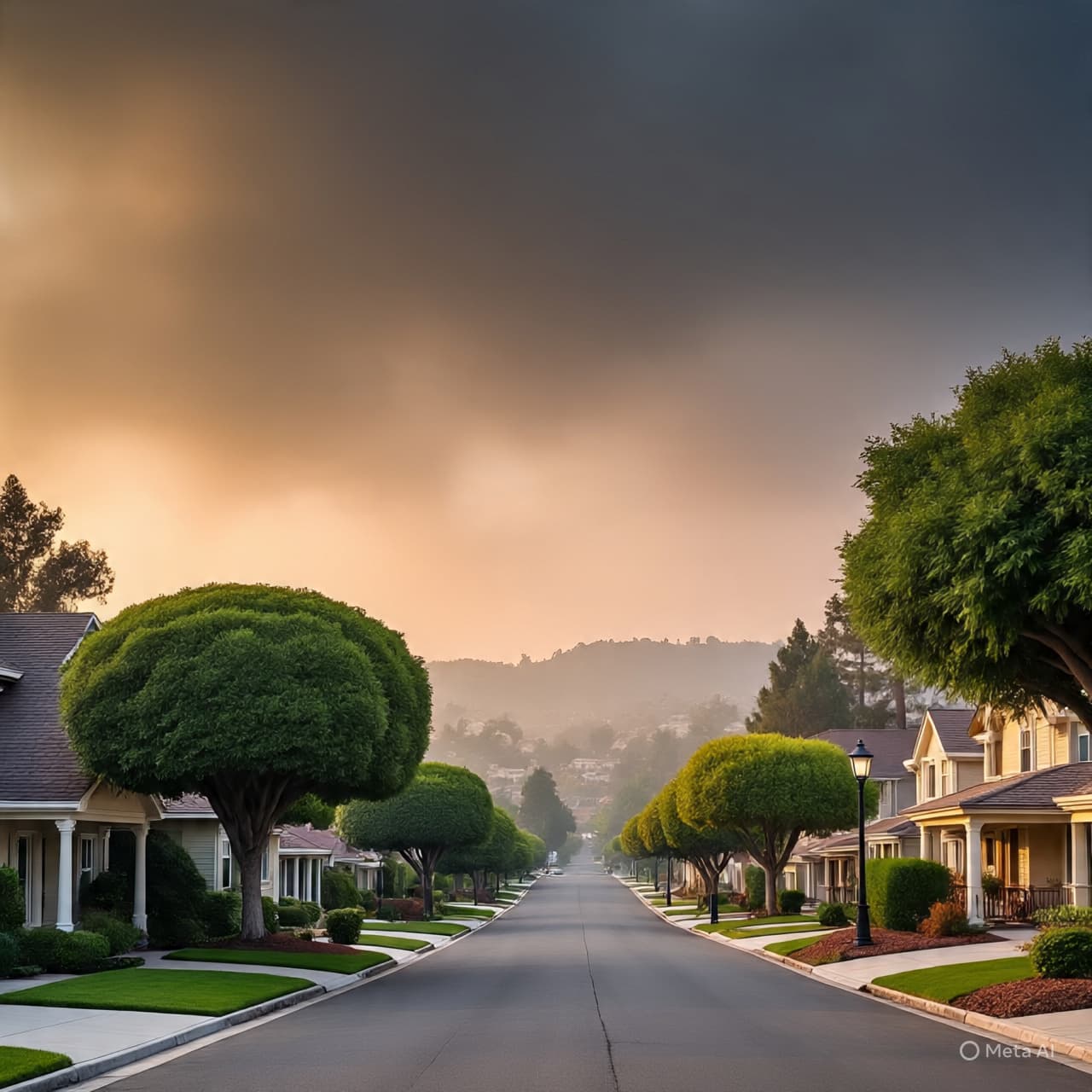
There are seasons when the sky changes its language. In parts of California, autumn once meant a soft turning of leaves and the quiet arrival of cooler winds. Yet in recent years, another rhythm has joined the calendar: the drifting haze of wildfire smoke. It arrives like an unwelcome visitor, sometimes briefly, sometimes lingering, tinting the sunlight and reminding communities that the forests beyond the hills are burning again.
For residents, recovery from these smoky episodes used to feel like the turning of a page. The air would eventually clear, lungs would relax, and daily routines would return to their familiar pace. But researchers are now noticing a quieter shift—one that suggests those intervals of relief may be becoming shorter.
A recent scientific study examining wildfire smoke patterns across California suggests that communities are experiencing less time to recover between major smoke events. In other words, the pauses between periods of unhealthy air are shrinking, leaving residents with fewer stretches of truly clean air before the next wave arrives.
Scientists analyzed years of air-quality measurements, focusing particularly on fine particulate matter known as PM2.5, the microscopic particles that wildfire smoke releases in large quantities. These particles can travel long distances and penetrate deep into the lungs, affecting respiratory and cardiovascular health.
What researchers found was a gradual compression of time between smoke episodes. In the past, a community might have had longer periods of relatively clean air after a wildfire event. Today, new smoke exposures are sometimes arriving before residents and ecosystems have fully recovered from the previous one.
The reasons are complex but widely discussed within climate and environmental research. Warmer temperatures, prolonged drought, and changing forest conditions have contributed to longer and more intense wildfire seasons across the western United States. As a result, smoke events can overlap or occur in closer succession.
In practical terms, this shift affects everyday life. Schools, outdoor workers, and healthcare providers must increasingly plan for recurring smoke exposure rather than isolated events. Public health agencies often recommend protective measures such as indoor air filtration, limiting outdoor activity during severe smoke days, and monitoring local air-quality advisories.
For communities already familiar with wildfire seasons, the challenge lies not only in the fires themselves but also in the lingering atmospheric effects that follow. Smoke can drift hundreds of miles from the original flames, touching regions that may never see the fire yet still experience its presence in the air.
Researchers also note that repeated smoke exposure can compound health risks over time. Vulnerable populations—including children, older adults, and people with respiratory conditions such as asthma—may be especially sensitive to frequent air-quality disruptions.
Yet the research is not solely a warning. It also offers a clearer picture of how wildfire smoke behaves across time and geography. With better data, public health officials can refine early warning systems, improve community planning, and design strategies that help people adapt to changing environmental conditions.
Some communities are already exploring solutions such as clean-air shelters, improved building filtration systems, and expanded monitoring networks to track smoke in real time.
In the quiet language of data, the message emerging from the study is not one of alarm but of awareness. California’s skies are still capable of clearing, and many days remain bright and blue. But the intervals between smoky chapters appear to be narrowing, inviting researchers, policymakers, and residents alike to think carefully about how communities prepare for the seasons ahead.
For now, scientists continue to study the patterns, watching how smoke moves across valleys and coastlines, and how long the air takes to recover after each event. Their findings may help guide public health responses as wildfire seasons evolve in the years to come.
AI Image Disclaimer Images in this article are AI-generated illustrations intended to represent concepts rather than actual photographs.
Sources Reuters The Guardian Los Angeles Times The New York Times Phys.org
Published by Banx Network. This article is part of the Banx decentralized media programme, powered by the BXE token on the XRP Ledger.