There are distances that politics measures not in miles, but in anxiety. When a president travels four time zones to a state with fewer people than Denver, three weeks before a midterm election, the journey itself becomes a confession—an admission that somewhere along the way, a safe harbor began to feel less safe. Alaska has voted Republican for president in every election since 1968 and has not sent a Democrat to the Senate in nearly two decades. Yet on Tuesday, President Donald Trump will stand in Wasilla, the hometown of Sarah Palin and the headquarters of the Iditarod, to rally for Senator Dan Sullivan . The trip is a long way from Washington, and the reason for it is not complicated.
Sullivan, seeking a third term, faces Democrat Mary Peltola, a former congresswoman who has built her campaign around an “Alaska First” message and the cost of living . Pollster Ivan Moore said he has observed a decline in Trump’s support statewide that mirrors his falling approval ratings nationally—meaning the race may hinge on voters who backed Trump in 2024 but are now uncertain . High gasoline prices from the Iran war and persistent inflation have damaged the president’s standing in a state where independence is not a slogan but a temperament. Vice President JD Vance has already campaigned in Fairbanks for Sullivan, and the senator recently appeared with Trump at the White House for the announcement of a $54 billion South Korean investment in an Alaska natural gas project—a deal South Korean officials later clarified had not been finalized .
Alaska’s election system adds a layer of unpredictability that neither party can fully control. The state uses open primaries and ranked-choice voting, a system Trump has publicly criticized. This year, there are two Dan Sullivans on the ballot: the incumbent and a retired teacher whom Trump and allies have characterized as a sham candidate . State Republican leaders have urged voters to rank only GOP candidates while acknowledging they must work within the system as it exists . Sullivan has remained a staunch supporter of Trump’s policies on energy and tariffs, unlike some Republicans in tighter races who have begun to distance themselves .
What may matter most is the shifting mood of Alaska’s voters. Moore noted that many Alaskans feel a closer kinship with Canada than with the Lower 48, and Trump’s trade policies have created friction with a neighbor that shares more than 1,500 miles of border and serves as a key trading partner . The tariffs and retaliatory measures could raise prices for Alaska consumers. “The visit is certainly appropriate,” Moore said of Trump’s trip. “Whether the visit will be effective or not is another matter” .
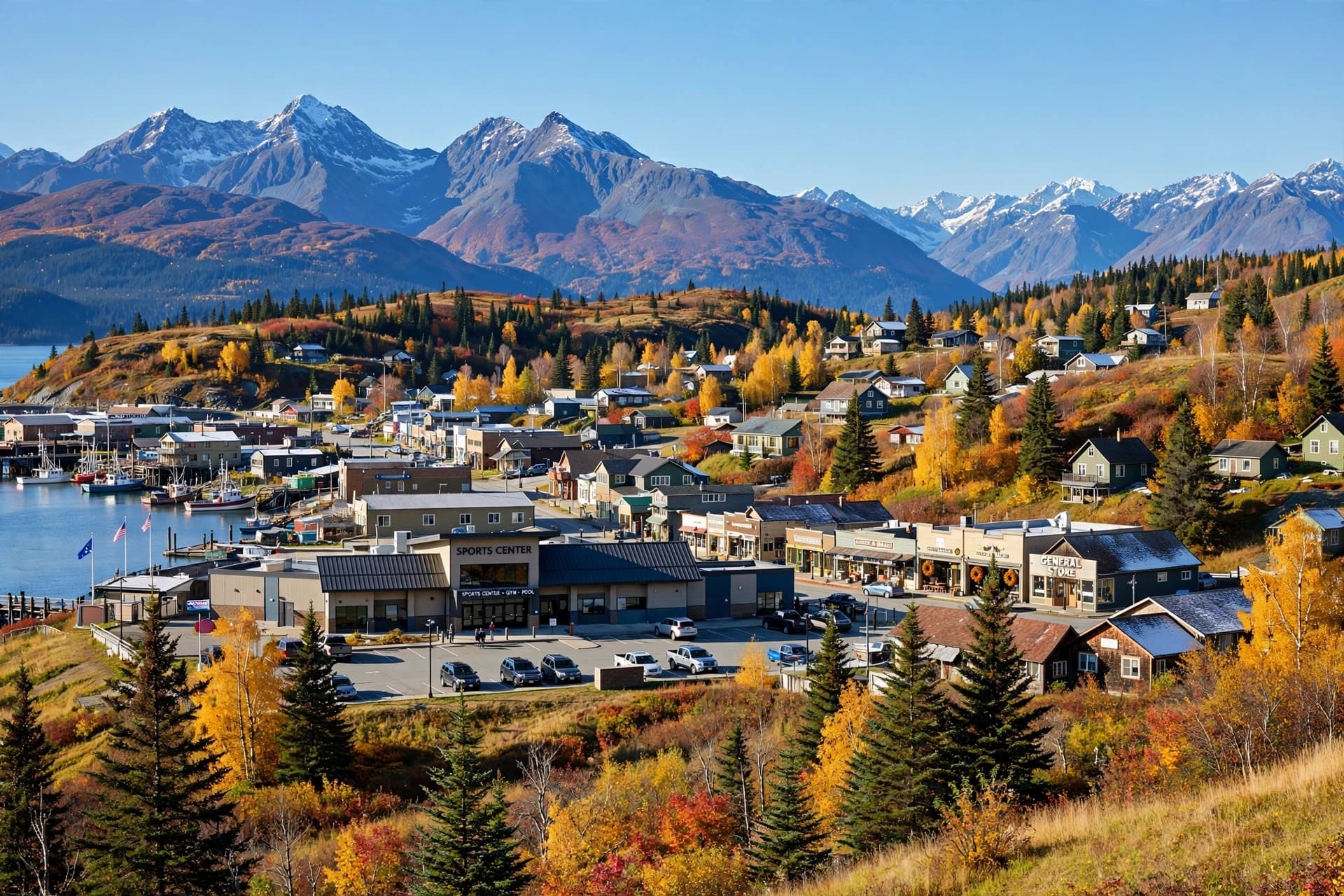
Trump’s rally will be held at the Curtis D. Menard Memorial Sports Center in Wasilla, a deeply Republican area where he carried more than 75 percent of the vote in 2024 . He will also stump for Republican Representative Nick Begich, who faces a competitive challenge from independent Bill Hill . The venue seats roughly 3,500 people—a modest setting for a presidential visit, but one that places the president in the heart of Sullivan’s base rather than in the more competitive urban centers.
Trump’s last political rally in Alaska, in 2022, was a lesson in the limits of his influence. He campaigned against Senator Lisa Murkowski and for Kelly Tshibaka, and Murkowski won reelection anyway . Whether this visit shifts the trajectory of a race that polls suggest is tilting away from the incumbent remains to be seen. But the mere fact of the journey—four time zones, three weeks before the election, for a state with 740,000 people—speaks to a Republican Party taking nothing for granted.
Trump’s trip to Alaska is scheduled for Tuesday afternoon, with rallies in Arizona and Montana to follow on Wednesday. Senator Sullivan will join him onstage. The election is November 3.
Note: The images associated with this article are AI-generated and do not depict real individuals or events.
---
Sources: Associated Press, PBS NewsHour, Los Angeles Times, The Independent, Washington Post, LRT
Published by Banx Network. This article is part of the Banx decentralized media programme, powered by the BXE token on the XRP Ledger.