
Key Highlights
- Exhibition Title:Arctic Fever showcases the Arctic's historical allure.
- Historical Context:The exhibit connects 19th-century exploration to modern geopolitics.
- Greenland's Role: The island's strategic importance is emphasized amid climate change.
The Arctic has always invited projection.
On antique maps, it appeared as blankness — wide pale spaces edged with speculation and wonder. In journals and sketches, it became a place of promise and peril, a white horizon where ambition could dress itself as destiny.
Today, those old visions flicker again, not in ink or charcoal, but in headlines, speeches, and renewed fascination with Greenland’s vast, icy expanse.
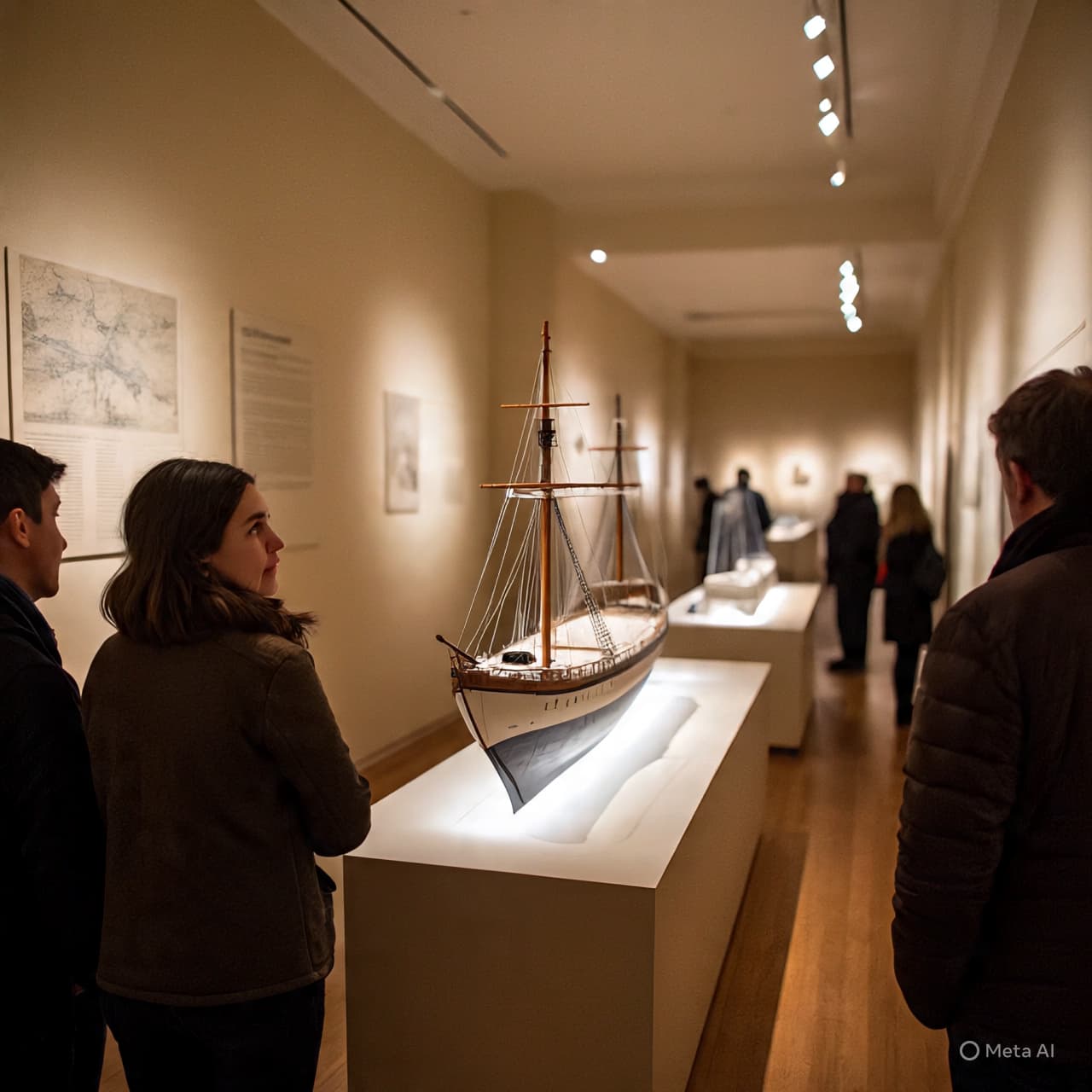
Inside a new exhibition titled Arctic Fever, visitors walk past glass cases holding 19th-century paintings, expedition tools, handwritten logs, and faded photographs. The rooms glow softly, but the atmosphere feels charged, as though the past is leaning forward, eager to be recognized.
Curators say the exhibit explores how European and American explorers once imagined the Arctic as both prize and proving ground — a place where national power, scientific curiosity, and personal glory converged. It also draws an intentional line to present-day rhetoric, including former U.S. President Donald Trump’s repeated expressions of interest in acquiring Greenland.
The parallels are not presented as accusation, but as reflection.
In the 1800s, Arctic expeditions were often framed as noble quests for knowledge. Beneath that language, however, lay strategic calculation. Control of northern routes promised trade advantages. Mapping coastlines meant influence. Planting flags meant presence.
The exhibition suggests that the vocabulary has evolved, but the underlying impulses remain recognizable.
Trump’s remarks about Greenland — including his past suggestion that the United States should purchase the island — were widely dismissed by some as eccentric. Yet historians note that the idea of powerful nations seeking Arctic footholds has deep roots. What sounds unusual in modern politics once formed the backbone of imperial strategy.
Greenland, governed by Denmark and home to a largely Indigenous Inuit population, has long occupied a complicated position in global imagination. Vast, sparsely populated, rich in minerals, and strategically located between North America and Europe, it sits at the intersection of geography and geopolitics.
As climate change accelerates ice melt and opens potential shipping routes, interest in the Arctic has intensified. Governments speak of security. Corporations speak of resources. Scientists speak of urgency.
And museums, it seems, speak of memory.
Arctic Fever does not argue that today’s leaders consciously emulate 19th-century explorers. Instead, it invites visitors to notice patterns: how power continues to express itself through fascination with distant frontiers; how landscapes become symbols long before they become policies.
Glass cases display weathered sextants and cracked leather boots. Nearby, video screens show contemporary satellite images of retreating glaciers and modern icebreakers cutting narrow paths through frozen seas.
Time collapses.
What once took months of perilous sailing now takes seconds of digital transmission. Yet the emotional language — discovery, opportunity, destiny — remains stubbornly familiar.
For Greenlanders, these recurring narratives can feel wearying. Local leaders have emphasized that Greenland is not an object to be acquired, but a society with its own aspirations, culture, and political trajectory. Discussions about the island’s future, they insist, must center the people who live there.
The exhibition leaves visitors with no simple conclusion.
Only an awareness.
That fascination with the Arctic is not new.
That desire rarely disappears; it merely changes costume.
As patrons exit the gallery, winter coats pulled tight against city air, the Arctic remains far away in physical distance. But in the imagination, it feels strangely close.
A place where old stories keep resurfacing.
A place where history whispers into the present.
Published by Banx Network. This article is part of the Banx decentralized media programme, powered by the BXE token on the XRP Ledger.



